Multi-day red flag warnings mark heightened fire risk
“It’s coming,” officials say of something happening

Beau Toepfer/The Aspen Times
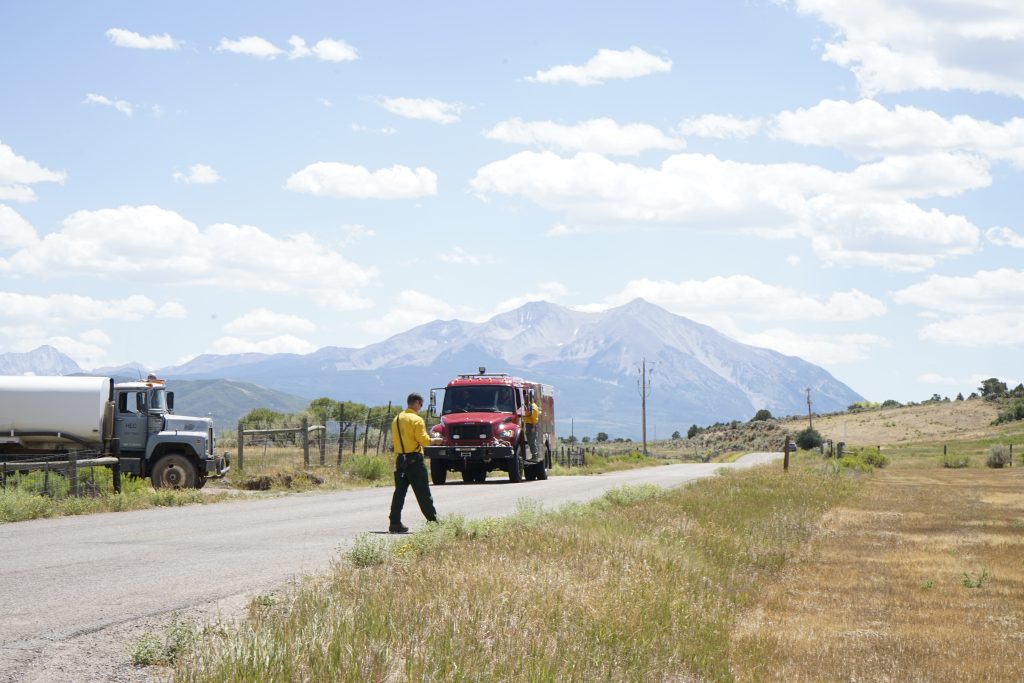
The National Weather Service has issued red flag warnings through Tuesday night for much of the Western Slope below 8,000 feet, meaning low humidity, high temperatures and a windy, unstable atmosphere is making small fires that start harder to control and more likely to grow into larger threats.
Jake Spaulding, the wildland battalion chief at the Aspen Fire Department, noted that even though Aspen is at the top threshold of 8,000 feet, fire conditions are still concerning for the forests and vegetation surrounding town. While Aspen’s fire conditions lag behind that of Grand Junction, where red flag warnings are issued from, Spaulding confirmed they have still been quickly deteriorating at Aspen’s higher altitude following an unusually dry winter and extreme drought conditions.
“We expect strong winds, low relative humidity, dry fuels and unstable atmospheric conditions,” Spaulding said. “Those atmospheric conditions tell me that there is potential for large fire growth, and we get that unstable atmosphere typically every afternoon, but with the winds it’s going to increase that atmospheric instability.”
Fuels are typically classified into one, 10, 100 and 1,000 hour drying times before the fuel matches the relative humidity of the air, and it’s when the 100 and especially 1,000 hour fuels dry out that conditions become exceptionally alarming. According to Spaulding, the past winter was so dry that moisture in fuels never fully recovered, especially in larger “1,000 hour fuels” like the large trees in the forests around town.
“We were coming into the season with low fuel moistures in the bigger fuels, and it doesn’t take much for the one hour and 10 hour fuels to dry out,” Spaulding said. “It’s those bigger fuels that really have us concerned that we could see significant large fires in western Colorado due to the lack of moisture that we’ve received for the past eight months or nine months. It’s really compounded to get us to where we are right now.”
Conditions have been concerning fire officials valley-wide, who have been watching these conditions approach over the past several weeks. Spaulding noted that if afternoon storms had continued, conditions may not have reached this critical point. A recent red flag notice from the National Weather Service noted that relative humidity is expected to be between seven to 12 percent, dangerously low, and that fires will likely “catch and spread rapidly and erratically.”
What’s happening in Aspen, in one click.
Sign up for our morning newsletter at AspenTimes.com/newsletter
“It’s kind of like being underneath power lines, there’s just this buzz around the fire service throughout the valley, if we get a [fire] start today, tomorrow, this week, it could be difficult to control because of the exceptional drought and the hot, dry weather that is forecasted for the rest of the week,” Spaulding said. “Everybody’s just waiting, we’re anticipating something happening, and hopefully nothing does happen, but it’s coming.”
Spaulding added that Aspen and the rest of the Roaring Fork Valley are relatively fire-aware, and that the worsening drought and hot, dry windy weather that is forecasted for the next several weeks have been on many people’s radar.
“Seeing [Colorado] in exceptional drought definitely adds to a heightened awareness throughout the whole valley, knowing where we are, knowing that we were in exceptional drought and we’ve been in it for quite some time and there’s no relief in sight in the near future,” Spaulding said.
Aspen Fire Department has brought on a crew of seven seasonal wildland firefighters and one lieutenant to help with Aspen’s wildfire preparedness. This summer is the first summer Aspen has done this, with the past three weeks spent training their seasonal crew and other employees on wildland firefighting tactics and safety protocol.
Spaulding confirmed that Roaring Fork Fire and Carbondale have also hired seasonal wildfire crews.
“Safety is our number one concern when we’re out on these fires,” Spaulding said. “Safety of ourselves and the public is paramount, so making sure that we can go out and do our job safely to keep the community safe is our number one priority.”





Pitkin County breaks ground on McClure Pass Trail
Pitkin County Open Space and Trails has officially broken ground on McClure Pass Trail, a new natural-surface trail connection in the Crystal Valley from Highway 133 to the summit of McClure Pass.