A historically hot, dry winter on the Western Slope has ‘everybody on edge’ about a potentially severe wildfire season — can it spur more preparedness?
Northwestern Colorado is facing more severe and widespread drought conditions than anywhere else in the U.S., making it a ‘bullseye’ for potential fire activity this summer

Ryan Spencer/The Aspen Times
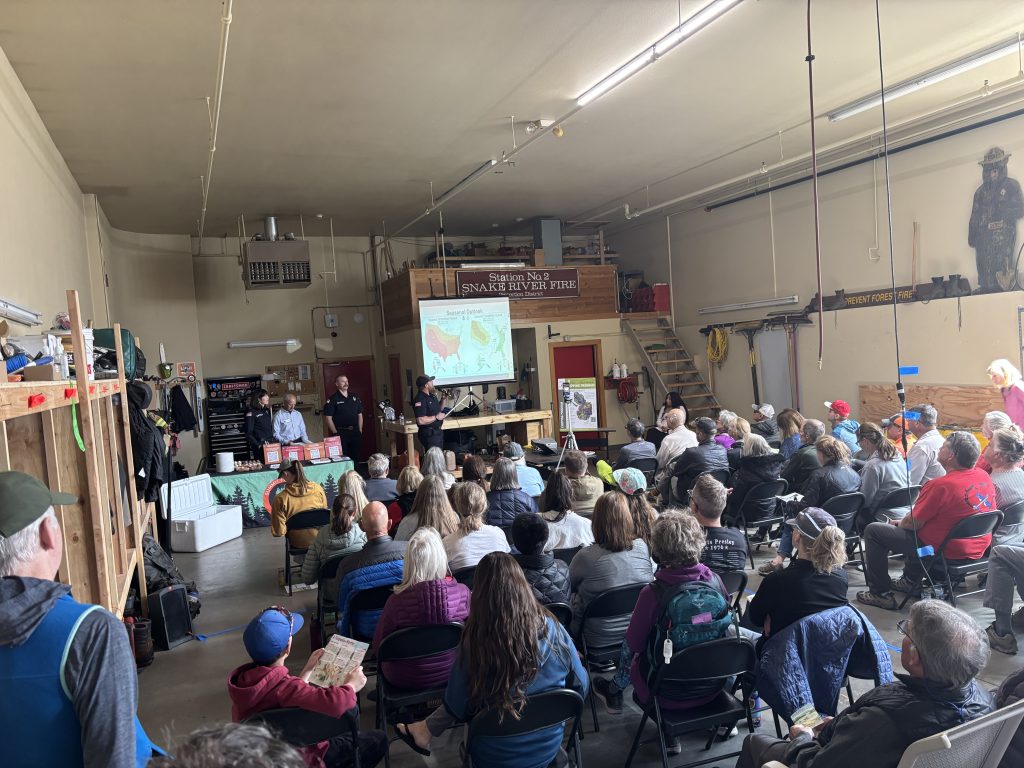
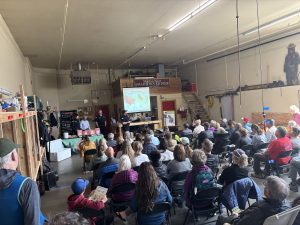
Dozens of folding chairs set up in the two-bay garage of Summit Fire & EMS Station 12 filled quickly on Sunday afternoon, April 12, as people filtered in for a talk on wildfire preparedness.
For extra seating, local residents brought over camp chairs and deck furniture. Others stood or sat in the back, some with children resting on their laps or dangling from their shoulders. More than 100 people turned out, a number of them scribbling in notebooks throughout the presentation.
Ami Doyle, a Summit County resident of 27 years who said she had never previously attended a wildfire preparedness event, summed up why she chose to show up: “The lack of snow this past winter has definitely brought the risk.”
Across the Western Slope, local wildfire officials say Colorado’s historically hot, dry winter and record-low snowpack appears to have sparked a sense of urgency in many people ahead of what could be a dangerous fire season.
In Grand County, Grand Fire Protection District No. 1 Chief Brad White said the record-dry winter — and what it could mean for the fire season ahead — is weighing “heavy on everyone’s mind.”
So far this season, White said more homeowners associations have reached out to the fire district than usual to organize preparedness talks. The amount of requests for wildfire risk assessments is also “well above and beyond what we’ve ever seen by this time of year,” he added, with a backlog of hundreds of properties.
Steamboat Springs Fire Chief Chuck Cerasoli said that Routt County has also seen an uptick in the number of homeowners seeking risk assessments. Cerasoli said the mild winter and the “crazy warm” temperatures in March have “everybody on edge.”
Summit Fire & EMS public information officer Steve Lipsher said the attendance at the district’s five wildfire preparedness events this spring “completely blew away our expectations,” and the phone has been “ringing off the hook” with questions about the coming season.
Pitkin County Emergency Manager Chris Breitbach said officials are now trying to harness the public’s concern into proactive wildfire planning and preparedness.
“It’s a fever pitch. The people in the public are very concerned about it,” Breitbach said. “… We don’t want the public’s anxiety to overwhelm them, but we do want it to snap them to attention and say, ‘I really need to act on this.'”
Western Slope a potential ‘bullseye’ for wildfire activity
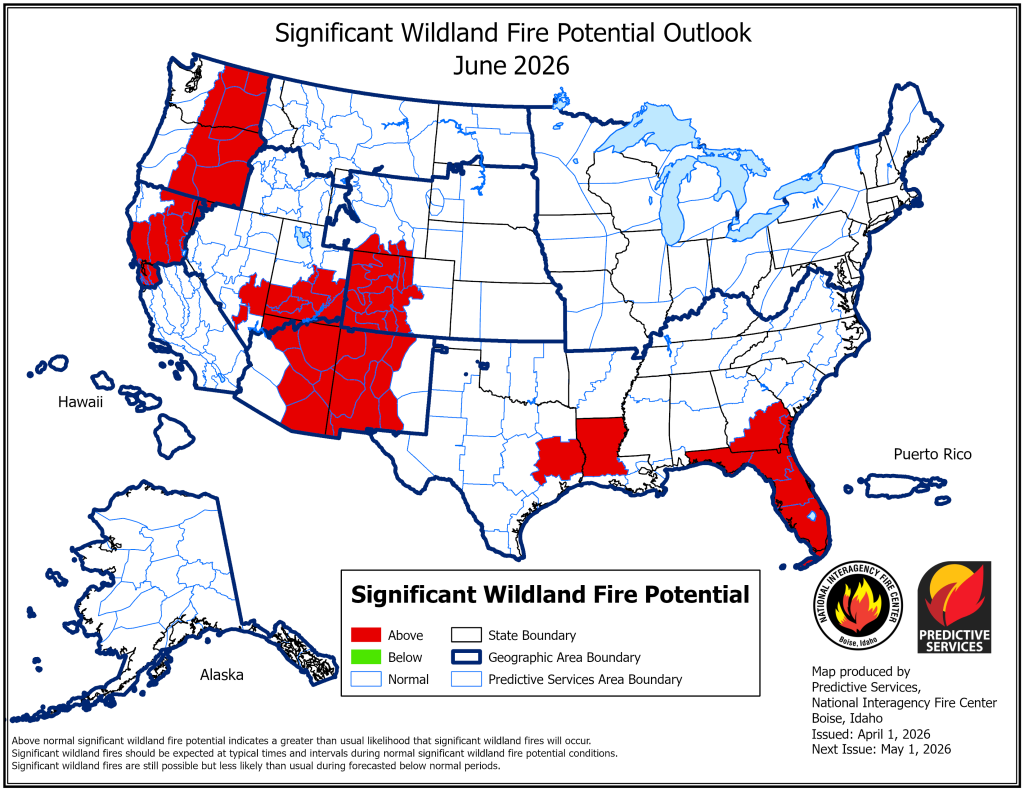
With drought conditions across the state and a snowpack that has melted off faster than usual, Colorado is heading into a wildfire season that experts expect to be more active than recent years.
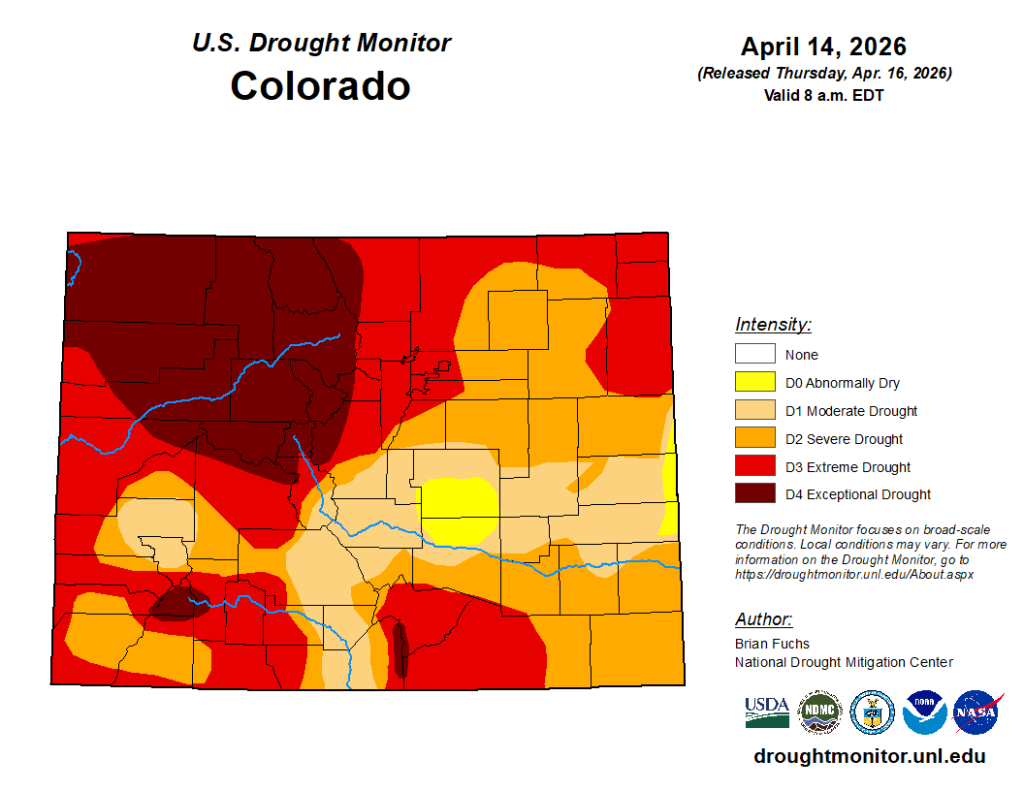
Breitbach noted that northwestern Colorado is facing some of the worst drought conditions in the entire country. Almost the entire northwest corner of the state — including nearly all of Summit, Grand, Eagle, Pitkin, Lake, Routt, Moffat and Rio Blanco counties — is under exceptional drought, or Level 4 of 4, according to the latest U.S. Drought Monitor report. Nowhere else in the West are the drought conditions as severe and widespread.
“If you want to put a bullseye in the country, one of them is right over this part of the state,” Breitbach said. “That’s not an opinion. That’s the fact of what the meteorologists and the National Weather Service are sharing with us.”
Across the Western Slope, the spring has kicked off with small amounts of precipitation. That has led to the vegetation to turn green and lessened the fire danger to the extent where fire restrictions are not currently necessary in most Western Slope counties, according to the fire chiefs. But by June, the heat and long-term drought is expected to lead to above-normal wildfire risk on the Western Slope and Front Range, according to the most recent wildland fire potential outlook from the National Interagency Fire Center.
The report states that the elevated fire danger is expected to continue into July.
“If we don’t get significant precipitation, the things that are greening up now will start to cure out and be available to dry or burn before we have the potential for any monsoon rain,” Vail Fire Chief Mark Novak said.
Novak noted that the way the fire season plays out will depend in large part on how weather patterns play out this summer, and whether or not the mountains see a soaking monsoon season come July and August.
“We hear a lot of talk about wildfire right now, and people asking the question, ‘Are we going to have a bad wildfire season?'” he said. “There’s a lot of variables. We don’t know that yet. But what I like to emphasize to people is right now is the time to start preparing.”
Coloradans need to be ‘ready’ for wildfires this summer
With the likelihood of high wildfire risk this summer, Colorado emergency officials are emphasizing the importance of the first step of the “Ready, Set, Go!” program for wildfire evacuations.
Western Slope residents need to be “ready” to go — with an evacuation kit in their vehicle and a plan for their family, loved ones and pets — in case a wildfire forces evacuations of their neighborhood this summer, the wildfire officials said.
“I can talk until I’m blue in the face about how people need to prepare,” Breitbach said. “‘Actually do it,’ is my response. You actually need to have a go-kit, you actually need to have an evacuation plan. This is not the year to blow it over.”
Every mountain resident should be signed up for local emergency alerts, which is the first way to learn about pre-evacuation notices or evacuation orders, fire officials across the board said. Families also need to be talking about what they’d do in the case of evacuations, including where to meet up and arrangements for pets.
Summit County: SCAlert.org
Routt County: CO.Routt.co.us/760/routt-county-alerts
Pitkin County: PitkinCounty.com/290/emergency-information
Eagle County: ECAlert.org
Grand County: CO.Grand.co.us/193/grand-county-alerts
Moffat County: MoffatAlerts.app.regroup.com
Garfield County: Garco911.com/emergency-notification-system
Emergency officials recommended that residents consider what they’d need to do to be ready to evacuate their home under a pre-evacuation notice, including what valuables they’d want to quickly be able to pack in their vehicle.
“All that sort of stuff should be on a checklist for that time that we say is pre-evacuation, or ‘set.’ Then, when it’s time to evacuate, people are ready,” Cerasoli said. “They can ‘go,’ get out of town. They can get out of their house and neighborhood quickly, and they know confidently that they have everything they need.”
Residents should also pack a go-bag with items they’d need if they were away from home due to an evacuation, and keep the bag in their vehicle in case they don’t have the chance to return home. Fire officials recommended that an evacuation bag have two or three days worth of supplies, including toiletries, medications and changes of clothes, as well as some snacks and water.
In the case of a wildfire, officials said that if residents feel that they’re at risk, they shouldn’t wait for the evacuation order — just go.
“Ideally you’re going to be able to avoid ever having the horror of trying to drive through smoke or flames,” Lipsher said. “You do not want that to happen. Leave early. Get out. Then, hang out until you know the threat is over.”
Western Slope urged to ‘do everything you can’
Being “ready” for potential evacuations is the bare minimum that Coloradans should do to prepare for wildfires this spring, according to the fire chiefs.
With the low snowpack, White suggested that homeowners “take the extra time they’ve gotten without the snow to work on their property and get prepped, doing that maintenance work that they might need to do before summer gets busy.”
Most mountain communities offer free wildfire risk and home ignition zone assessments through their local fire district or wildfire council to help homeowners understand how to make their property defensible in the case of a wildfire.
While those assessments can be helpful, White said there’s no reason to wait on a visit from a professional. The Colorado State Forest Service, and most fire districts, offer online guides and checklists to help homeowners create defensible space around their home to help protect it from wildfires.
International Fire Chiefs Association’s “Ready, Set, Go!” Program: WildlandFireRSG.org.
Colorado State Forest Service “Create Your Own Action Plan” checklist: TinyURL.com/csfsactionplan
Summit Fire & EMS Wildfire Planning Tips: SummitFire.org/wildfire-planning-tips
Colorado State Forest Service homeowners guide to wildfire protection: CSFS.ColoState.edu/wildfire-mitigation/protect-your-home-property-from-wildfire
This summer, Breitbach said it will be the responsibility of all Western Slope residents to be prepared and help spread the word to neighbors and visitors about any fire bans that are in place. He noted that local first responders, who have been training and reviewing wildfire plans with state and federal partners for months, are ready for the wildfire season — and now it’s on the public to also be prepared.
“You can’t wait for public safety to take you by the hand and guide you out of your house to a safe location. There’s not enough of us, and there’s too many people,” he said. “So it is a ‘we’ responsibility. It’s not a ‘you’ public safety responsibility. We are going to do everything we can do. We are begging you to do everything you can do as well.”



Nearly 2,000 ski instructors have joined lawsuit against Vail Resorts so far; opt-in deadline is Wednesday
Consent forms filed in federal court on Friday show that nearly 2,000 ski and snowboard instructors have joined a collective action against Vail Resorts, alleging Fair Labor Standards Act lawsuit against the company.