17 moose sightings reported in Aspen so far this summer

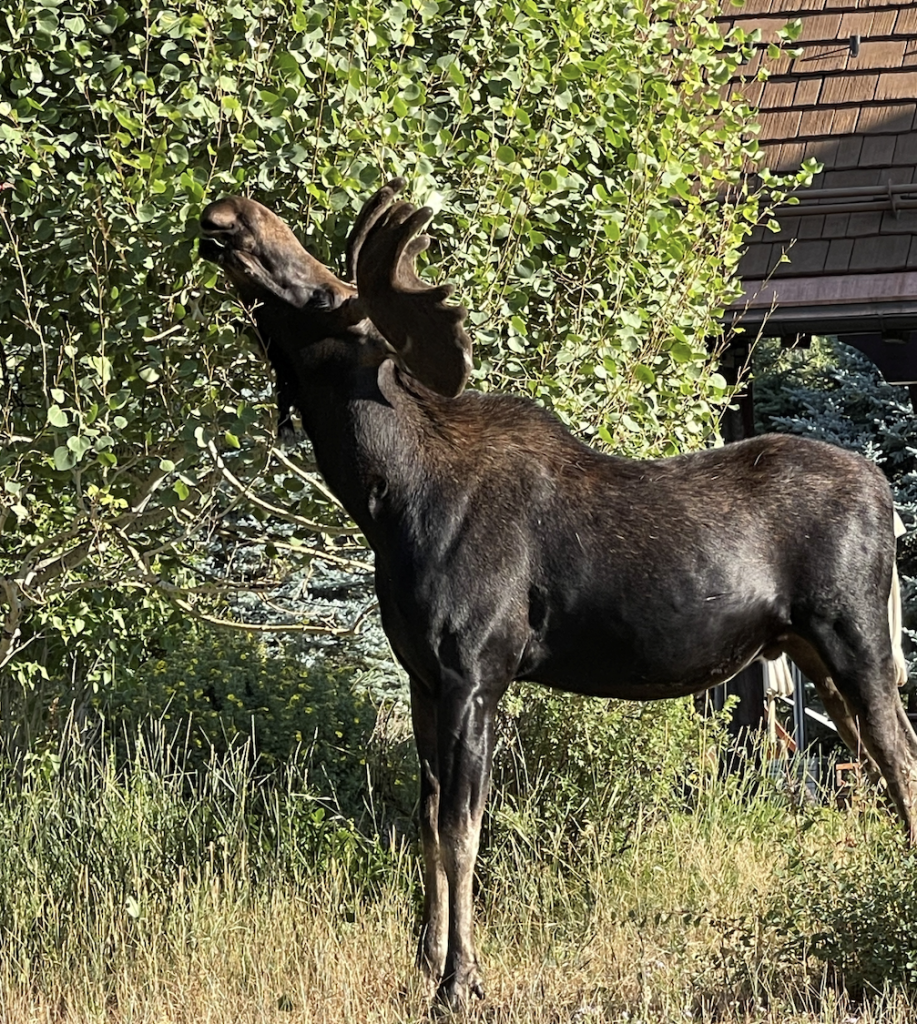
Lara Xaiz/Courtesy photo
With moose sightings ramping up in Aspen and calving season kicking off, it’s important that residents and visitors know how to stay safe around the largest member of the deer family.
So far, 17 moose sightings have been reported in Aspen this summer, city of Aspen Wildlife Coordinator Lara Xaiz told The Aspen Times. Moose are commonly found in riparian wetland zones along Maroon Creek, Castle Creek and North Star Preserve.
It’s crucial for hikers to be aware of their surroundings when in riparian areas. In the event of a moose encounter, hikers should back off and hide behind the nearest car, tree or boulder to avoid being charged and stomped on. Signs of moose aggression include pinning back their ears, raising their hackles (long hairs around neck, shoulders and back) and licking their lips.
“Once you see one, make sure you give it plenty of space,” Xaiz said. “The basic rule of thumb is to hold your arm out straight in front of you with your thumb pointed up, and your thumb should be able to cover whatever animal you’re looking at. If you’re too close, your thumb won’t cover the whole animal.”
She added, “If you do get attacked, protect your head and neck and wait until they completely leave the area.”
Xaiz also pointed out that it is risky for hikers to assume that they can simply continue hiking past a moose. Instead, they should turn back.
“On top of giving it space, so many folks think that if they just keep nudging along the trail then an animal is going to move out of their way,” Xaiz said. “That is just not the case, so if you see a moose and they’re blocking your route, turn around and go back the way you came.”
Because of calving, which occurs in early summer, mother moose currently pose a unique threat to hikers because of their heightened protective instinct and unpredictability, according to Xaiz. In the fall when mating season happens, male moose tend to be more aggressive as well.
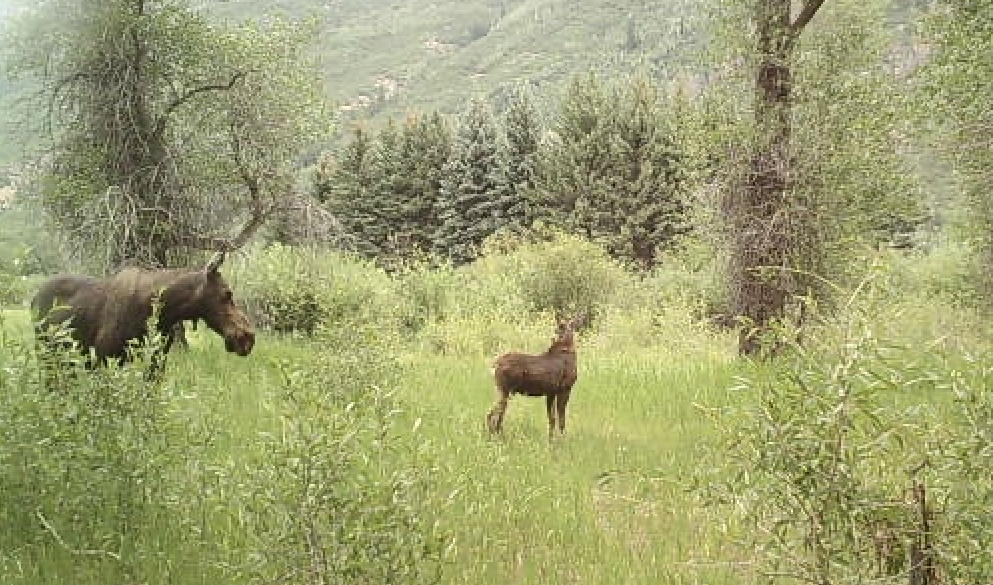
Xaiz also mentioned that keeping dogs leashed is essential. Moose may think dogs are wolves — one of their only natural predators. As a result, dogs may agitate moose more than humans. It is helpful for community members to do a quick check in their yards before letting dogs outside.
For more information on moose in Colorado, visit https://cpw.state.co.us/living-moose.




Pitkin County breaks ground on McClure Pass Trail
Pitkin County Open Space and Trails has officially broken ground on McClure Pass Trail, a new natural-surface trail connection in the Crystal Valley from Highway 133 to the summit of McClure Pass.