Glenwood Springs commits $500,000 toward Cavern Springs mobile home park resident purchase effort

Jaymin Kanzer/Post Independent
Glenwood Springs City Council voted 5-2 Thursday to commit $500,000 from the city’s workforce housing fund to help residents of Cavern Springs Mobile Home Park purchase the land beneath their homes.
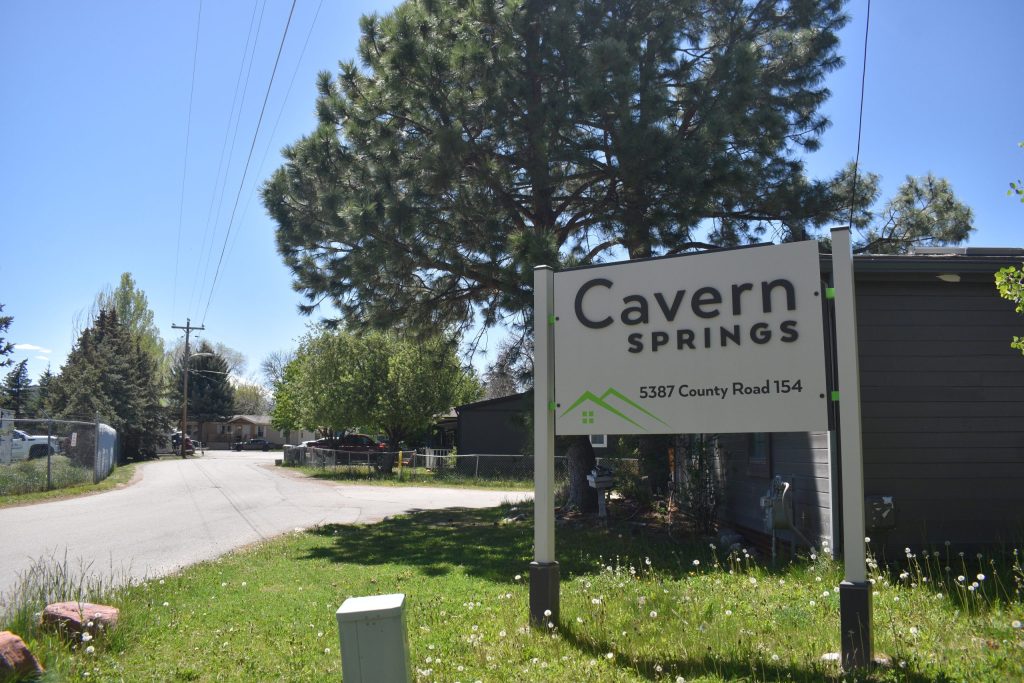
The funding, structured as a forgivable loan, would support a regional effort to preserve the 98-home mobile home park as resident-owned workforce housing. Cavern Springs is in unincorporated Garfield County, just outside Glenwood Springs city limits, and is home to about 300 residents, including about 60 children.
Councilors David Townsley and Ray Schmahl voted against the request. Mayor Marco Dehm, Mayor Pro Tem Erin Zalinski and councilors Mitchell Weimer, Steven Smith and Sumner Schacter voted in favor.
Residents, organized as Sopris Mountain Collective, are working with Mountain Voices Project, Thistle ROC, which stands for Resident Owned Communities, and the West Mountain Regional Housing Coalition to raise enough money to make a counteroffer for the park. The owners of Cavern Springs received a $23 million offer, triggering a process under Colorado law that allows residents to make their own offer, which the owner must consider in good faith.
April Long, executive director of the West Mountain Regional Housing Coalition, said the broader acquisition target is about $24 million, which would include the purchase price, operating reserves, capital reserves and some anticipated improvements.
The city’s contribution would bring local government commitments to about $5.5 million. Aspen has committed $2 million, Snowmass Village has committed $1 million, Carbondale has committed $500,000 and Pitkin County gave a verbal commitment last week for $1.5 million.
Long said the coalition’s goal is to secure $6 million in local government commitments, along with private donations, business contributions and loans. ROC Capital, a nonprofit lender connected to the resident-owned community model, is expected to provide a below-market-rate loan of between $6 million and $14 million, depending on how much other funding is raised.
Housing Development Manager Watkins Fulk-Gray told council the city’s $500,000 would not be spent unless the resident purchase effort succeeds. If the deal falls through, the money would be deobligated.
Fulk-Gray said Cavern Springs residents own their homes but not the land beneath them, meaning they pay monthly lot rent. Under a resident-owned cooperative model, residents would jointly own the land, allowing them to control future lot rents, maintenance and reserves.
“That is the method for preserving affordability in the park,” Fulk-Gray said.
The request was recommended unanimously by the city’s Workforce Housing Fund Advisory Board. Alex Daue, a Glenwood Springs resident and advisory board member, told council the board supported the request because it aligned with the city’s 2C workforce housing goals.
“If you do the math with all 98 units, that’s $5,100 a unit,” Daue said. “If we look at that 36% estimate of workers in Glenwood Springs, that’s more like $14,000 per unit.”
Fulk-Gray said city estimates based on anonymized cell phone data show about 36% of Cavern Springs residents work in Glenwood Springs or the 81601 ZIP code. Some council members questioned how the city could determine whether residents were working in Glenwood Springs or spending time there for other reasons.
Fulk-Gray said the analysis looked at devices that appeared to be in the park overnight over a 30- to 45-day period, then tracked repeated patterns of three to eight hours spent in Glenwood Springs.
Townsley said he had reservations about using Glenwood Springs workforce housing money outside city limits, especially when other city residents also face high housing costs.
“How come we’re picking this group of people to give them something?” Townsley said. “Are we going to subsidize everybody in the valley?”
Schmahl said he supported the residents’ effort but did not believe the project fit the intent of the city’s 2C ballot measure.
“This project clearly fulfills many of the goals of the 2C ballot issue measure,” Schmahl said. “Clearly a worthy project, a good community. I wish you success in your pursuit of buying your property.”
But Schmahl said he believed the measure was passed “in the interest specifically of Glenwood Springs, not outside of Glenwood Springs.”
Supporters on council said the park’s location and workforce connection made the request appropriate. Schacter said the project would preserve existing housing at a lower cost than building new units and would support a broader regional partnership.
“Not being able to help everyone shouldn’t be an excuse not to help a current situation,” Schacter said.
Weimer said he initially came into the meeting opposed to the request, but changed his mind after hearing the discussion.
“While I came into this conversation, this discussion, against this, I am now in support,” Weimer said.
City Attorney Karl Hanlon said the 2C ballot language and the city’s enabling ordinance allow council to interpret whether a project is close enough to Glenwood Springs and sufficiently tied to the city’s workforce housing goals.
“If Council finds that this is adjacent, I think it is a reasonable finding, and I think it is supportable and defensible,” Hanlon said.
Several Cavern Springs residents and supporters spoke in favor of the request, saying the park is home to longtime local workers, retirees, students and families whose children attend Riverview School and Glenwood Springs High School.
Maria Judith Alvarez, a Cavern Springs resident and leader with Mountain Voices Project, said residents are seeking stability and a chance to preserve their homes.
“This is no handout,” Alvarez said. “This is an investment in stability and workforce retention and in the future of this community.”
The city’s funding would come from its workforce housing fund, which was created through the voter-approved 2C lodging tax. Fulk-Gray said the fund is projected to have about $900,000 available at the end of the year before the Cavern Springs request. If the full $500,000 is ultimately spent, the fund would still have about $400,000 remaining.
The forgivable loan would be tied to an affordability covenant intended to preserve the park as local workforce housing. Long said similar restrictions used in prior mobile home park preservation efforts included requirements that homes be owner-occupied, that short-term rentals be prohibited and that future buyers meet local employment and income requirements.
Long said residents must gather funding commitments before making their offer in early June. If the offer is accepted, they would have 120 days to close.
Original reporting from postindependent.com

La Greca: Building a bridge when the first step feels too big
I have always believed in listening to children. Not in letting them run the show, but in trying to understand what they are really saying underneath the words



Sale, repair bikes not allowed in Aspen’s Right of Way
The city of Aspen’s Community Development and Engineering staff will communicate this spring to bike shops that for sale and repair fleets are not allowed in the Right of Way.