Aspen enacts Stage 3 water shortage
Officials push for valley-wide conservation

Heather Sackett, Aspen Journalism/Courtesy photo
In the wake of one of the hottest, driest winters on record, communities in the Roaring Fork Valley are bracing for summer with more-severe water restrictions, fines for the worst offenders and a water conservation outreach campaign.
At its regular meeting Tuesday, Aspen City Council approved staff’s recommendation of moving to a Stage 3 Water Shortage in a 4-1 vote. The city had been in Stage 2 since September. Stage 3 restricts outdoor irrigation to just two days a week: Tuesday and Friday for even addresses; Wednesday and Saturday for odd addresses; and no watering at all on Mondays, Thursdays or Sundays.
Residential swimming pools, hot tubs and water features cannot be filled or refilled with city water, and noncommercial car washing and washing of sidewalks, driveways, parking areas, tennis courts and patios are not allowed. No outdoor water use is allowed between 8 a.m. and 6 p.m.
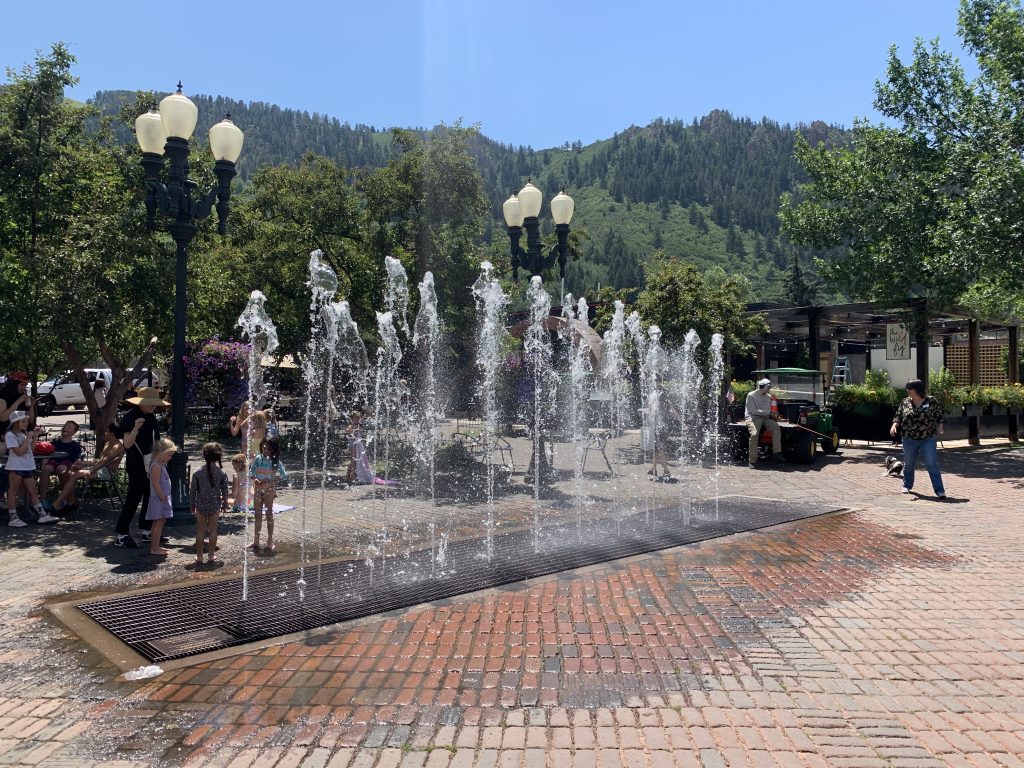
The city will also take measures to cut back on its own water use. According to a staff memo, athletic fields, the golf course and public parks will be watered with extreme care and efficiency, with “a water reduction goal no less stringent than the outdoor percent reduction goal set” for city water customers, according to a staff memo on the shortage declaration. Aspen’s Kai Davis Fountain and Dancing Fountain will also remain dry during the Stage 3 shortage.
The goal of Stage 3 is to reduce water demand by 15% to 25%. The move also comes with a water rate increase for those who use the most water: Customers in Tier III will see a 50% rate increase and Tier IV will see their rates increase 125%. According to the memo, the highest residential water users represent 15% of active customers but drive almost 40% of total water consumption.
“I think what’s being proposed here is one of the only tools we have available to discourage egregious water use,” said Council Member John Doyle.
Council Member Bill Guth voted no on moving to Stage 3, saying he would rather see increased fines and enforcement instead of bigger water users paying a higher rate. Fines go up in Stage 3, but until now, the city has relied on a carrot more than a stick approach, relying on education and outreach instead of punitive measures. Staff has said they will begin ramping up enforcement for violations this year, with escalating penalties for repeat offenders.
“In Aspen, I’d much rather you have a higher fine for people who aren’t following the current rules,” Guth said. “I don’t think a higher bill is going to do it, and it doesn’t feel fair and right to me because our goal is behavior change and conserving water, not collecting more revenue.”
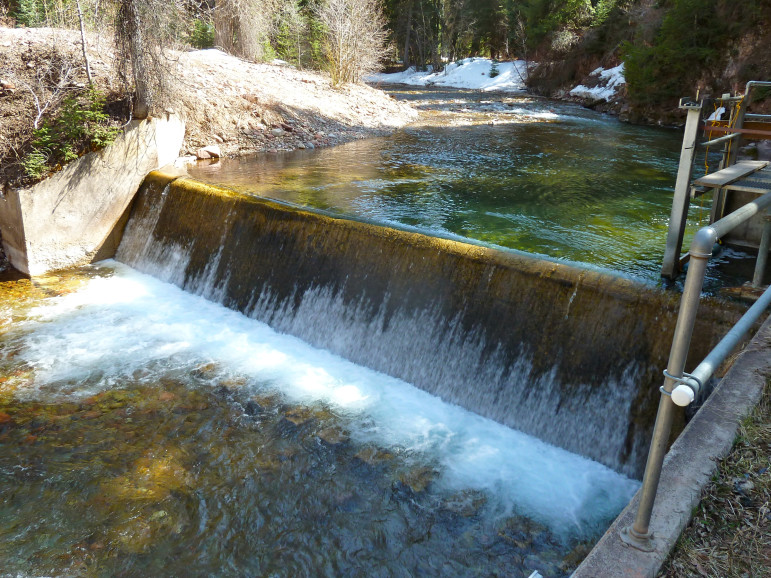
With very little storage and a municipal water supply that largely depends on snowmelt in Castle Creek, Aspen has some of the strictest water use regulations in the valley. The city has an agreement with the Colorado Water Conservation Board to leave enough water in the creek to meet the minimum instream flow water right of 12 cubic feet per second, which is aimed at protecting the environment.
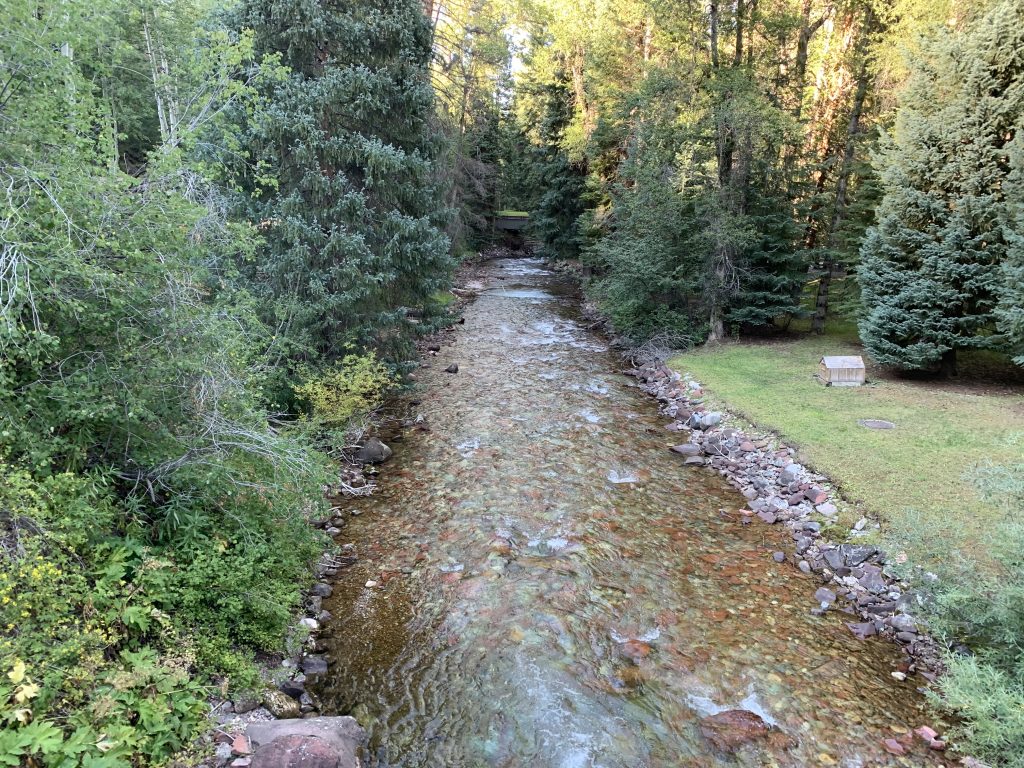
The agreement, however, has a provision that allows Aspen to draw the creek down below the minimum flow in emergency conditions such as extraordinary drought. According to the memo, staff does not currently have enough certainty to confirm whether Aspen’s water demand this season will cause the instream flow to dip below the 12 cfs threshold.
The city has directed its conservation efforts at outdoor watering of lawns and gardens, which historically has put the biggest strain on the city’s system, accounting for between 60% and 70% of treated water use. Water Efficient Landscaping Standards, implemented in 2019, are aimed at reducing outdoor water use.
This was the first time city staff have recommended a Stage 3 water shortage declaration since the water shortage policy was adopted in 2020. The new rules will go into effect Friday.
Downvalley municipal water use restrictions
The efforts at water conservation extend downvalley as municipal providers take stock of their supplies while anticipating water scarcity summer. According to the U.S. Drought Monitor, all of Pitkin and Eagle counties are currently in D4 (exceptional drought) and all of Garfield County is in either D3 (extreme drought) or D4.
Snowmass Water and Sanitation District is tightening its rules regarding outdoor water use by allowing watering only three times a week between midnight and 8 a.m. And the district has increased fines for off-schedule watering this year, up to $1,000 for a fourth violation, with the potential for disconnection after the fifth violation.
The district is continuing to focus on outdoor irrigation efficiency, providing grant money for upgrades such as weather-based controllers.
“If we can simply reduce waste, it will make a huge dent in water consumption here in town,” said Darrell Smith, water resources manager with Snowmass Water and Sanitation District.
The town of Carbondale does not have mandatory watering restrictions in place, but it is asking residents to voluntarily conserve by limiting outdoor watering during the hottest part of the day and following an even/odd schedule based on address. If demand increases, the town may move to mandatory restrictions.
The city of Glenwood Springs is not currently implementing any additional water restrictions, but it is asking residents to observe the normal even/odd watering schedule before 10 a.m. or after 6 p.m. According to Communications and Engagement Officer Bryana Starbuck, the city is also adjusting some of its watering procedures for parks to ensure that trees get enough water without wasting water and working with the largest water users to reduce their usage.
The town of Basalt is under Stage 1 water restrictions, which limit outdoor water use to an even/odd schedule and ask residents to use only what they need to help the watershed and environment.
Valleywide conservation messaging
Ruedi Water and Power Authority is working to unite municipal water providers throughout the valley around a water conservation public outreach campaign. On May 8, the RWAPA hosted a Roaring Fork Watershed Collaborative meeting in Carbondale to gather feedback on the campaign’s messaging.
RWAPA first floated the idea of valleywide watering standards for municipal water providers in 2022, but they were never implemented. Each water provider has a unique system: variable amounts of storage; differences in water rights; and long-standing rules that customers were already used to. As a result, uniting the valley under one set of regulations was tricky.
“All of our systems are just different enough that one strict rule up and down the valley isn’t going to work,” said Kevin Schorzman, Carbondale’s public works director. “However, that doesn’t mean we can’t work together on educational materials and best practices and things like that.”
Now, RWAPA’s focus has shifted to an education campaign that promotes individual water conservation to maximize the collective impact on a watershed scale.
The campaign plans to have a fact sheet, a radio spot, social media posts and a homemade yard-sign contest to spread the message that this year, the valley needs everyone to use a limited water supply more wisely — especially outdoors.
For water customers on a municipal system, the vast majority of in-home water use returns to the river after it is processed in a wastewater treatment plant. The biggest water use savings can be found by cutting back on outdoor irrigation. This type of water use is known as “consumptive” because plants consume most of it, without much of it returning to local streams.
“The goal is to have our community members realize that this year in particular, due to the very low amount of snowpack and resulting low river flow, we need to all work together to conserve water in our backyard,” said Paula Stepp, executive director of RWAPA. “And every drop that we save in our backyard is going to help us sustain our rivers and our municipalities.”
The city of Aspen supports Aspen Journalism with a community nonprofit grant.
Aspen Journalism is an investigative, nonprofit news organization covering water, environmental, social justice and more. Visit aspenjournalism.org.
Heather Sackett is the managing editor at Aspen Journalism and the editor and reporter on the Water Desk.

La Greca: Building a bridge when the first step feels too big
I have always believed in listening to children. Not in letting them run the show, but in trying to understand what they are really saying underneath the words

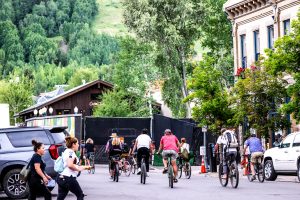
Sale, repair bikes not allowed in Aspen’s Right of Way
The city of Aspen’s Community Development and Engineering staff will communicate this spring to bike shops that for sale and repair fleets are not allowed in the Right of Way.