‘Costs of having the capacity to serve’: Holy Cross Energy discusses new demand charge with Pitkin County
The energy company presented to Pitkin County last week on the rate change, fire danger

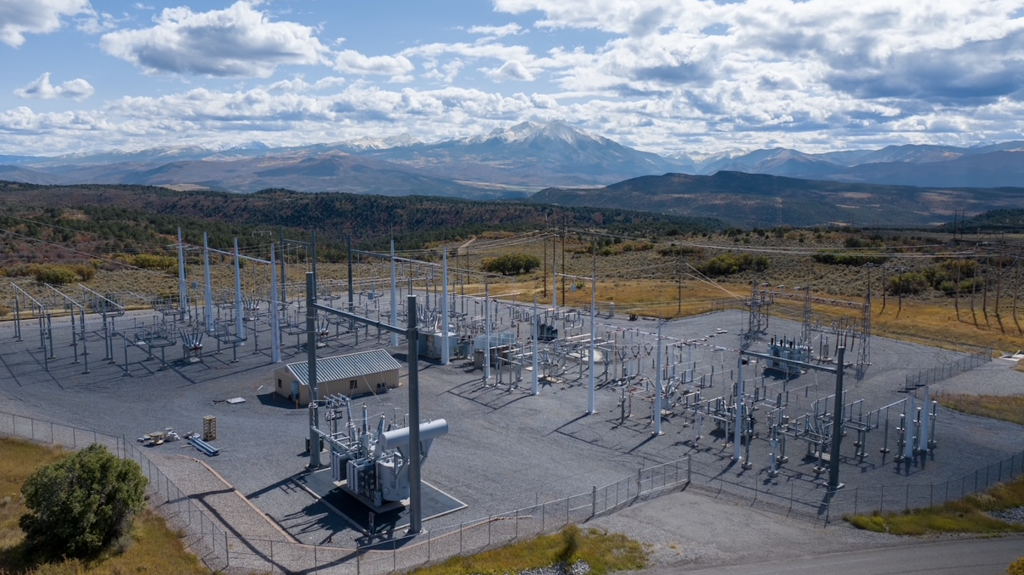
Holy Cross Energy/Courtesy photo
Last month, Holy Cross Energy implemented a new demand charge of $1 per kilowatt hour for all small, general residential services that use less than 50 kilowatts — a charge that reflects a customer’s single highest kilowatt reading each month.
This demand charge also offers consumers the opportunity to save money by staggering their energy use throughout the day to lower their highest kilowatt reading.
“What we’re asking our members to think about is, ‘Could I throw in a little wash in the morning before I leave for work?'” Holy Cross Vice President of Member and Community Relations Jenna Weatherred told The Aspen Times. “Could I make sure that I’m charging my car from midnight to 4 (a.m.) when nothing else is going on? We are asking folks to focus on separating out their usage rather than stacking it all.”
Weatherred added that the demand charge supports better allocation of payment within Holy Cross’ renewable energy system.
“We have done several cost analyses and studied where our costs really are incurred, member by member,” she said. “To bring in a demand charge means that everyone is beginning to pay for the different pieces of the system that we use, and it allows us to build the system for the appropriate size for when everyone is using it. We’re trying to be really responsible with the system and make sure that we can keep our rates as low as possible.”
During the May 5 Pitkin County Board of County Commissioners work session, Holy Cross President Bryan Hannegan explained that the new demand charge can also help lessen the strain on the power grid.
“What that does is that actually puts a cost on using everything at once, and it does that for a very deliberate reason,” Hannegan said during the session. “We would love to have people stagger their demands for electricity over a broader period that is easier for our infrastructure to support, rather than stack it all at once where it increases that peak demand.”
He shared that lowering peak demand for electricity is important for maintaining existing infrastructure and reducing the likelihood that it will need replacement in the future. Improving energy efficiency in the Roaring Fork Valley is one of Holy Cross’ primary goals.
“You can avoid some part of that demand charge and actually help us help you avoid having to pay more in your electric bills for the infrastructure in future years,” he said. “That is also a robust way to make sure everybody understands the costs of having the capacity to serve.”
Hannegan noted that there are also other ways for consumers to help mitigate peak electricity demand, including using rooftop solar panels and home batteries.
During the work session, Commissioner Greg Poschman raised concerns about Holy Cross’ fire safety protocols in light of recent drought.
“These electric poles look like they’re ready to catch fire,” Poschman said. “How is your fire resiliency?”
Hannegan shared that Holy Cross extensively evaluates weather conditions to help make informed decisions about daily operations.
“We have a published wildfire mitigation plan that involves being aware of what the operating conditions are and what our wildfire preparedness level should be based on the day’s humidity and soil moisture and fuel content and so on,” he said. “We’re going around with drones that are observing from all angles and even taking thermal sensors to see where it might be getting hot.”
He also highlighted Holy Cross’ commitments to affordability and clean energy, stating that their current residential rate of 11 cents per kilowatt hour is 40% below the national average rate. In 2025, 85% of energy supplied to customers came from sustainable sources including wind, solar and hydro.
The company’s current goal is to supply 100% clean energy by 2030.





Pitkin County could step in to save Maroon Bells from ‘red zone’
Pitkin County gave the go ahead on Tuesday to begin pursuing a special use permit to take over operations at the Maroon Bells Scenic Area from the U.S. Forest Service in light of concerns around funding and federal support.