Saddle Sore: Returning to where they belong
Tony Vagneur Follow

Tony Vagneur/Courtesy photo
Making my morning irrigation rounds — the sun peeked over the far horizon, illuminating the dew on the waking, iridescent green grass. My dog Tux, running through the stalks, sent a shimmering cloud of droplets skyward, framing him in a beauty that’s hard to describe.
Like a silver serpent, the irrigation ditch wound its way around a shallow bend, the morning light turning its surface into something almost solid, obscuring the movement beneath. Water on the move, yes — but not lost. Not gone. Just on its way.
There’s an old saying that a man never steps in the same river twice. I’ve never been entirely convinced of that.
Standing there on the bank, as I do every summer, watching the water ripple and slide past, it felt more like the opposite might be true. The water changes, certainly, but the course remains. The purpose remains. Day after day, year after year, it finds its way along the same path, carrying something forward — life, memory, possibility.
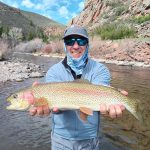
As I turned to leave, a sudden flopping off to the side caught my eye. A fish — a rainbow, about a foot long, golden in the rising sun — had somehow found itself stranded in the grass. Not common but not unheard of either. As I grasped it, to pick it up and carry it back to the life-sustaining waters of the ditch, its strength, its power was impressive for such a small creature, and it was that power that made the importance of its life utmost at the moment.
I picked it up and carried it back to the ditch. The fish slipped from my hands into the current, paused briefly in the shade beneath the bank, gathering itself, then disappeared into the flow, back into a world it understood.
Same ditch. Same bend. Same quiet purpose.
Maybe we don’t step into the same river twice. But some things, given enough care and a little help now and then, have a way of returning to where they belong.
The early settlers from the Aosta Valley, who arrived here after the Utes, understood something important about water: By its nature, it seeks the path of least resistance. They also understood its value. The Roman aqueducts crossing the landscape of their homeland had demonstrated that centuries before.
Standing beside the power of the Roaring Fork River and its tributaries rushing down this valley, they recognized immediately what water could mean here. Properly guided, it could make farms and ranches endure for generations.
Even now, it remains one of the rites of spring in this valley — preparing for the movement of water through the irrigation ditches, watching it split and wander this way and that, fed each year by the winter snowpack gathered high in the mountains.
The ditch itself is old by Colorado standards, dug by men who understood that survival in this country depended less on conquering water than guiding it. Every spring, headgates are opened, banks repaired, obstructions cleared away. The work repeats itself so regularly that it almost disappears into habit.
Yet entire valleys still depend on it.
There is something about irrigation water that quietly orders life in this valley. Haying, planting, cattle turnout, even the conversations between neighbors leaning on shovels over a fence — all of it follows the movement of water. Generations have timed their days, and in many ways their lives, around its arrival each spring.
Maybe that is why the old ditches feel less like relics and more like continuations of something still alive.
Having stood on ditch banks the better part of my life, I’ve come to realize part of their appeal is the stability they offer. The water comes every year. The work returns every year. And somewhere in that repetition there is comfort.
My daughter occasionally asks, “Are you ever going to retire, Dad?”
“Yes,” I tell her. “When I die.”
And the fish, after a brief struggle in the grass, was slipped back into the current and disappeared beneath the bank into familiar water.
Same ditch. Same flow. Same quiet purpose.
Maybe that old Greek philosopher was only partly right.
Tony Vagneur writes here on Saturdays and welcomes your comments at ajv@sopris.net.
Tony Vagneur writes here on Saturdays and welcomes your comments at ajv@sopris.net.



Pitkin County could step in to save Maroon Bells from ‘red zone’
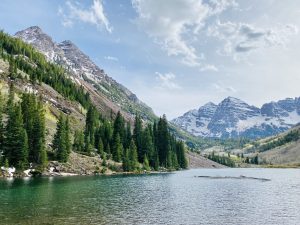
Pitkin County gave the go ahead on Tuesday to begin pursuing a special use permit to take over operations at the Maroon Bells Scenic Area from the U.S. Forest Service in light of concerns around funding and federal support.