Over 7,500 animals were killed in 2025 on Colorado highways: Here’s a glimpse at what wildlife is being hit and where
Almost 68% of the roadkill reported in the state last year took place on the Western Slope

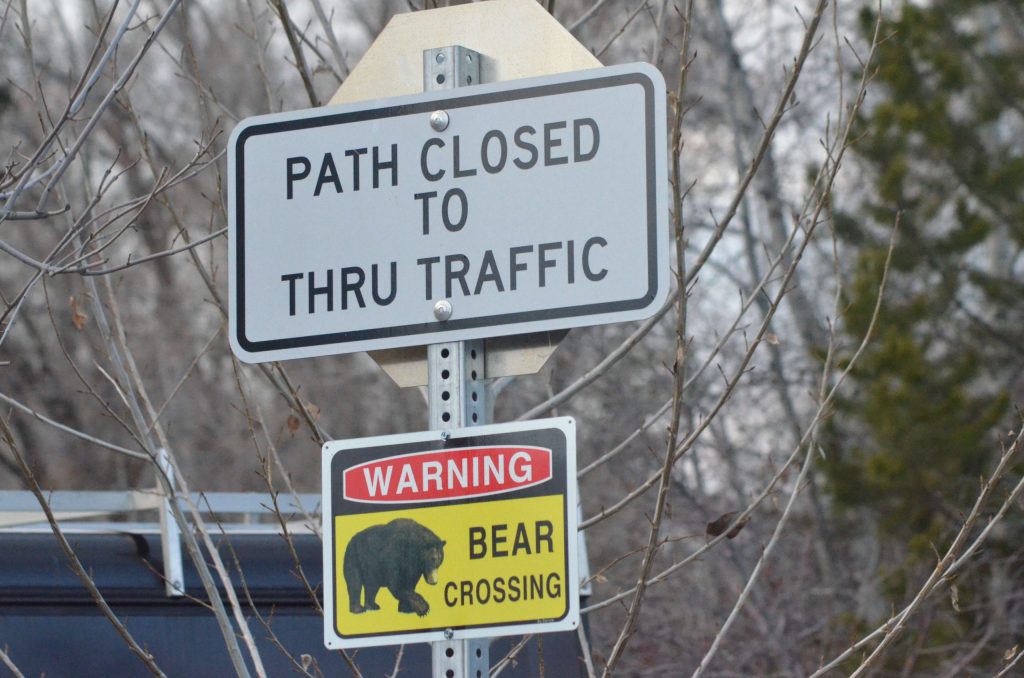
Suzie Romig/Steamboat Pilot & Today archive
At least 7,770 animals were killed last year on Colorado’s roads, the vast majority occurring on the Western Slope.
This is according to 2025 roadkill data from the Colorado Department of Transportation. The agency relies on reports from its road maintenance crews and roadkill app as well as an app from Colorado Parks and Wildlife to gather quarterly and annual reports for the state.
Lindsay Martinez, the transportation department’s wildlife specialist, wrote in a note announcing the data that while the “information is vital for CDOT, CPW and our partners as we work to reduce (wildlife-vehicle collisions) and make the roadways safe for humans and wildlife,” it comes with several caveats.
Primarily, because the data is collected opportunistically, the numbers are considered to be underreported and can have inequalities regarding where reports are made. As such, the state transportation department warns that the data is not for analysis, but for information — giving a general idea of which animals are being struck and where.
Where was roadkill reported?
Reports of roadkill between 2024 and 2025 were up slightly across the state, with 273 more animals noted than in 2024. Which region of the state and what animals were killed in 2025 followed similar trends as the previous year.
The Western Slope accounted for the vast majority (68%) of roadkill reports in Colorado. Last year, the Colorado Department of Transportation’s southwest region — one of five regions in the state — had the highest volume of reported roadkill. Around 39% of the state’s total came from the southwest.
This was followed by the agency’s northwest region, which reported 2,226 animals killed or around 29% of Colorado’s total. The northwest region encompasses a significant portion of the Western Slope, including Moffat, Routt, Jackson, Grand, Summit, Eagle, Lake, Pitkin, Rio Blanco, Garfield, Mesa, Delta, Gunnison and Hinsdale counties. It also includes a portion of Montrose County.
While CDOT’s report does provide information regarding which highways and the 10-mile stretches of road where the reports were made, it warns that the numbers should only be used to study the same stretches over time. Some of the highway segments in the northwest that experienced high volumes of roadkill in 2025 align with the high-risk areas named in a 2019 study of the Western Slope conducted by the transportation department and Colorado Parks and Wildlife.
In 2025, the 10-mile stretch in the northwest region that had the highest number of roadkill reported was between Paonia and Hotchkiss in Delta County on Colorado Highway 133.
High numbers of incidents were also reported last year on Interstate 70 along the 10-mile stretch through Glenwood Springs, and on the highway between Dowd Junction west of Vail and Silverthorne. Colorado Highway 13 between Craig and the Colorado-Wyoming border, and stretching south toward Garfield County, had some of the highest reports as well.
U.S. 40 from Maybell in Moffat County to Steamboat Springs, U.S. 50 near Blue Mesa Reservoir in Gunnison County and Colorado Highway 82 between Carbondale and Basalt also saw high numbers of roadkill.
What animals are the most at risk?
Year after year, mule deer are the No. 1 animal reported as roadkill in Colorado. Last year was no exception, with deer accounting for the vast majority of reports in all five of the transportation department’s regions. This is perhaps unsurprising, as Colorado boasts one of the nation’s largest mule deer populations, with an estimated 400,000 across the state, according to Parks and Wildlife.
In 2025, at least 4,769 deer were killed on Colorado roads, accounting for around 61% of all roadkill reports. Of the deer reports, 73% occurred on the Western Slope. In the northwest, around 1,218 deer were reported as roadkill, and 2,271 in the southwest.
Elk were the second most reported roadkill last year, with 729 animals counted. Sixty-four percent of these took place on the Western Slope, 216 in the northwest and 246 in the southwest.
Taking the number three spot in the transportation department data is unknown or unidentifiable animals. Just over 400 reports were classified as such in 2025.
This is trailed by black bears, of which 318 were reported last year. This included 95 bears in the northwest, making up 30% of the state’s total, and 117 in the southwest, accounting for 37%.
These three species represent the bulk of roadkill data, with many of the other species seeing fewer than 100 reports in 2025. Aside from deer, elk and bears, only raccoons, rabbits, skunks and coyotes exceeded 100 reports last year.
What months are the most dangerous?
Across the state, November saw the highest number of reports, with 976 incidents noted by the department’s dataset. This is followed by October with 882, March with 717 and December with 708.
In the northwest, November 2025 had the most reports for the year with 294, followed by March (250), December (210) and February (186). The fewest reports came in April last year, with 128 animals reported. January, June, July, August and October all saw between 170 and 180 reports.
In each month, mule deer drive the count, but elk and bears had slightly different peaks. For elk, June was the deadliest month in the northwest, with 15% of the region’s elk reports coming during that month.
The vast majority of black bear reports came in the late summer and early fall. September saw the highest numbers in 2025, accounting for a third of all northwest bear roadkill reports. This was followed by August, July and October. This aligns not only with the months that bears are awake in Colorado but also with the seasons Parks and Wildlife historically receives the highest number of bear sightings and conflict reports.
Taking steps to reduce wildlife-vehicle collisions
While not a perfect picture, the data collected by the Colorado Department of Transportation and Colorado Parks and Wildlife reflects an effort to make Colorado’s roads safer.
In 2025, collisions with wildlife were the fifth-most common type of vehicle crash in the state, according to the CDOT Colorado Crash Data Dashboard. Wild animals were named as the leading cause of 3,671 crashes last year — around 4% of all collisions reported on the dashboard.
Wildlife-vehicle collisions are estimated to cost Colorado around $321 million annually, with the average cost of hitting a deer exceeding $23,700, based on a 2023 study of Western states by Montana State University and the Center for Landscape Conservation.
These figures have led to a rising movement in Colorado to fund and build wildlife crossing infrastructure — like fencing, escape ramps, overpasses and underpasses. In some instances, such structures have led to a 90% reduction in state wildlife-vehicle collisions.
As the Colorado legislature wrapped up its 2026 session on Wednesday, May 13, one of the many bills heading to Gov. Jared Polis to become law is a measure that will help fund these structures with an optional $5 fee added during annual vehicle registration.


Pitkin County could step in to save Maroon Bells from ‘red zone’
Pitkin County gave the go ahead on Tuesday to begin pursuing a special use permit to take over operations at the Maroon Bells Scenic Area from the U.S. Forest Service in light of concerns around funding and federal support.