Drought impacts flow into northwest Colorado fisheries
While spring brought good opportunities for anglers, state aquatic biologists are more cautious about what the summer will bring

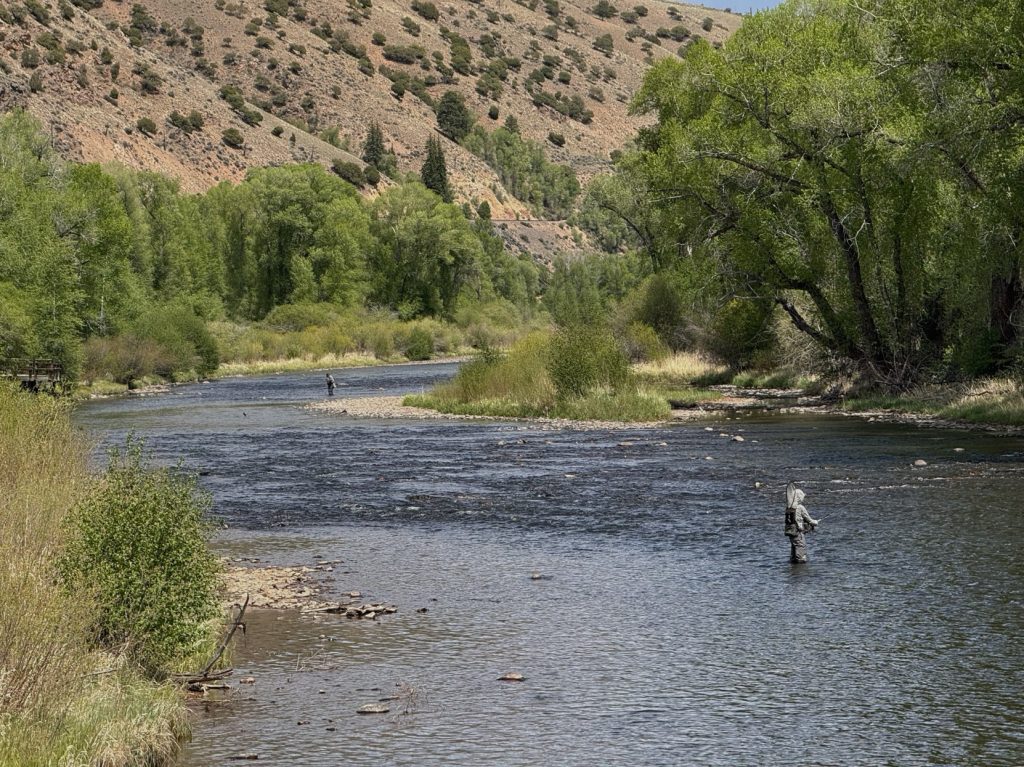
Ali Longwell/The Aspen Times
Unprecedented spawning, low flows, hotter temperatures — these are some of the phrases used by state biologists to describe the situation facing Colorado’s northwestern fisheries as a drought persists in the region.
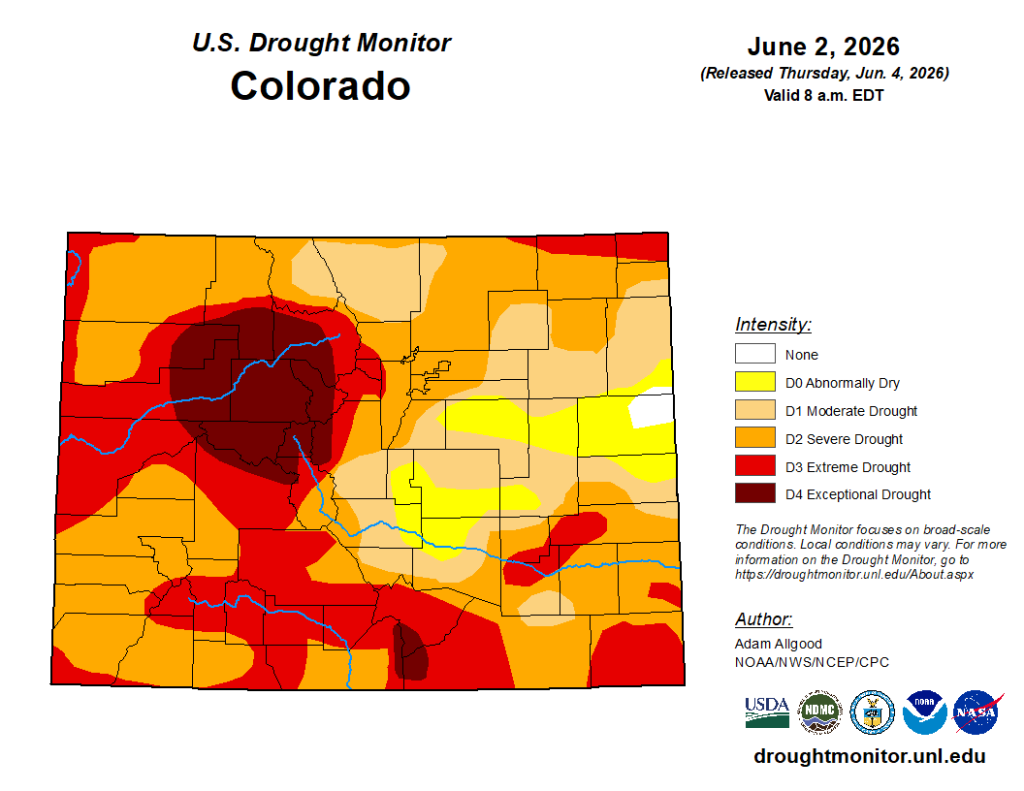
At the start of June, 100% of Colorado was experiencing some drought conditions following the state’s lowest snowpack on record and warmer-than-normal temperatures across the winter months. Record-setting heat in March led to an early melt-off and has brought concerns into summer for Colorado’s fisheries as the drought impacts streamflows and reservoirs.
“This drought is something that’s being closely watched with a lot of anxiety by many, many people,” said Jon Ewert, Colorado Parks and Wildlife’s aquatic biologist for Grand and Summit counties, during a June 2 drought tour in Grand County.
“As far as impacts we’ve seen so far this year, it’s kind of interesting because what we have seen so far this spring in terms of recreational angling is an incredibly good spring for fishing,” Ewert said.
This, however, has more to do with timing than as a predictor for what the drought will mean for anglers this summer. The March heatwave moved up the timelines for peak streamflow and other aquatic markers.
“Everything’s a month ahead of schedule this year,” Ewert said. “The rainbow (trout) spawned a month early … The caddis are hatching on the Colorado River, which is usually like a July 1 thing. And so the thing is that the water is low and clear, and the fish are hungry coming out of winter, and they’re very aggressive and the bugs are hatching early.”
Ben Felt, Parks and Wildlife’s senior aquatic biologist in its northwest region, at a Monday, June 1 meeting of Colorado’s Drought Task Force in Winter Park, said this has also brought “unusual timing” for Parks and Wildlife’s projects in the region.
“What we’re seeing is that the ice came off most of our reservoirs, a good 4 to 6 weeks earlier than usual, and that throws off a few things where a lot of the work that we do in the spring is aimed at removal of invasive northern pike, and northern pike spawning timing was way earlier this year,” Felt said. “We’ll likely see some increases in northern pike numbers, just based on our reduced ability to be out there that early when the pike are spawning — it’s just completely unprecedented in terms of the timing of this fish.”
While Ewert said this is leading to “really great conditions” compared to what Colorado anglers typically see in spring and early June, it begs the question: “What’s it going to look like in July? What’s it going to look like in August?”
“We all have some grim ideas about that,” he said.
Russ Schumacher, Colorado’s state climatologist, said climate models are forecasting a good chance for an active monsoon season kicking off in the middle of July, with a continued trend of warmer-than-normal temperatures through the summer. Schumacher added that whatever relief was brought by cooler temperatures and closer-to-normal precipitation in May is not going to make up for deficits in the winter’s snowpack.
“The river flows are going to be extremely low in the summer,” he said. “The drought impacts are going to continue to emerge.”
Ewert shared some hope — with a caveat — around what an active monsoon could mean for the state’s fisheries.
“The thing about a monsoon in low water years like this, in terms of the rivers, we know we’re not going to get flushing flows anywhere this year… and we’re probably going to have high temperature issues in rivers like the Colorado and the Fraser,” Ewert said.
“However, if we have a consistent and active monsoon, the thing about monsoonal patterns is that even if we don’t have enough precipitation to even be a measurable amount of precipitation, it’s getting that cloud cover … that consistent cloud cover every afternoon that interrupts the solar gain heating up that water,” he added.
Low streamflows and high air temperatures can prove stressful and deadly for Colorado’s fish populations.
“We actually pretty regularly implement voluntary fishing closures in these fisheries during drought years,” Ewert said.
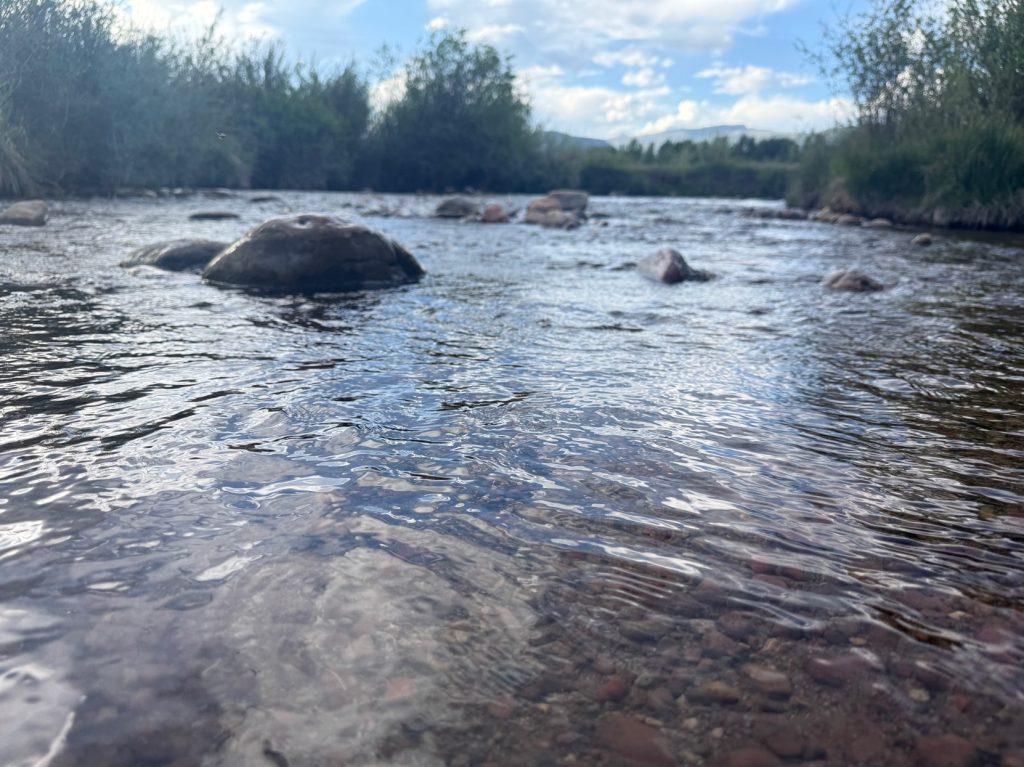
Per Parks and Wildlife’s fishing regulations, when river temperatures rise above 71 F, the agency will issue an emergency fishing closure. When temperatures rise, oxygen levels in the water drop and fish can stop feeding, become more susceptible to diseases and stress from angling, which can ultimately cause them to die. The agency can also issue emergency closures when streamflows drop below 50% of the daily average. Low flows can cause fish to bunch up in small areas, increasing competition for food and making them more susceptible to angling pressure and disease.
“Warm temperatures and low flows that we are seeing across the state are likely to get more pronounced as we get into the summer months,” Felt said. “Overall, there’s just gonna be a higher potential for fish kills this year based on the drought and issues with water levels and temperatures and water quality.”
During his presentation, Felt shared how Parks and Wildlife’s fisheries work in the region has been impacted by the conditions so far.
The Colorado River
The Colorado River’s headwaters are located in Grand County. Felt reported that in the river’s upper reaches, “the reservoirs and transbasin diversions up there have reduced the flows and flow regimes that the upper Colorado would traditionally have.”
The Colorado River has 12 major transmountain diversions. They carry water from west of the Continental Divide — where 80% of the state’s water supply comes from — to the east — where 90% of the state’s population lives.
“The situation is that the natural morphology of the rivers in this part of the state just don’t align with the reality of the flows that are in those rivers, and that could cause some habitat issues and temperature issues,” Felt said. “Those concerns can become more pronounced in drought years.”
While the transmountain diversions can create a “lack of high volumes of water” in Grand County, Ewert said that there can be some benefits.
“There are tradeoffs that occur when reservoirs are drawn down, of course,” he said. “We benefit from, in Grand County, these places where bottom release dams are cooling down the river and we can make use of that in really beneficial ways … that water can be used to mitigate some of these high-temperature periods of time that we see.”
This year, the draw down of some reservoirs in the upper reaches of the Colorado River could impact recreation and fisheries. The Williams Fork Reservoir, currently sitting at 54% full, will be closed to boating this year due to its lowered level.
“We kind of expect to be rebuilding the Williams Fork fishery more or less from scratch once we get to the other side of this drought,” Ewert said.
Downstream on the Colorado River, Parks and Wildlife is monitoring the 15-Mile Reach — which Felt called a “stronghold” for native fish species that are threatened and endangered.
“This is a stretch that’s in the Grand Valley that’s especially vulnerable to low flows because it’s located just downstream of a couple major diversions in the Colorado, and it’s also upstream of the Gunnison River confluence,” Felt said. “We did see that the flows in the 15-Mile Reach drop to 52 cfs earlier this spring, which is a pretty alarming amount of water to be in the mainstem Colorado River.”
Felt reported that around that time, monitoring efforts showed the fish in “good condition, but were fairly concentrated in the pools of habitat.” This quality habitat can be hard for fish to travel between when flows are low, he added.
“This is certainly a situation that we will continue to actively monitor, and if flows drop again, and if fish start to become stranded, we may consider some sort of salvage efforts out there,” Felt said.
The Yampa and White rivers
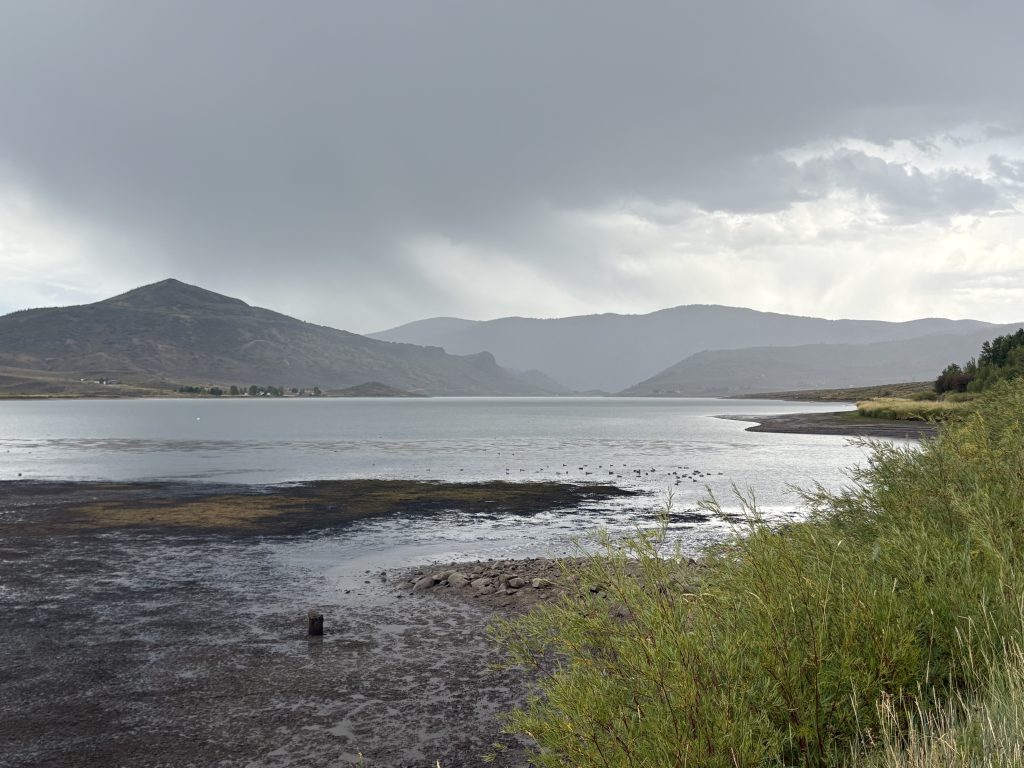
Felt shared that within the Yampa and White rivers, Parks and Wildlife’s work around recovery of native fish species has been limited by the low flows.
As of June 10, the Yampa River in Steamboat Springs was running at 330 cubic feet per second, significantly lower than the 2,320 cfs it was running at the same time last year, according to the U.S. Geological Survey. The White River below Meeker was running at 214 cfs on June 10, when the normal flow for this time of year is closer to 1,500 to 2,500.
“There’s not enough water to launch the rafts or the jet boats,” Felt said. “What we anticipate is that if there are reductions in electrofishing efforts, that will, combined with low water levels, likely result in some increased densities of some of these non-native fish species that we’re managing against.”
Within the Stagecoach Reservoir tailwaters on the Yampa River — which Felt called an “incredible” and “very, very popular” fishery — there has been a mandatory fishing closure since October. Felt said when the flows here drop below 40 cfs, the fish become “very vulnerable to angling,” and experience “increased levels of angler-induced mortality.”
Parks and Wildlife works alongside the Upper Yampa Water Conservancy District and the Colorado Water Trust to plan releases out of the reservoir as part of an instream flow program.
“We decided to wait till later in the year to release that water — the Water Trust made that decision — to ultimately hedge our bets a little bit, and still have that water available when the conditions could be even more critical in the Yampa,” Felt said, adding that the groups are also studying the changes to habitat quality during “unprecedented flow levels down there.”
Felt added that Parks and Wildlife has been “actively working” to rebuild fisheries in Lake Avery and Rio Blanco Lake, which were both drained in the past few years for outlet and dam repairs.
“There’s some uncertainty that remains on both the water management and fisheries management at both of those lakes based on these drought conditions,” he added.
X Games, Aspen Snowmass announce three-year deal to keep winter contest at Buttermilk
X Games and Aspen Snowmass announced a new three-year host agreement that will keep the contest at Buttermilk through the 2028/29 winter season.

Aspen One’s CEO Dave Tanner gives update on state of the business
The future of the skiing industry is a more somber one than many might think.