Inside the ‘complex’ and ‘tremendous’ second year of wolves in Colorado
What 2025 brought for Colorado’s wolves and ranchers as the state’s restoration program continued on the ground

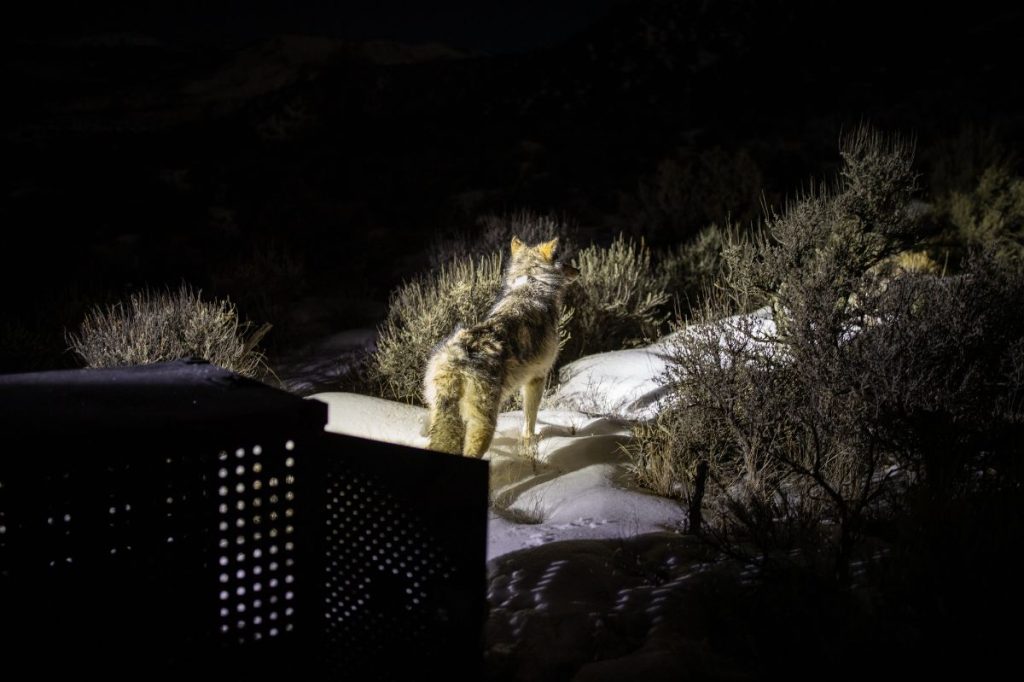
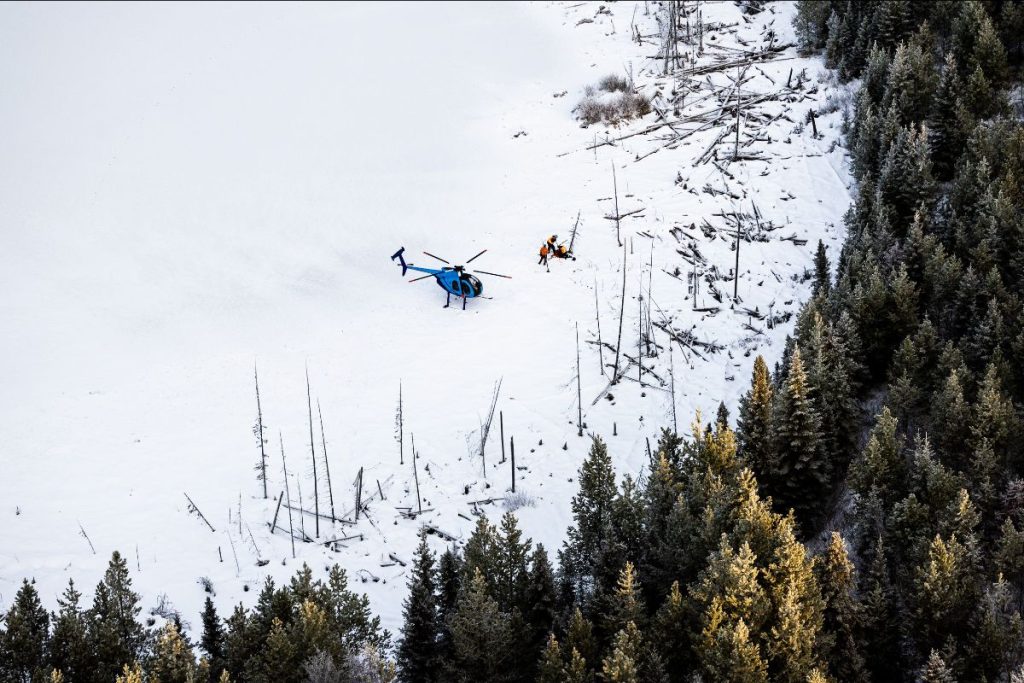
Colorado Parks and Wildlife/Courtesy Photo
This is the first story in a two-part series recapping Colorado’s second year of wolf reintroduction.
Colorado’s wolf program was eventful from the start in 2025.
Just over a week into the new year, Colorado Parks and Wildlife’s commission rejected a request to halt wolf releases, which was requested by Western Slope agricultural producers, towns, and elected officials. Ten days later, the state’s population of gray wolves tripled with the release of 15 gray wolves from Canada and the re-release of five members from the Copper Creek Pack.
Now, almost one year later — and two years into the voter-mandated reintroduction of gray wolves in Colorado — the answer to how the wolf program is progressing depends on who you ask.
For wolf and environmental advocates, it’s tracking as expected, if not slightly better, as Colorado’s wolf population grew with a second release and new packs were established. Concurrently, the advocates applaud the state’s efforts to build and grow new programs for reducing conflict between wolves and producers, despite their feeling that social and mainstream media has shifted attention away from these successes.
“From our perspective, the real story is that wolves are out there just doing what wolves do, and most of it has nothing to do with livestock conflict,” said Rob Edward, co-founder of the Rocky Mountain Wolf Project, which led the citizen effort to reintroduce wolves. “Most of our wolves have been completely under the radar out there feeding themselves on elk, deer, mice, and beavers and just doing what they’re supposed to be doing and hopefully finding each other and having puppies — and that’s gone swimmingly.”
For livestock producers and agriculture stakeholders, it was a year where the state’s efforts to manage wolves and mitigate conflict felt rushed, inconsistent, and inadequate as livestock losses and stress mounted. A year where their questions surrounding the program’s leadership and management drove greater wedges between landowners and the state agency.
“Two years into the wolf reintroduction, we’re seeing the consequences of a rollout that’s been rushed and, unfortunately, politically driven,” said Brittany Dixon, executive director of Club 20, an advocacy group representing Western Slope interests. “We’ve seen no success for anybody — not for the landowners, not for the (Parks and Wildlife) staff who are under fire, and not for the wolves themselves either. It’s really unfortunate that we’re in this space where it’s a lose-lose situation for everybody involved.”
Luke Perkins, Parks and Wildlife’s public information officer, summed up 2025 with one word: “complex.”
Despite these divides on the surface, others have seen people coming together and progress being made.
Kaitie Schneider, the Colorado wolf representative for the national wildlife advocacy organization Defenders of Wildlife, spent her year working directly with producers on projects to reduce conflict between wolves and livestock.
“I’m seeing a lot of engagement, and I’m not seeing as polarized of conversations as we have in years past,” Schneider said. “It’s becoming a lot more constructive.”
She said that the common ground between her role at a wildlife advocacy organization and ranchers is that “in helping protect livestock, we’re helping protect the wolves, as well.”
“We’ve identified a lot of common ground in the last two years,” she said. “Let’s start from that spot and develop those relationships, so that we can better tackle the parts that we disagree about because it’s actually a fraction of the program as a whole.”
Sen. Dylan Roberts, D-Dillon, who has been critical of the wolf program since its inception, said this year was “slightly improved” on some fronts while major challenges remain and persist on others.
“I’ve also seen a cultural shift, at least with the constituents in my district, who in the first year were resistant and upset that this was happening, to more of an acceptance that wolves are here now,” Roberts said. “It’s something that we, unfortunately, have to live with, but we are trying to find solutions to make that more feasible and tolerable.”
What happened with Colorado’s wolves this year?
Proposition 114 required Colorado Parks and Wildlife to develop a plan to reintroduce and manage gray wolves and to use state funds to help producers prevent wolf conflicts and pay fair compensation for livestock losses.
The resulting plan recommends the release of between 30-50 wolves in the first three to five years to build a sustainable population of gray wolves. With the release in January from British Columbia, the state has reintroduced 25 in the first two years.
As the wolves hit the ground, they began to disperse in search of habitat, prey populations and mates. Parks and Wildlife’s GPS collars allow the agency to track the broad-scale movements made by the animals, including the out-of-the-ordinary travels of one female that explored over 1,700 miles between January and May.
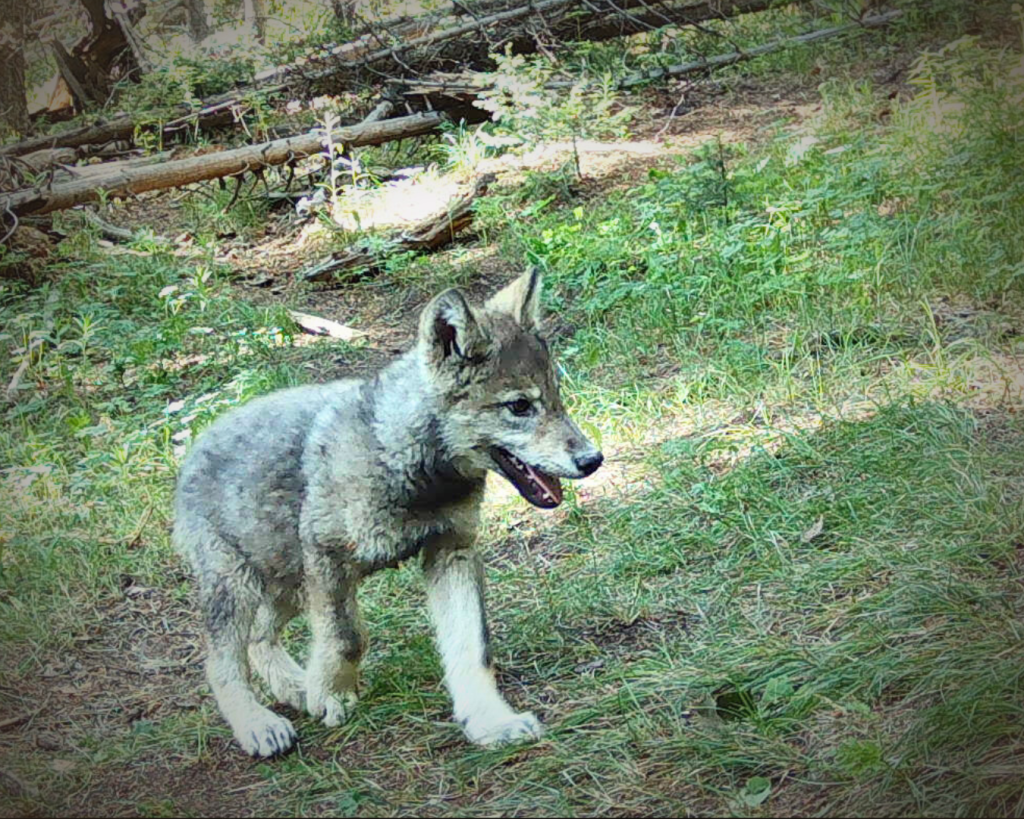
Come spring, Colorado was home to four wolf packs: the Copper Creek pack, whose matriarch mated with a new patriarch and had a second litter in Pitkin County; the King Mountain Pack in Routt County; the One Ear Pack in Jackson County; and the Three Creeks Pack in Rio Blanco County.
While Parks and Wildlife announced at least four pups born to the King Mountain Pack and at least six to the One Ear Pack, it has not given any other estimates. An average wolf litter is between four and six pups. Perkins said the numbers will be published in its annual gray wolf report.
“Part of the reason that it is not possible to do this is because we cannot maintain confirmed pup counts on all of the packs at all times, and we will not know if this year’s pups will be successfully recruited into Colorado’s wolf population until later this winter,” Perkins said.
It’s in these biological milestones that advocates see the program’s achievements.
The existence of the four breeding packs “is a great ecological metric of success that biologically, (Parks and Wildlife) is doing exactly what they need to,” Schneider said.
Two years in, Colorado is “leagues ahead of where the Northern Rockies were at this point in the reintroduction of wolves to Yellowstone and Idaho,” she added.
“The name of the game right now is to grow that population,” Edward said.
The effort to restore wolves in Colorado was spurred by the Western Slope’s “tremendous potential for wolf restoration” based on the distribution of public land, elk and deer abundance, winter and summer range, and road density, he said.
“Wolves were wiped out on behalf of a very small segment of American society as part of a larger complex social dynamic going on at the end of the 1800s and into the early 1900s,” he said. “That extermination campaign was completely blind to the long-term, large landscape-level consequences.”
Alli Henderson, with the Center for Biological Diversity, said that when species, especially keystone predators like wolves, are removed from an ecosystem, there are imbalances.
“The hope for restoring wolves in Colorado is that this is going to help our state’s biodiversity, especially right now, as we are in a biodiversity crisis,” Henderson said, pointing to the fact that Colorado’s 2025 State Wildlife Action Plan saw a growing number of species in peril.
While eight wolves from Colorado’s founding wolf population died this year, Perkins said the losses are “not far off from what is expected among wolves that do not live in a pack,” which is how the majority of Colorado’s wolves are living.
Only one death this year, caused by a mountain lion attack, was natural. The rest were related to human activity. This included three that were killed in Wyoming, where protections and laws differ for gray wolves, a vehicle collision, and a legal coyote trap. A Copper Creek yearling was killed by Parks and Wildlife after it was tied to repeated livestock attacks in Pitkin County.
“No one was or should have been expecting 100% survival rate,” Schneider said. “That’s just not how the wild works.
Finding ways to mitigate conflict with livestock, wolves
Parks and Wildlife also found success this year in the growth of its non-lethal programs, meant to minimize and prevent conflict between wolves and livestock.
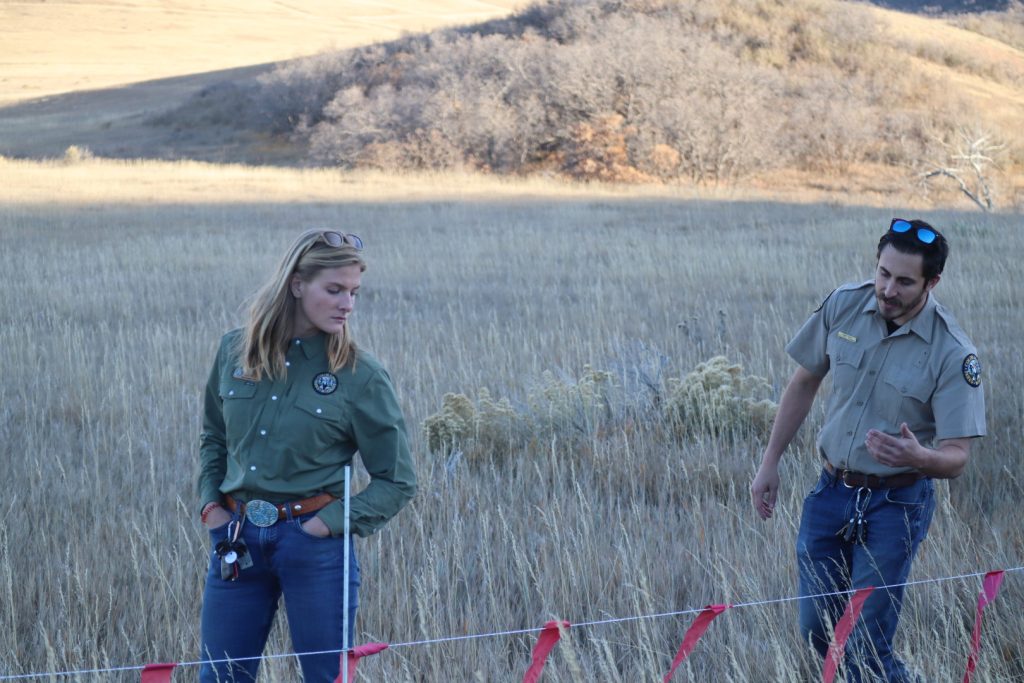
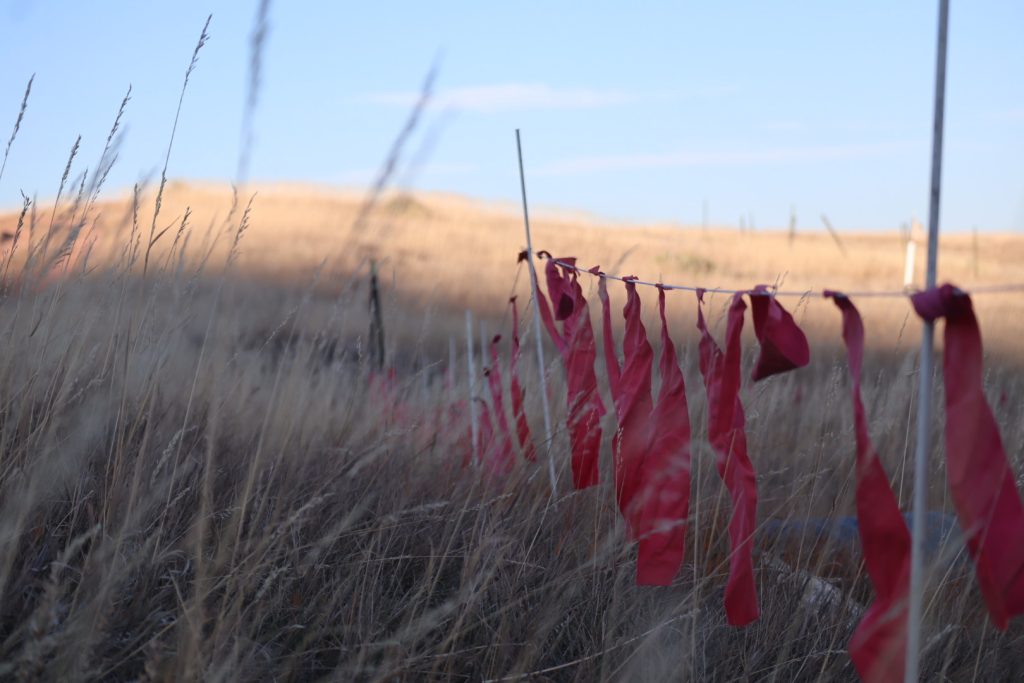
Among the milestones this year, Perkins listed improvements to Parks and Wildlife’s wolf loss compensation process, a pilot program for monitoring and hazing wolves with drones, establishing a state-contracted range riding program, hiring additional wildlife damage specialists to aid with depredation investigations, expanding the agency’s hard tool stockpile with fladry (electrified, flag-line fencing meant to deter wolves) and scare devices, and completing over 240 site assessments to give personalized recommendations to ranchers.
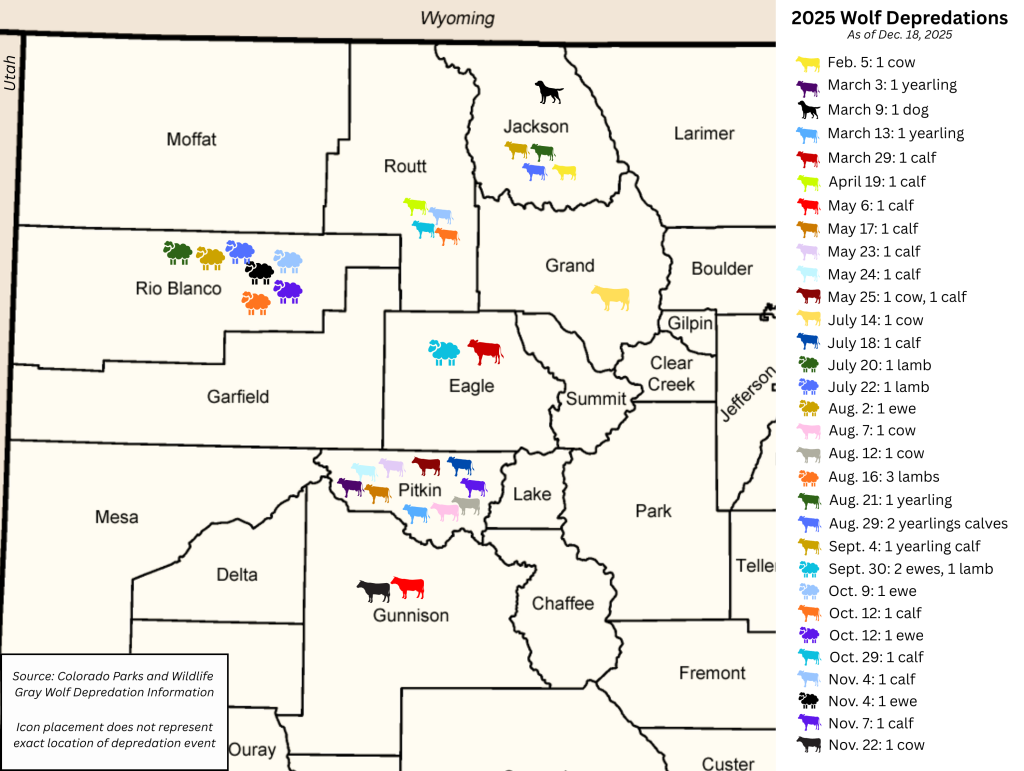
“From the agricultural perspective, if your metric of success is not wanting to see livestock conflict, we are seeing less direct livestock loss to wolves than the year before,” Schneider said. “We are seeing the results of some of those (conflict minimization) tools being scaled up and put into practice. We’re seeing that come down at a statewide level, and we’re seeing more ranchers requesting those site assessments, more people participating in those programs.”
Having more participation allows the state and nonprofits to “funnel more support and more resources directly to the people living with wolves,” she added.
One resource, Colorado’s “Born to Be Wild” wolf license plate, hit the $1 million milestone this year, providing that funding annually to support wolf conflict mitigation programs in the state. The Rocky Mountain Wolf Project spearheaded the license plate effort and received funding from the plate this year to continue marketing it in Colorado. Edward called the milestone a “big” deal.
The majority of this funding has gone to the state’s range riding program, which was a positive in 2025, even for many who are critical of the program. Range riders provide a human presence on grazing allotments, using techniques like noise, lights, and patrols to haze wolves away from livestock.
Chance Jenkins, a Roaring Fork Valley rancher and president of the Holy Cross Cattlemen’s Society, called it the “lone encouraging spot” of Colorado’s wolf program.
The state contracted 11 range riders this year, who were deployed in Pitkin, Jackson, Moffat, Routt, Rio Blanco, Grand, and Eagle counties. Two were full-time state employees and the remainder were contracted based on need. Parks and Wildlife intends to continue growing this program and is currently hiring up to 24 riders for 2026 to “meet the needs of producers during their open ranging seasons when additional human presence is needed to help minimize conflict,” Perkins said.
Defenders of Wildlife also had two range riders deployed at two operations this summer.
There are some concerns about the program’s future. Erin Karney Spaur, executive vice president of the Colorado Cattleman’s Association, questioned its sustainability, particularly given the time commitment required when wolves have established a territory.
“There were some range riders that were spending 24/7 with the wolves,” Spaur said.
Jenkins called the workload required “wild,” given the sheer size and terrain of the grazing allotments that Western Slope livestock producers rely on in the summer.
“The possibility of being everywhere and being at the right place at the right time is one thing,” said Merrit Linke, a Grand County commissioner and rancher.
The other thing, according to Linke, is that range riders successfully pushing wolves away from one property could place them on another.
“It goes for range riders. It goes for fladry. It goes for relocation,” he said. “You can’t fix problems by dumping your problem onto your neighbor.”
Despite some successes, producers are seeking more support from the state when it comes to preventing conflict.
“The wolves are being released into landscapes without fully functioning conflict mitigation systems,” Dixon said. “The systems that are in place now that are meant to support coexistence are not keeping up with what was set forward and laid out under Proposition 114.”
Producers have expressed concerns about the validity, availability, sustainability, and effectiveness of some of the tools being promoted by the state.
“The only thing that works is human presence, and a wolf has to associate being around cattle as dangerous,” Jenkins said.
While fladry has been questioned as a method by some, Perkins said Parks and Wildlife has had “zero confirmed depredations within fladry builds to date” since reintroduction started.
“I think they can be effective if you use them correctly,” Spaur said. “But they also have a window of effectiveness before wolves get acclimated to them. We’re dealing with an apex predator, and they’re an apex predator for a reason. We can continue to throw all these things at them, but they’re smart.”
The intelligence of wolves and their ability to hunt in packs is what separates them from other predators Western Slope producers have deterred and dealt with for years. Many reported that these new pressures are adding significant stress to their already challenging workload.
“The emotional effect it has on families and ranchers cannot be overstated,” Jenkins said. “Everything in a rancher’s life, and all of agriculture, is built around the necessities of that crop, whether it be cattle or wheat or corn. Our life revolves around them.”
Construction causes power outage at PitCo Health and Human Services
Construction work hit a buried power line at 3 p.m. on Thursday that supplied grid and backup generator power to the Pitkin County Health and Human Services building, leading to necessary repairs that will last through the weekend and into next week.