Aspen ‘holding off’ on Flock cameras pending legislation

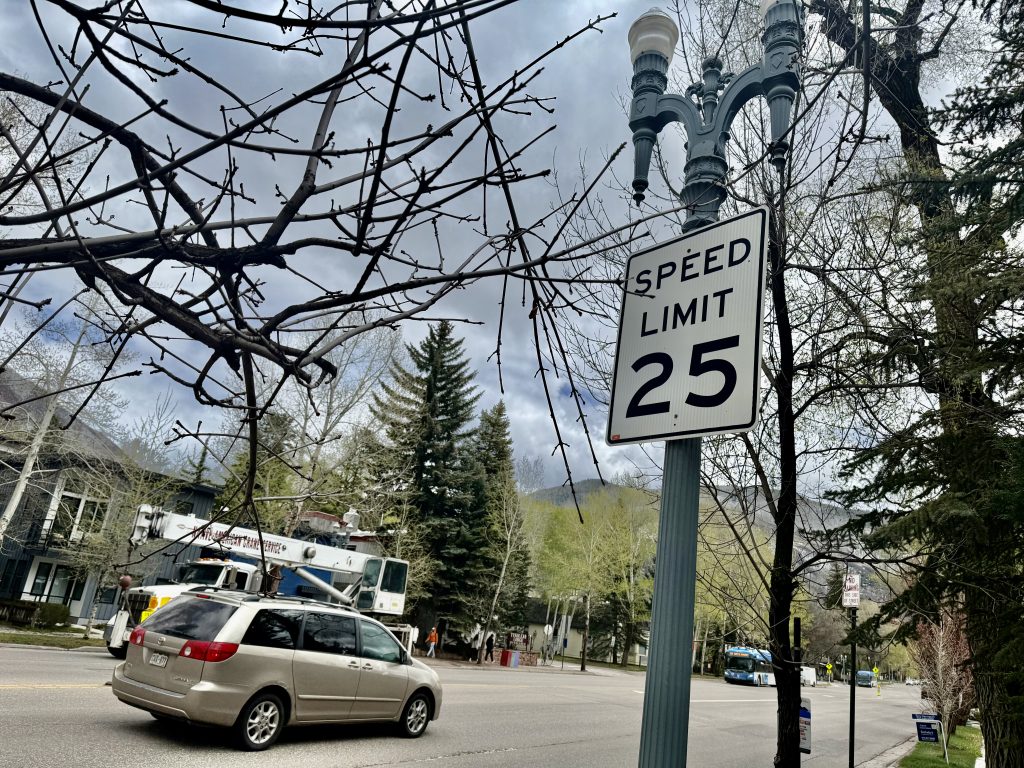
Madison Osberger-Low/The Aspen Times
Editor’s note: This article has been updated to reflect that the plaintiffs in the lawsuit against the city of Norfolk regarding their use of Flock cameras are planning to appeal the decision, not the defendants.
The Aspen Police Department is currently still planning on installing Flock Safety cameras, but it won’t be in the very near-term.
That’s according to Chief of Aspen Police Department Kim Ferber, who said that a proposed bill working its way through the Colorado legislature that would seek to place guardrails around footage and data access is stalling the installation locally.
“I am holding off on implementation of the (automated license plate readers) until we learn more about what the legislative changes might entail,” Ferber said. “With that being said, I don’t have a timeline that I can provide to you right now, but I anticipate (camera installation) could be later this summer.”
Flock Safety cameras are an automated license-plate reader system that surveil streets constantly in order to allow law enforcement to search the footage using artificial intelligence to find cars and individuals of interest.
Automated license plate readers differ from automated vehicle identification systems, which are frequently deployed as a traffic calming measure, because license plate readers take footage without disruption. Automated vehicle identification systems, like the ones soon to be deployed in Basalt, only record and save data when a specific trigger event occurs, like running a red light or exceeding the posted speed by a specific amount.
But license plate readers like Flock have created concern for some due to reports of data being shared with federal immigration authorities, reports of security vulnerabilities and allegations that the technology could violate the Fourth Amendment.
Flock denied that it shares data directly with federal authorities in a frequently asked question blog post but acknowledged that data is owned by “its customers” who can choose to share data with federal agencies if they choose.
An American Civil Liberties Union post in August 2025 noted that federal immigration authorities have accessed Flock data in Colorado through the customer relationship noted by Flock. According to the post, Denver Flock camera data was searched more than 1,400 times between June 2024 and August 2025, and several Front Range police departments said they had shared data with or conducted searches of their data on behalf of federal immigration authorities.
The Guardian also reported in April that Flock cameras were infiltrated by security researchers who were able to access a live feed of a camera and posted the vulnerability in an online video after sharing their findings with Flock directly.
In the article, Flock denied this security vulnerability, saying that the specific device that was hacked was not connected to the internet and thus did not have the same security protocols at the time.
Concerns around how the constant monitoring by these cameras could pose a potential violation to the Fourth Amendment, which protects individuals from unlawful searches and seizures, still persist. U.S. Senators Mark Warren and Tim Kaine submitted a letter to the U.S. Department of Homeland Security alleging that the agency may be violating the Fourth Amendment through its use of Flock data in immigration operations.
A lawsuit in Virginia also alleged that the city of Norfolk, Virginia, was violating the Fourth Amendment with its use of Flock cameras. WHRO, a Virginia-based local broadcasting and news company, reported that the lawsuit was ruled in Flock’s favor in February. The judge noted that, while he didn’t think there was a Fourth Amendment violation in the usage of Flock cameras at the time, it could become a violation in the future if not used with proper regulations and oversight.
The plaintiffs noted at the time that they plan to appeal the decision.
An even more recent lawsuit has been filed in California, making similar allegations of Fourth Amendment violations, according to NBC News.
The proposed Colorado Senate Bill 70 that the Aspen Police Department is watching is seeking to lock some portion of Flock camera footage and data behind warrant requests, prohibiting “a government entity from accessing a database that revealed an individual’s or a vehicle’s historical location information, subject to certain exceptions.”
The bill, according to previous reporting by The Aspen Times in February, would require law enforcement agencies to obtain a warrant to access data from automated license plate reader cameras if the data is more than 72 hours old, with exceptions built in for parking and traffic enforcement.
The bill will be considered by the Colorado Senate this week.
While it works its way through the state government, the Aspen Police Department is holding off on installing the cameras until further information becomes available. According to Ferber, they will likely still be installed, but when they are, it will be with a better idea of how to use them.
“I do anticipate deploying the LPRs at some point and waiting to see if the legislation has any impact on our internal procedures before training staff,” she said.
The Aspen Times reached out to Flock Safety about the bill, with Flock stating that they were supportive of “guardrails” proposed in the bill.
“Flock Safety strongly supports legislation that creates guardrails for how license plate recognition data is used and shared, enhances transparency and helps build public trust,” said Paris Lewbel, a public relations manager for Flock Safety, “while preserving the efficacy of this important public safety tool.”
PHOTOS: Ragnar Trail Colorado race has ‘run its course’ in Snowmass
After 10 years of racing in Snowmass, the Ragnar Trail Colorado Team Race is set to wrap up its tenure.