Federal officials say a car killed a Colorado wolf in May
The male wolf died in northwest Colorado this spring


Colorado Parks and Wildlife/Courtesy Photo
A vehicle collision was responsible for the death of one of Colorado’s reintroduced gray wolves, according to initial necropsy results from the U.S. Fish and Wildlife Service.
The wolf — 2507, a male wolf relocated from British Columbia this year — died in northwest Colorado on Saturday, May 31. On Sept. 9, the federal agency reported that results show the animal died from “blunt force trauma sustained during a suspected vehicle collision.”
As gray wolves are currently listed as endangered in Colorado under the federal Endangered Species Act, all deaths are investigated by the Fish and Wildlife Service.
While Colorado Parks and Wildlife reported the death occurred in northwest Colorado, it will not release the county where the incident took place, according to a statement from Luke Perkins, a spokesperson for the state agency.
This male wolf is among the 10 Colorado wolves that have died since the reintroduction effort began in December 2023.
This number has included three deaths from natural causes, relating either to conflict with other wolves or mountain lions. The remainder have been related to human activity, including the vehicle collision in May, a death caused by a gunshot wound, one occurring after a legal coyote trap trapped the wolf, and three that died after traveling into Wyoming.
Additionally, in August, Parks and Wildlife, alongside partners with the Division of Wildlife Services, shot a wolf in Rio Blanco that they believed was chronically depredating sheep in the county. Officials found evidence that the animal was hit, but could not locate it following an extensive search. DNA collected identified the wolf as a fifth Copper Creek yearling that was not captured with its family in fall 2024.
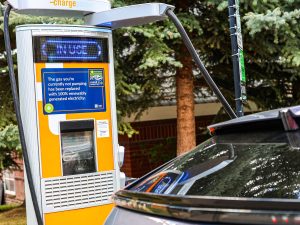
Aspen to install 7 more EV charging stations
Aspen City Council decided to move forward Tuesday with the installation of seven new electric vehicle charging stations at three city-owned facilities.