Aspen partners with food waste program
Markets in-home food recycler to Aspen Residents

Brittany Clarke/Courtesy Photo
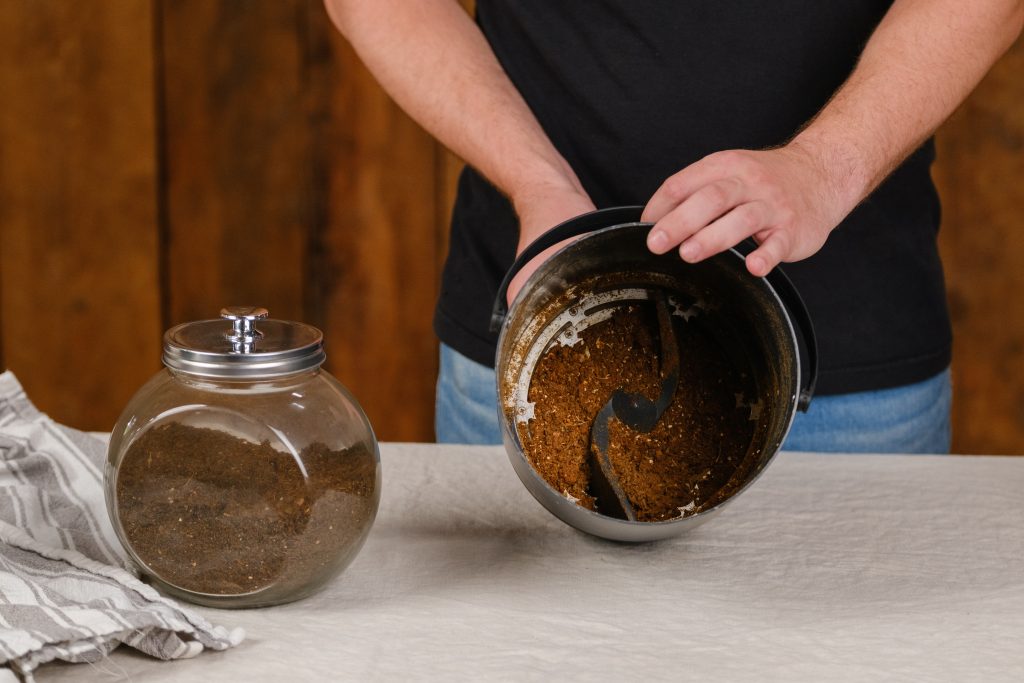
The city of Aspen has partnered with Food Cycler, a company that makes an in-home food waste management system, somewhat similar to compost, that takes food waste, dehydrates it, and turns it into a byproduct that can be used as fertilizer.
Brittany Clarke, Food Cycler’s program account manager, noted that this technology can be used to supplement composting and would be especially helpful to residents who have their own gardens, as the process of making the fertilizer byproduct is much quicker than composting. Food Cycler is offering residents discounts for their products, as well as an additional $200 off for the first 50 residents to buy a product.
“(Food waste) is one of the most overlooked climate challenges in North America alone,” Clarke said. “We generate about 168 million tons of food waste each year, and roughly half of that comes from our households. When we end up putting food waste into a landfill, it produces emissions that are actually more harmful than your typical CO2 sources. When we can address food waste, especially at the household level, it’s a really important opportunity.”
Clarke emphasized that their technology creates a different product from compost, even though some of the processes are similar. The biggest difference is that compost has lots of bacteria that are active in breaking down the organic waste. Food Cycler’s product eliminates the bacteria but can create fertilizer in only about eight hours, as opposed to the weeks it takes compost.
“This doesn’t replace traditional composting; they actually work hand in hand,” Clarke said. “They can still use this machine all year long indoors, not having to store as much food waste, and then it can be added to their composter as a really great additive.”
The fertilizer made by Food Cycler could be used on its own as fertilizer, added to compost, or disposed of in a landfill, which, according to Clarke, is a less desirable option but still 20% more efficient than if the food waste had not been processed.
“People run one of our products about three times a week, the food waste gets reduced by up to 90% weight and volume, so at the end of the cycle they’re left with what we like to say is like one or two handfuls of the byproduct,” she said.
To learn more and order a machine with the Aspen-specific discount, visit food-cycler-ca.myshopify.com/pages/city-of-aspen-foodcycler-program.





Skier-focused hospitality brand launches in Aspen
A new hospitality brand, First Chair, has launched in Aspen as of June 1, with a focus on providing experiences for the diversity of skiers who travel to the area.