Saddle Sore: Different places, same feeling
Tony Vagneur Follow

Tony Vagneur/Courtesy photo
I felt welcome right from the start, driving up a two-lane asphalt road with ranches on either side, irrigation water spilling over ditch banks and cattle scattered here and there. It could have been Highway 82 in a land that got forgot, back when. I felt a kinship before I’d even reached my destination.
Sitting out in the middle of northwestern Colorado’s agricultural country is Walden, a town that harkens back to days of my youth. Walk down a street in Walden, and you might notice a building that hasn’t changed much in years, sitting quietly, waiting its turn.
Walk through parts of Aspen, and every now and then, you’ll see something not all that different — a space that could be something, but isn’t, at least not yet. Different places, different reasons — same feeling.
Standing on the main drag through Walden at 7 a.m., a pickup truck appears in the distance, heading my way. Thirty seconds later, it passes, one man inside and pulls into what serves as the town’s version of a 7/11 — an independent gas station and snack store. Walking west, there are boarded windows, “closed” signs on doors, and you begin to wonder if there really is a place to get breakfast. Then, there it is, tucked in among its quiet neighbors: the Antlers Inn.
It wasn’t always so different in Aspen.
In 1971, early morning, heading to work on the Aspen Mountain ski patrol, town was quiet in much the same way — a few cars here and there, not much movement. Breakfast was at the White Kitchen, a place that had been there for years. I’d grab one of the few empty stools at the horseshoe counter. The talk was of snowplowing, work at the filling station and a couple of lift attendants finishing up just as I was getting started.
Each town had its turn; one slowing down, almost closing up, the other growing very fast, sometimes by leaps and bounds, some said. But though they exist in different worlds, there is a similarity between them that deserves mention.
Early on, Walden was a mining and ranching town, as was Aspen. Aspen’s mining era was largely over by 1893; Walden’s fluorspar (fluorite) mining ran roughly from 1923 to 1973. Ski development brought Aspen to the forefront. Walden, relying on less intense outdoor recreation, has struggled along since, trying to stay alive.
There is one constant between the two towns. You guessed it, didn’t you? Money. Ah, yes — that which so often seems to take away, rather than enhance, a community.
Incongruous, you say. A wealthy man from Oklahoma arrived in Walden with a distaste for Aspen or Vail and bought up most of the commercial property on Main Street. He wants to keep it quiet, to his liking, I reckon. Doesn’t want to sell or lease space for businesses. Keep in mind, however, he does own the Antlers Inn. Money is keeping Walden small and stalled, where little changes. According to one resident, “It’s turning us into a ghost town!”
Aspen, on the other hand, has seemingly unlimited wealth behind it. It is fully developed in the resort sense, and yet — nothing needs to change. Enter Mark Hunt and RH, with a seemingly ravenous appetite for downtown commercial property, accompanied by the curious tendency to board those properties up, letting them sit idle for years. You know the ones I’m talking about.
The destruction of the White Owl Cigar advertisement painted on the outside wall of the Crystal Palace building felt like a signal to the town — that whatever the plan might be, it didn’t take into account the accumulated history of Aspen.
It’s funny how two very different places can arrive at the same quiet — one shaped by necessity, the other by abundance.
Different causes, same unintended effect.
Stagnation, bought with cash.
Tony Vagneur writes here on Saturdays and welcomes your comments at ajv@sopris.net.
Tony Vagneur writes here on Saturdays and welcomes your comments at ajv@sopris.net.



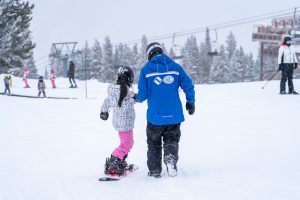
Nearly 2,000 ski instructors have joined lawsuit against Vail Resorts so far; opt-in deadline is Wednesday
Consent forms filed in federal court on Friday show that nearly 2,000 ski and snowboard instructors have joined a collective action against Vail Resorts, alleging Fair Labor Standards Act lawsuit against the company.