Q&A: Meet the Republicans vying for Colorado’s 3rd Congressional District
Incumbent Jeff Hurd and Ron Hanks are facing off in the June 30 Republican primary

Staff report Follow
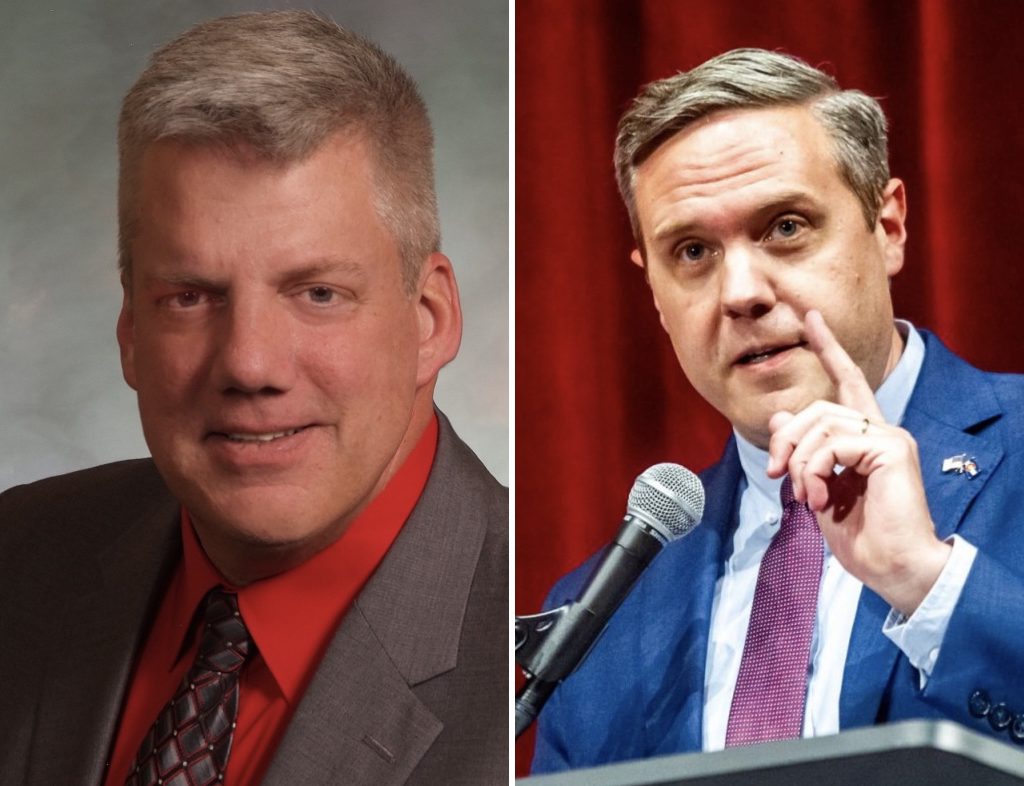
Colorado General Assembly/Courtesy photo, and Larry Robinson/Grand Junction Daily Sentinel
Incumbent U.S. Rep. Jeff Hurd and Ron Hanks are both candidates in the June 30 Republican primary for Colorado’s 3rd Congressional District. The Aspen Times asked each candidate five questions about some of the key issues facing the district.
Hurd declined to participate in the Q&A for the primary election.
Question 1: Colorado’s 3rd Congressional District is broad and diverse, from ski towns to ranching and farming communities that span the political spectrum. As a member of Congress, how will you ensure you are representing all your constituents, even those who might not have supported you?
Hanks: Unlike the current representative, I will schedule meetings and actually show up for them. When I am back from Washington, D.C., I will attend meetings others have set up, if invited. Finally, I will conduct interviews with local media — not dismiss them like our current representative.
My commitment is simply this: I will represent our district in Washington, D.C. and advocate for our shared interests. I will meet regularly with constituents, provide clear and objective updates and listen closely to your concerns while seeking your ideas for solutions.
Question 2: The cost of living in Colorado’s mountains, from housing to childcare, continues to challenge working residents. What actions can Congress take to actually lower costs for western Colorado?
Hanks: Inflation was headed in the right direction — largely based on reduced fuel and transportation costs. The closure of the Strait of Hormuz because of the military operation against Iran reversed that trajectory. Fuel prices have increased dramatically. We need to reopen the Strait of Hormuz, and when that happens, fuel prices and inflationary pressures will drop dramatically.
We must also reduce the tax draw on our citizens. We can do that by resetting the federal budget. Zero-based budgeting would help: Every department starts at zero, and we build their budget back, one line at a time. If the DOGE (U.S. Department of Government Efficiency) estimates of fraud and waste are accurate, we could reduce the $7.5 trillion budget by $2 trillion to $3 trillion dollars. In a $30 trillion dollar economy, that’s 7% to 10% of the gross domestic product. That would be a significant anti-inflationary move — and money in the taxpayers’ pockets, for use in their family budget or family business.
Question 3: Your district is home to some large immigrant communities, particularly in resort towns. Do you believe federal immigration policy is hurting or helping these communities, and would you support any changes to the way agencies like Immigration and Customs Enforcement currently operate?
Hanks: We must have consistent immigration policies enforced fairly across the nation. I support the deportation efforts of ICE and believe we should be reviewing immigration visa fraud and abuse. While we do this, I support a review of the seasonal labor programs, so that we can offer the employee and employer a streamlined opportunity benefiting both sides.
As a military veteran, I worked on security issues — from the perimeter security of the Iraqi airbase I was deployed to, to the post-9/11 U.S. border concerns of military-age males and potential combatants entering our nation. Because our border was so porous and was deliberately left open, we must now thoroughly investigate and pursue all leads in the interest of national security. Our enemies exploited our weakness, and we have uncovered drugs, weapons and child and sex trafficking enterprises. We need to stay on task looking for biological, chemical, even nuclear materials smuggled into our country.
Question 4: Public lands sales were a contentious issue in Congress last year. Do you support the idea that some public lands should be sold, and, if so, how should those decisions be made?
Hanks: I do not support the federal government locking up more land. The federal government already owns 36% of Colorado, and I contend they are not managing it well. We need a significant reset of the missions of federal land management.
Over the last 50-60 years, we have seen the effort shift more toward “lock it up, and watch it burn.” That is a disastrous policy for our citizens, our economy, the wildlife burned alive trying to escape these massive fires. We should do better.
There is room for multi-use public lands. I support conservation efforts and the leasing of public lands for mineral rights, oil extraction, and grazing. We are blessed with a big nation, and there is room for all of that.
Question 5: The 3rd Congressional District has the highest rate of Medicaid enrollment of all the state’s congressional districts. Last year, Republicans reduced federal funding for Medicaid and limited eligibility as part of the One Big Beautiful Bill Act. Do you support these policies, or are there changes you would make?
Hanks: I believe the One Big Beautiful Bill was the best piece of legislation President Trump could hope to get from a moribund Congress in his first year, but I think it was an abdication of the duties of the House and Senate.
I believe we should be working on the funding of all these programs from the ground up — aka, zero-based budgeting. We should start at zero for each department and build the budgets according to the merits of the program based on constitutional review. I believe the federal government has largely ruined healthcare and certainly driven up costs. Fraud is a major factor, and we need to expedite the audits and “DOGE” efforts. We should eliminate the outrageous expense of “sanctuary states.” The Somali daycare and doctor diagnoses fraud is only the beginning of the federal failures we will uncover.
View the Q&A responses from the Democratic candidates for Colorado’s 3rd Congressional District primary. Ballots for the June 30 Colorado primary were mailed to voters starting Monday, June 8. To check your voter registration status, visit GoVoteColorado.gov.
Meet the candidates for Snowmass Village’s 2026 election
As Snowmass Village’s election approaches, five candidates will be racing for the two open town council seats, while incumbent Mayor Alyssa Shenk is running uncontested.