Cloud seeding couldn’t save Colorado from a historically bad snowpack, but the dry winter sparked more interest in the technology
At least nine states conduct cloud seeding operations, including California, Nevada, Idaho, Utah, Wyoming, New Mexico, Texas and North Dakota

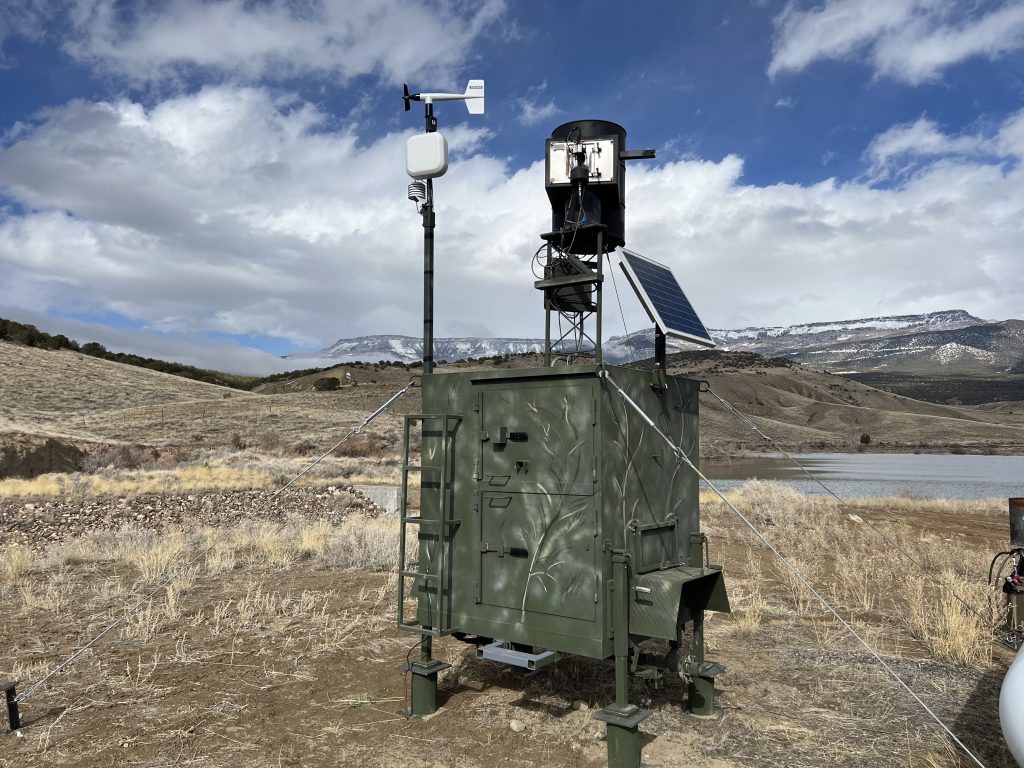
Colorado Water Conservation Board/Courtesy photo
Colorado’s weather modification program is seeing an increased interest in cloud-seeding technology after the record-low snowpack this past winter.
In the past couple of weeks, Weather Modification Program Manager Andrew Rickert said he’s received inquiries from two major ski resorts hoping to learn more about cloud seeding, which can increase the amount of snowfall a storm drops.
“After a year like this, it makes sense that these ski resorts are looking for anything they can do to bolster snowpack,” Rickert said. “They’re very interested in seeing what else they can do to get more precipitation.”
Cloud seeding is a weather-modification technique that has been around since 1946. It involves dispersing silver iodide, or other harmless compounds, to serve as nuclei around which ice crystals can form during a storm, Rickert explained. He said cloud-seeding systems can increase a storm’s snowfall by roughly 8-12% when generators are turned on.
The Colorado Water Conservation Board administers the state’s weather-modification program, which issues permits to contractors who operate seven permitted winter cloud-seeding projects, all of which are located on the Western Slope.
Rickert said he believes that dry years like this “are one of the reasons why we need to look into cloud seeding as a measure to get more snow, to get more moisture out of a system.” But he noted that the technology can only do so much when natural snowfall is low.
“Cloud seeding can’t create storms,” he said. “We need storms to be present with the right characteristics — wind speed, wind direction and the presence of super-cooled liquid water — and when all those things are there, then we can seed the storm to get a little bit more out of it.”
Fewer storms to seed
The ability of cloud seeding to add to Colorado’s snowpack was limited this year compared to past years due in large part to the lack of suitable storms that rolled through the state, Rickert said. He noted, however, that the technology still likely added small amounts of extra precipitation to the storms it did seed.
In Colorado, he said all seven wintertime cloud-seeding programs use ground-based generator systems and operate from Nov. 1 to April 15, with contractors able to get an extension to the end of April if conditions allow.
“We can’t just create a storm out of thin air,” he said. “It’s all dependent on how many storms we have through the course of a winter. We can’t do anything during a season like this when we have such a small number of storms.”
Two of the state’s cloud seeding projects — the Central Colorado Mountains River Basins project, which targets the region from about Winter Park to Aspen, and the San Juan Mountains project — are run by Western Weather Consultants, a Durango-based company.
Western Weather Consultants Lead Forecaster and Assistant Manager Mike Hjermstad said that the regions where both of those projects operate saw far fewer storms suitable for cloud seeding this year.
In the central mountains, where there are usually 30 to 40 storms that are suitable for cloud seeding, there were only 20 this season, Hjermstad said. In the San Juan Mountains, there were even fewer storms that were suitable to be seeded. Only about 12 storms rolled through all winter long that could be seeded, he said.
Now that the cloud-seeding season has ended, contractors that run cloud-seeding programs in Colorado are compiling reports on when generators were turned on and how long to estimate how much snow they were able to add to the snowpack.
He said while Western Weather Consultants wasn’t able to do as much cloud seeding this year as in the past, it wasn’t nothing.
“It was totally limited,” he said. “But there is an increase from it, from seeding.”
Potential looking forward
Despite the limited impact this winter, cloud-seeding technology has been rolled out across the West with the goal of adding to the snowpack.
At least nine states currently conduct cloud-seeding operations, including California, Nevada, Idaho, Utah, Wyoming, New Mexico, Texas and North Dakota, according to the Western Governors’ Association.
The Governors’ Association confirmed cloud seeding is a cheap way to boost water supplies. Cloud seeding is able to produce an acre-foot of drinking water for less than $10, compared to the same amount of drinking water costing about $3,000 to produce via desalination, according to the association.
Rickert said that weather modification is often misunderstood, but with the drought conditions that the West has been facing in recent years, the technology could be critical to increasing the region’s water supply.
In a normal winter, he said it could supply “an additional hundreds of thousands of acres of winter.”
“Weather modification is the only way to actually add physical water to a system,” he added. “When ski resorts are making snow, they’re pulling water from our lakes, streams and rivers to do that. This just uses our silver iodine solution to add snow. It’s the only way to actually add water to a basin, which I believe is a huge benefit.”


Nearly 2,000 ski instructors have joined lawsuit against Vail Resorts so far; opt-in deadline is Wednesday
Consent forms filed in federal court on Friday show that nearly 2,000 ski and snowboard instructors have joined a collective action against Vail Resorts, alleging Fair Labor Standards Act lawsuit against the company.