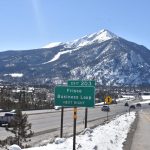
Basalt Municipal Election Candidates speak on issues 2 weeks to election
Election on Tuesday, April 7

Basalt voters will be asked to select three of the four candidates for town council in the upcoming Municipal Election on April 7.
Earlier in March, candidates made their cases in a forum to Basalt voters where they were able to introduce themselves to the community and introduce their positions.
The four candidates are Greg Shaffran, Elyse Hottel, Benjamin Fierstein and Angela Anderson.
All are long-time Basalt residents who expressed a deep interest in seeing their community succeed in the candidate’s forum.
Anderson currently serves on Basalt Town Council and is seeking re-election. Hottel has previously served on town council but did not seek re-election immediately due to possible housing movement pushing her out of Basalt — she has since found long-term housing in the town.
Fierstein has worked in Basalt as a civil engineer and has served on Basalt’s Planning and Zoning board. Shaffran has worked in a range of positions in the Roaring Fork Valley, including a consistent volunteer position with Mountain Rescue Aspen, and has served as the president of his Homeowner’s Association since 2021.
The Aspen Times asked each candidate questions about a range of issues facing the town of Basalt — building codes, community space, regional collaboration and affordable housing. Below are the two issues that had the most variety of opinions from the candidates; more details on each candidate’s background and general positions can be found from past Aspen Times reporting on the candidate’s forum.
Electric building code
The four candidates will likely address a commitment the town council previously made, in 2022, to adopt an all-electric building code by 2025. Recent discussion has focused on potential code that would mandate that new construction be serviced by electric utilities, forgoing gas power as a residential utility.
Shaffran said that he was supportive of programs that would incentivize electric construction, perhaps with rebates, but cautioned against limiting the choice of residential builders to build their homes with gas utilities.
“I think there’s ways to achieve some of these goals kind of with incentives, but some people are going to want to have gas, and so I’m not on the side of forcing people one way or the other,” Shaffran said.
Hottel noted that she was supportive of electric building codes and added, as a disclosure, that she is a board member for the Community Office for Resource Efficiency, which focuses on reducing greenhouse gas production. She added that electric utilities can improve indoor air quality — the Colorado Department of Energy has noted that gas stoves can lead to buildup of gases in the air that are harmful to human health.
Hottel did stress the need for resiliency to be considered in any code change, noting that natural disasters like fires can knock out electric grids. To address this, she would like to see a plan for grid resiliency and backup power in the case of natural disasters.
“One of my biggest concerns about going to an all‑electric code is resiliency,” Hottel said. “Could (a wildfire) take out our electrical infrastructure? Sure. Before I could get 100% on board with an all-electric building code, I would want to understand what our resiliency opportunities are.”
Fierstein acknowledged the history and added that Basalt has a further commitment to meet 2026 state standards but stressed the need to be cognizant of energy provider’s ability to meet demand if it were to increase faster than they could supply.
“What we have learned is that when you hitch your wagon to one single provider and one single source of energy, limitations and capacity can be a potential issue,” Fierstein said. “I don’t want that to happen to Basalt.”
Anderson was initially supportive of an electric building code when it was brought up in late-2025 during public comment discussion. However, since then, she has said that she would like to learn more about the potential pitfalls of an all-electric building code after hearing concerns from fellow councilors. Anderson told The Aspen Times that, with regard to electric building code, she is in an information gathering stage and would like to hear more from the Basalt Building Department and from Basalt residents to hear more about benefits and drawbacks of potential code amendments.
“I want to hear from builders, I want to hear from people who have all‑electric homes,” she said.
Affordable housing
Basalt Town Council recently passed a code change that opens up more of the town to the development of Accessory Dwelling Units, or self-contained accessory units built on current lots that could house additional occupants. Despite most of Basalt now being ADU-developable, homeowner’s associations present an additional obstacle to their development, as many of them forbid ADU construction due to parking and density concerns.
All four candidates agreed that the town council should not seek to force any ADU-policy changes on homeowner’s associations but can seek to encourage policy changes through robust education on the benefits and drawbacks of ADUs in Basalt neighborhoods.
Among incoming actionable affordable housing projects that the town can take on is “Parcel 2E,” which is a town-owned vacant lot south of The Arts Campus at Willits’ building.
A recent presentation by Design Workshop on the lot revealed a couple of proposals, including between 38 to 44 affordable housing units and a possible community space. The next town council may be faced with decisions about the parcel’s use and development direction.
Shaffran and Fierstein were both enthusiastic about the community space and housing density elements, highlighting the potential for broad age-ranges to make use of the space alongside increasing housing availability and improving neighborhood character.
“Something certainly needs to go there,” Fierstein said. “To get something that has 40-something units, while that’s certainly dense in that area, helps to be a part of this plan moving forward of creating inventory within our community.”
Hottel saw the space as a rare opportunity for Basalt to have a direct impact on housing stock as buildable land increasingly is developed, and stressed the importance of creating a good plan and executing it.
“I would imagine, in four years, we’ll probably break ground as well and start building it out,” Hottel said. “But for sure, (we need to) zero in on what exact programming looks like while we’re conscientious about the fact that buildable land is at a premium.”
Anderson was concerned about the cost to build out the parcel and said she would want affordable housing initiatives to be more “development neutral,” with deed restriction buy-downs and other strategies that don’t build out limited vacant land.
“I would prefer that we look into development neutral solution, rather than saying, ‘Let’s just build a gigantic, affordable housing complex,'” Anderson said.
She added that the town should look toward the “Pitchview” rugby field development as a pilot project to gauge the success of developing a town-owned vacant lot before committing to anything on 2E.
For more information on the upcoming election, visit basalt.net/732/April-2026-Election.
For more from the candidates themselves, see the complete recording of the candidate forum at youtube.com/watch?v=EE_r0_SBVuI.
Sale, repair bikes not allowed in Aspen’s Right of Way
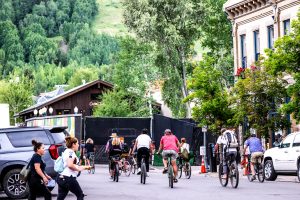
The city of Aspen’s Community Development and Engineering staff will communicate this spring to bike shops that for sale and repair fleets are not allowed in the Right of Way.