Western Slope towns are posting fewer jobs. Here’s what it means for Colorado mountain communities.
Colorado ski towns posted fewer second-quarter jobs compared to 2025, but business experts say it points to a stabilizing workforce

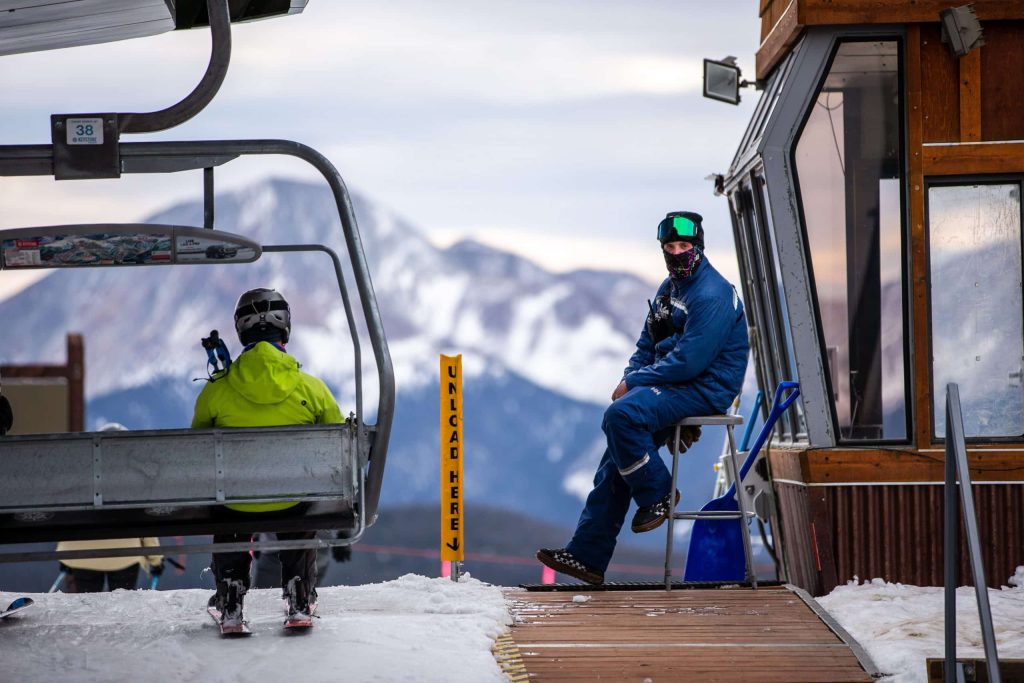
Vail Daily archive photo
The Western Slope’s second-quarter job postings are in the red, with fewer employers hiring for vacant positions compared to last year despite recent quarter-over-quarter growth. Business experts say this could signal the region’s recovery from pandemic-era turnover.
A Colorado jobs report for the months of April, May and June, released by the Colorado Chamber Foundation and Aspen Technology Labs, shows that Western Slope markets drove the state’s quarter-over-quarter momentum in job postings as recreation hiring picked up ahead of the winter ski season.
Although many of those same mountain communities reported negative growth in job postings compared to last year, local business experts say it could be a sign of a stabilizing workforce.
Colorado had 127,508 active job postings in June, up 1.5% from June 2025 and 1.1% from March 2026. The state’s median advertised full-time salary also reached $67,590 in June, up 4.4% from last year and $5,356 above the U.S. median.
Rachel Beck, executive director of the Colorado Chamber Foundation, said Colorado’s return to growth in job postings is an encouraging sign for the state economy, underscoring the importance of strengthening local talent pipelines.
Colorado’s outdoor recreation sector emerged as an industry spotlight in the report. A selected sample of 50 outdoor recreation employers posted 1,580 openings in June, up 17.3% year-over-year. Demand was concentrated in resort communities including Aspen, Vail and Keystone.
Aspen’s 307 second-quarter job postings in outdoor recreation marked a 184% increase from 2025 — the largest increase in the state. Vail had the second-largest job growth in the sector, posting 18% more jobs than last year.
“Hiring typically begins to accelerate in late summer as resorts prepare for the winter season, making the June increase an early indicator of stronger seasonal staffing demand,” the report states.
The increase in job postings in Colorado’s recreation sector was largely tied to hospitality, with food and beverage roles making up 40% of postings, according to the report. Lodging and guest services made up 16% of open positions and recreation-specific roles accounted for 8%.
Some ski towns see year-over-year drops in job postings
While Western Slope towns recorded the largest quarter-over-quarter job posting increases in the state when looking at all sectors — with Montrose growing by 21.5%, Grand Junction by 18.9% and Durango by 15.9% — year-over-year changes paint a different picture for some mountain communities.
Edwards, Breckenridge, Steamboat Springs and Rifle all recorded fewer overall job postings compared to the second quarter of 2025. Edwards and Breckenridge saw 7.9% and 7.5% drops, respectively, while Steamboat Springs had 3.7% fewer job postings and Rifle lost 2.8%.
Meanwhile, Denver, which accounts for more than half of the state’s job postings, rose 2%.
“Overall, Colorado’s job market showed encouraging signs of a rebound in the second quarter, but we are continuing to track soft spots in some of our mountain communities, where job postings remain below last year’s levels,” Beck said. “At the same time, we were encouraged to see outdoor recreation job postings increase 17.3% year-over-year, which could point to stronger hiring activity for mountain communities heading into the third quarter.”
Chris Romer, president and CEO of Vail Valley Partnership, said the year-over-year job posting losses aren’t as red of a flag as the colors may suggest in the data. Romer said his conversations with business leaders in Eagle County support the idea that lower job turnover is leading to a more stabilized market, rather than a loss of actual jobs.
“It’s not that there’s fewer jobs, it’s that people aren’t leaving their jobs with the frequency that they were before,” Romer said. “In the years after the pandemic, people were leaving jobs … leaving the mountains for lower-cost-of-living places, and I think it has really stabilized. That’s what the data shows me.”
Romer said he hasn’t seen any data that would suggest Eagle County is losing jobs, though that doesn’t mean the region isn’t facing challenges with finding local talent to fill those positions.
“The labor force is still the same or growing; the difference is that more people are staying in their jobs,” he said. “That’s what I’m hearing from people in hospitality and retail.”
Changes to full-time salaries were more of a mixed bag. The majority of Western Slope towns identified in the report saw modest quarter-over-quarter losses in median full-time salaries, ranging from a 3.3% decrease in Rifle with a median salary of $54,080 to a 0.7% decrease in Breckenridge for a $58,864 salary.
Compared to 2025, however, Breckenridge’s median full-time salary saw a notable 8.9% increase — standing out against Edwards’s 0% change and Rifle’s 3.7% decrease.
While job postings are picking up for the recreation sector, Romer said it’s too early to tell how the past winter’s poor snow conditions will impact overall hiring at ski resorts on the Western Slope. Forecasts for winter 2026-27 suggest the Western Slope region has equal chances of seeing above- or below-average snowfall, though it will most likely be more than what the state saw last winter.
“Last year, [resorts] tried and did everything they could to hang on to their year-round people,” Romer said. “They cut hours or just didn’t bring on [employees], or they let go of their seasonal people. … That’ll be the big question: Are they bringing on their part-time and seasonal folks at the same levels they have in the past?”
Romer said that although hiring for the winter season begins as early as June, the process kicks up during October and November, which will provide a better indication of whether resorts will be slower to hire as they recover from last year’s lost tourism.
“The October timeframe is really the bellwether of how people are feeling about the winter season. … No one’s talking about it on Labor Day, they’re still focused on summer,” he said.


Climber dies in Maroon Bells area
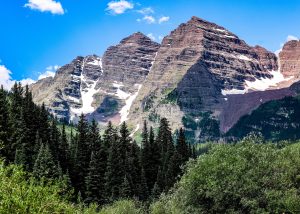
A climber who was reported missing earlier this week was found dead Thursday morning in the Maroon Bells area by Mountain Rescue Aspen.