Leaves are starting to turn in Colorado’s High Country, but experts say this year’s fall peak won’t be as vibrant as most
A look into how drought might impact fall foliage and when colors could peak

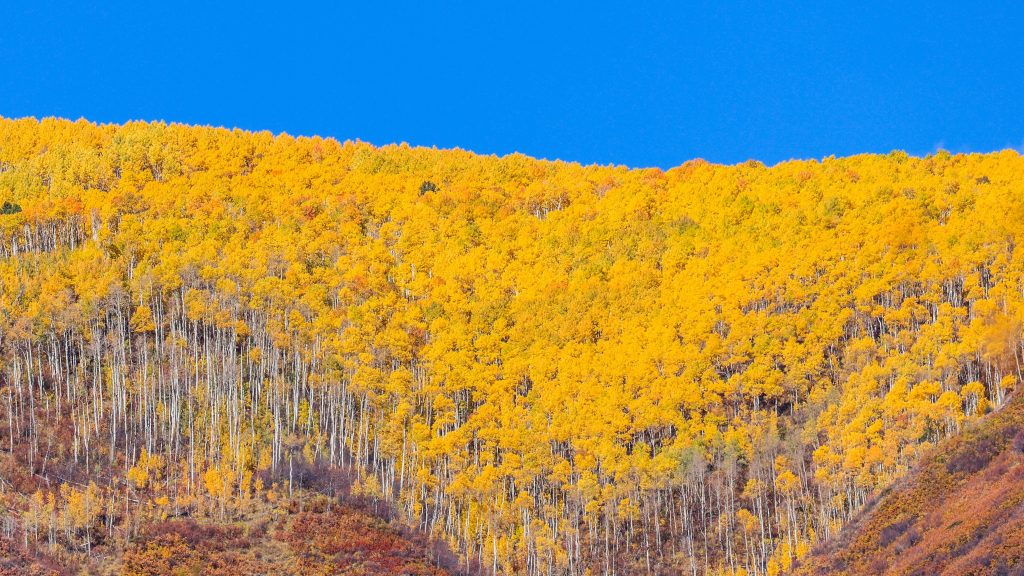
Austin Colbert/The Aspen Times
In Colorado’s High Country, leaves are starting to change color and pepper the ground — a sure sign of not only the changing seasons, but also the ongoing drought crisis.
While some experts still say it’s a little too early to tell how this year’s fall peak will turn out, many agree it’s likely to be impacted by the past year’s hot and dry conditions in some way.
“It’s still a bit early to have a clear picture of what this year’s fall colors will look like across Colorado,” said Dan West, forest entomologist with Colorado State Forest Service, in an email. “Aspen color change varies considerably from one region to another and is influenced by local weather, elevation and moisture conditions throughout the growing season.”
Will drought impact fall foliage?
Alan Smith, a meteorologist at OpenSnow, wrote in a blog post that while the timing and vibrancy of turning trees can be “tricky to nail down,” there are some climate patterns that can help bolster predictions.
Leaves tend to turn earlier than normal when there are “drought conditions and below-average late-summer rainfall, earlier-than-average spring leaf-out and below-average early fall temperatures,” Smith wrote, adding that the inverse is true for years that see fall foliage later than normal.
The most vibrant fall colors typically come in years with “wet or non-drought conditions during the spring, near-normal or slightly above normal mid- to late-summer rainfall, and warm, sunny days and cool nights during the fall.”
In Colorado, the past year’s dismal snowpack, extreme heat — which has continued to smash records — and drier-than-normal conditions are likely to bring an early fall peak and less vibrant colors. While monsoonal moisture has begun to emerge across Colorado’s mountains, precipitation has still been below normal in the late summer, doing little to reverse the worst of the drought conditions.
“Areas with extreme to exceptional drought, such as Colorado and New Mexico, may experience a less vibrant fall foliage season than usual, though there will still be good color to be found,” Smith wrote.
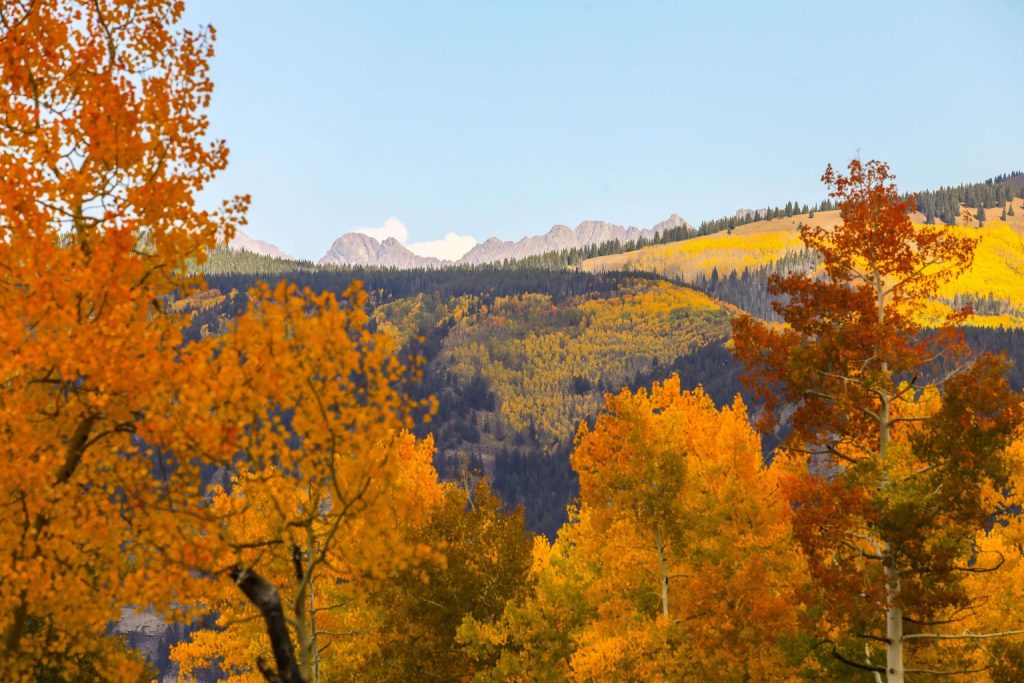
He wrote that while sometimes “above-average summer and early fall warmth,” consistent with what Colorado has experienced, “can often act to delay fall foliage,” this will likely not be as much of a factor for areas like the Colorado Rocky Mountains “that are already under excessive drought.”
Nearly 94% of Colorado is currently experiencing some drought conditions, with nearly 44% of the state in extreme or exceptional drought — the two worst conditions measured by the U.S. Drought Monitor — according to the latest Sept. 3 report. These conditions have existed for much of the year in many regions, including on the Western Slope, which has seen drought conditions persevere and deepen since the start of the water year on Oct. 1, 2025.
West added that the drought conditions add “another layer of uncertainty.”
“In many areas, we’re already seeing signs of moisture stress, including smaller-than-normal leaves and browning along the leaf margins compared to what we would typically expect in a year with adequate precipitation and cooler summer temperatures,” he said.
When will Colorado’s trees turn this fall?
According to Smith, this drought and below-average rain in late summer means Colorado “will likely see an earlier-than-normal leaf change this year since the leaves are already stressed from the lack of moisture, and they also leafed out much earlier than normal in the spring.”
In terms of timing, West said that the next few weeks will bring “a much better understanding, as temperatures cool and trees respond to the conditions they’ve experienced throughout the summer,” but that in general, he expects “most of the central portions of Colorado [to] be in peak near the end of September and early October.”
Northern areas and higher elevations turn the earliest, with trees progressively turning color over the subsequent weeks as you move both south and into lower elevations.
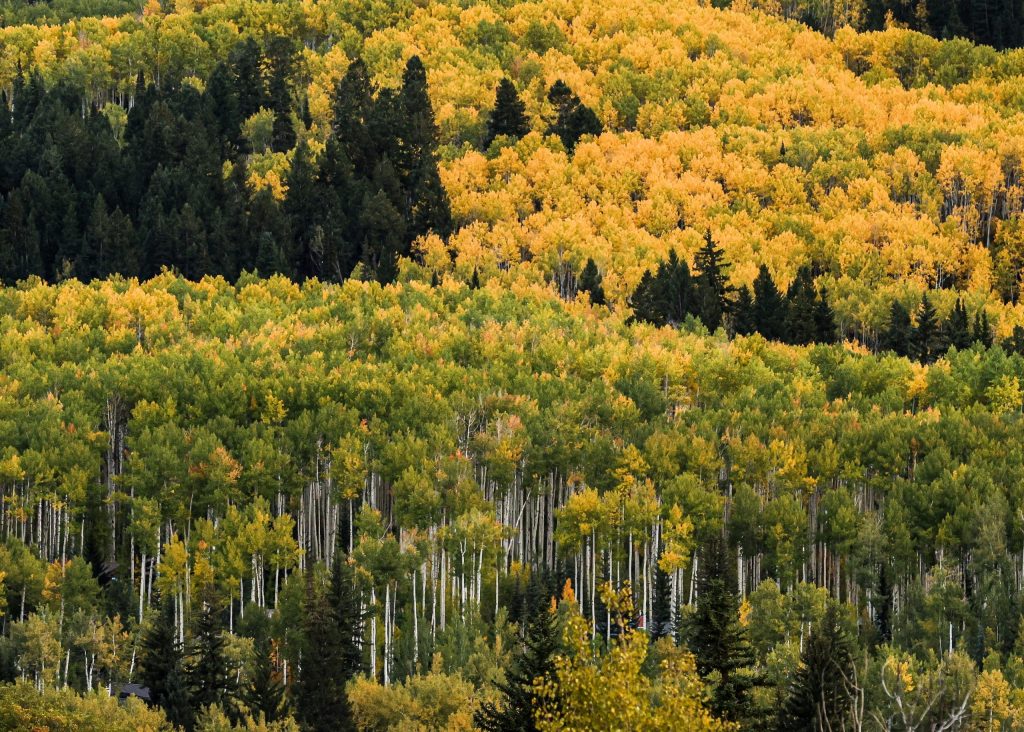
Seth Linden, an atmospheric scientist with the National Center for Atmospheric Research and founder of “Seth’s Weather Report” Facebook group, wrote in a Sept. 3 blog post that across Colorado “you can’t go wrong in the Sept.16-30 timeframe.”
Linden’s forecast predicts that the north-central mountains will see areas like Summit County and Rocky Mountain National Park start to peak between Sept. 14-28, with mountain regions further west, including Vail, Steamboat Springs and Glenwood Springs, seeing peak colors from Sept. 20-Oct. 4. He predicted that the forests just south, including areas around Aspen and Crested Butte, will similarly peak around Sept. 18-Oct. 1. Heading further south, Linden forecasts that Telluride and the San Juan Mountains are likely to see full fall colors starting Sept. 22 through Oct. 6.
OpenSnow’s fall colors map predicts that with lower color starting in some Colorado mountain regions over Labor Day Weekend, areas in the central part of the state and some northern reaches will see the first peak color starting Sept. 27. By Oct. 4, the map estimates that some higher elevation areas will be past peak color, with other lower-elevation mountain areas hitting their most colorful that week.
How will this year’s color display compare?
When it comes to colors, while Colorado will still likely see a range of yellows, oranges and reds, the drought-stressed trees may also lead to a “less vibrant fall color season,” according to Sam Collentine, OpenSnow’s chief operating officer.
“While some stands may still develop vibrant fall color, others experiencing prolonged moisture stress could see leaves change more quickly, display less intense color or drop earlier than usual,” West said but cautioned that “at this point, it’s simply too soon to predict how those patterns will play out across the state.”
“For now, we’re letting Mother Nature take the lead before making any broad predictions about this year’s display,” he added.

Climber dies in Maroon Bells area
A climber who was reported missing earlier this week was found dead Thursday morning in the Maroon Bells area by Mountain Rescue Aspen.