Q&A: Meet the candidates running to represent Colorado House District 57
Incumbent Elizabeth Velasco and Russ Andrews are facing off in the Nov. 3 midterm election

Staff report Follow
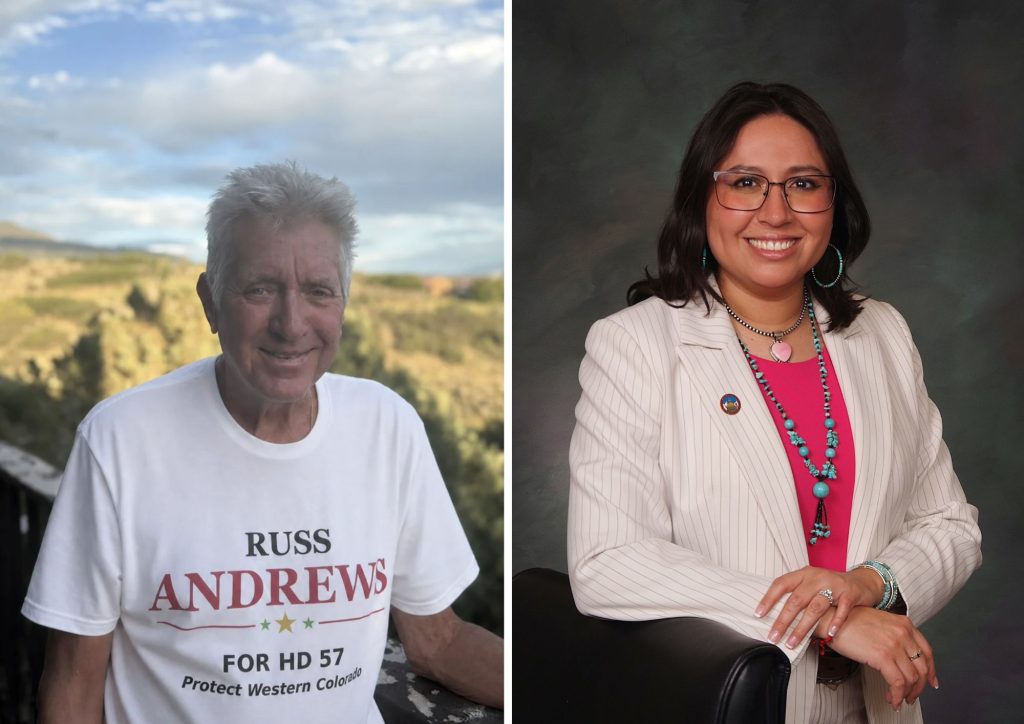
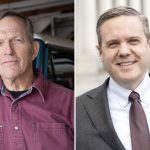
Courtesy photos
Democratic incumbent Rep. Elizabeth Velasco is running against Republican Russ Andrews in the Nov. 3 election for Colorado’s House District 57. The Aspen Times asked each candidate five questions about some of the key issues facing the district.
Question 1: What would you say is the most significant challenge faced by residents in your district, and how would you approach a solution?
Velasco: Wealth inequality is our community’s greatest challenge, and working families feel it every day in the cost of living. Aspen is home to extraordinary wealth, but the people who live here year-round and power our economy are struggling, making daily tradeoffs like skipping care, buying less food and commuting further for work.
Decades of policy choices have favored corporations and the ultra wealthy and that is why I am committed to fighting for policies that uplift our most vulnerable neighbors first and make the wealthy pay their fair share. I have and will continue to sponsor legislation like a tax on second homes, removing the Telluride decision allowing for rent control, fighting for workers’ rights and advocating for Amendment 87 on your ballot this year, which would lower taxes for 97% of us and make those who make over $500,000 a year pay a little bit more.
Andrews: Cost of living is our most significant challenge: building a life here and affording to stay. Our media backgrounder estimates that living costs in House District 57 rose approximately 32% from 2020-2026. I believe Biden’s spending and border policies worsened affordability pressures.
My priority is reducing costs state government can control. The Colorado Chamber ranks Colorado sixth nationally for business regulatory restrictions. I would scrutinize taxes, fees and regulations, support predictable property-tax relief and oppose new spending without sustainable funding.
On housing, I would support faster permitting for locally approved projects and eliminate state requirements that add costs without clear benefits. Partnerships among communities, employers and builders can help create housing for year-round residents, with realistic water and infrastructure plans.
Government should protect taxpayers and deliver essential services efficiently. My test for legislation is simple: Does it make life more affordable, and does its value justify the cost to families and businesses?
Question 2: The Colorado River system is under unprecedented strain following one of the lowest snowpacks on record in the Rockies. What role should the state play in balancing Front Range demand for water with the needs of Western Slope communities, agriculture and the environment?
Velasco: HD57 is made up of headwaters communities, where reliable water is an essential part of our daily life as well as our agriculture and outdoor recreation economy and culture.
We are experiencing one of the worst droughts on record. The state must treat conservation as a shared responsibility. Front Range demand cannot sustainably be balanced by Western Slope agriculture and rivers. That is why I joined a bipartisan group of legislators calling for conservation on both sides of the Continental Divide and a meaningful role for local water organizations.
The state should invest in water infrastructure, drought planning and water-conscious land use, while enforcing conservation expectations consistently. I’m currently working on a statewide moratorium on data centers while Colorado develops safeguards that consider issues like total water use, not just “closed loop” labels. And I will introduce legislation recognizing clean water and a healthy environment as rights in our constitution.
Andrews: The state should defend Colorado’s water rights and ensure that Western Slope communities have a meaningful role in decisions about their future. I would insist that conservation responsibilities be shared fairly across regions and water users.
We currently send 180 billion gallons of water to the Front Range; I say not a single drop more! Growth there should come with credible water-supply planning, conservation and reuse where appropriate. I would oppose treating the permanent drying of agricultural land as the default solution to growing municipal demand.
I would support voluntary, compensated water-sharing agreements that protect participating producers and rural economies. State investments should also address watershed health, river habitat, and infrastructure where benefits justify the costs.
Any proposed diversion or supply project should demonstrate dependable water availability, disclose effects on existing users and river health, and identify who pays. We need enforceable commitments and realistic planning.
Question 3: Property values in your district’s mountain communities have risen rapidly over the last several years. What policies would you support to protect property owners from rising tax bills while ensuring local governments have enough revenue to provide essential services?
Velasco: I believe property tax relief that helps people stay in their homes without cutting the services our communities depend on is only one piece of the puzzle. We need to address the other costs making it harder for working people to live here, especially insurance and the loss of housing to second homes and short-term rentals.
This year, I passed legislation giving mobile home owners more time and stronger notice protections when they fall behind on property taxes. I sponsored legislation that would’ve allowed local voters to tax vacant homes and dedicate that revenue to affordable & workforce housing. I support giving communities flexibility to manage short-term rentals based on local housing needs. And in wildfire-prone communities, we have to lower insurance pressures by investing in mitigation and expanding access to coverage. The goal is to make it possible for the people who live and work here year-round to stay here.
Andrews: A higher home valuation does not necessarily mean a homeowner has more income. I would support predictable limits on property-tax revenue growth, targeted relief for homeowners with limited incomes and a straightforward assessment-appeal process.
At the same time, schools, fire districts, and emergency responders need dependable funding. I would require a district-by-district fiscal analysis before supporting changes to assessment rates or exemptions, rather than making promises without identifying the consequences.
Where relief would undermine essential services, I would support targeted replacement funding only with an identified, sustainable state funding source. Local governments seeking additional revenue should clearly explain the need and respect voter approval requirements.
The goal is durable relief that lets people remain in their homes while preserving essential services and avoiding cost shifts onto other taxpayers.
Question 4: Medicaid bore the brunt of the state’s roughly $1 billion shortfall in the state’s 2026-27 budget. As a state lawmaker, how would you work to balance spending on state programs and prioritize crucial services for Coloradans?
Velasco: I’m very worried about next year’s budget cuts and who it will harm most. That is why I keep supporting Amendment 87, which would create new revenue for healthcare, childcare and education from a small tax increase on those earning more than $500,000 a year — creating space in the budget to protect other essential services.
I will fight to protect affordable healthcare programs serving people with the fewest coverage options, because losing that care can increase uncompensated emergency costs across our health system. And push for our state dollars to be spent on direct care, while requiring the Department of Healthcare Policy and Financing to show they pursued all reasonable vendor and administrative savings before cutting services. Our budget should reflect the Colorado we want to build, and I do not believe our poorest should absorb disproportionate cuts while areas like private-prison reimbursement rates continue receiving new investments.
Andrews: Colorado has created 167 new spending programs under Gov. Jared Polis, and employs one state worker for every 40 residents. Reducing staffing through attrition by nine percent over two years could save an estimated $1.045 billion annually.*
I would protect education, public safety, essential infrastructure and care for vulnerable Coloradans, while scrutinizing administrative spending, overlapping programs and ineffective contracts before cutting frontline services.
Medicaid needs stronger oversight of improper payments, simpler administration and transparent reporting on costs and access. Provider-payment cuts deserve scrutiny for their effects on rural hospitals, clinics and appointments. Eligible patients should not lose care through avoidable paperwork problems.
Every program must demonstrate results, and new commitments need sustainable funding. Eliminating waste alone may not close the budget gap. Lawmakers must set priorities, publish credible savings estimates and explain who would be affected.
*Estimated based on 13,400 assumed retirements over 2 years, or 6,700 per year, 149,000 assumed state employees and $78,0000 assumed annual cost per position.
Question 5: What do you think Colorado could be doing differently to reduce the risk posed by wildfires and post-fire flooding in mountain communities, and how should the state pay for it?
Velasco: Wildfire risk has become a part of daily life in our communities, and as a former wildland firefighter and chair of the Wildfire Matters Committee, I have been focused on working through this collaboratively and addressing the many intersections that come with mitigation, healthy forests, preparedness and recovery.
The cost of disasters will keep rising if we only pay after they happen. Colorado should invest earlier in forest health, watershed restoration, resilient infrastructure and local fire districts, especially as the state is already backfilling lost federal disaster-mitigation funding. I support Proposition 137 on our ballot this year, which would allocate funds specifically for fire mitigation.
And I recognize that a huge reason for these increasing natural disasters is caused by climate change, which is why I believe in holding big polluters accountable and protecting our natural resources.
Andrews: Colorado should make prevention and preparedness dependable budget priorities. I would support coordinated work across state, federal and private lands, including appropriate thinning, carefully managed prescribed burns, defensible space and measures that make homes more resistant to ignition.
Projects protecting homes, evacuation routes and drinking-water sources should receive priority. After a fire, damaged watersheds can create flooding and debris-flow hazards, so planning should include rapid assessments, drainage improvements and reliable public warnings.
I would fund this work by prioritizing mitigation within the existing state budget, pursuing available federal support and sharing appropriate costs with participating local governments and water providers. State assistance should account for smaller communities’ limited ability to provide matching funds.
Funding should follow demonstrated risk, with public reporting on completed work and ongoing maintenance.
Ballots for the Nov. 3 Colorado midterm were mailed to voters starting Friday, Oct. 2. To check your voter registration status, visit GoVoteColorado.gov.


Halloween pumpkins could be a problem for Aspen bears
This spooky season, bears don’t need an invitation to trick or treat.