Utah passenger rail advocates join Colorado in push for ski trains ahead of 2034 Olympics
David O. Williams/Vail Daily
It wasn’t long after Russia hosted the approximately $50 billion Sochi Winter Olympics in 2014 — which included a $9 billion high-speed train and road from the seaside city to the ski areas — that former Colorado Gov. Dick Lamm did a bit of a 180 on the idea of ever hosting the games.
The late Lamm, who was teaching at the University of Denver at the time, said he wouldn’t be opposed to Colorado bidding on the Winter Olympics if it resulted in a massive scaling back of public spending but brought in federal dollars to fix the Interstate 70 bottleneck between Denver and the state’s mountain resorts.
The reversal was remarkable for a man who, as a state representative in the early 1970s, had led the charge to give the games back after the International Olympic Committee had already awarded Denver the 1976 Winter Olympics, with yet-to-be-built Beaver Creek proposed as a key venue for Alpine ski racing.
Lamm was afraid the state’s zoning laws were too weak, environmental regulations would be ignored in the Olympic frenzy, and that the state’s taxpayers would be left holding the bag. Even back in 2014, Lamm still stood by the campaign to oppose the games, which Denver-area voters backed at the polls to become the only city to ever reject the Olympics after being selected.
“We have a bottleneck in Interstate 70 going up to the mountains; it can’t be expanded,” Lamm said in 2014 of proposed 1976 venues stretching from Denver to Steamboat Springs to Beaver Creek. “Just simply the Balkanized nature of the Olympics promised all kinds of logistical problems, but we are a much more sophisticated state at this time. It’s an expense problem, but I think we can engineer our way around that bottleneck.”
At the end of that year, with host cities pulling out left and right in the wake of Sochi’s spending spree, the IOC adopted Olympic Agenda 2020 to emphasize using existing venues, scaling back costs and minimizing environmental impacts. In 2018, based largely on reusing venues for the 2002 Winter Olympics and because of more perceived support from local residents, Utah again landed the Winter Olympics for what wound up being the 2034 Games.
Beaver Creek, while it hosts World Cup ski races every December, didn’t open for another five years after those 1976 Games would have been held, and it is widely considered a testament to high-quality mountain-resort development.
Kathy Heicher, president of the Eagle County Historical Society and a longtime local journalist, remembers landing at the Eagle Valley Enterprise in Eagle as a 22-year-old graduate of Colorado State University and hearing about the 1976 Winter Olympics, an enigmatic legislator named Lamm and a movement that wanted to reject public funding and send the games back to Squaw Valley, which had just hosted in 1960. Heicher wrote an editorial to that effect.
“Boom, in the door comes Arnold Nottingham, who was one of the patriarchs of the Nottingham family … and he said, ‘Well, you don’t know what you’re talking about … we need (the Olympics) and you better get your head on straight,” Heicher recalled. “Well, the Nottinghams were going to sell their land to Vail Associates for the development of Beaver Creek.”
Heicher stuck to her editorial guns with the backing of the paper’s owners despite pressure from local businesses, the chamber of commerce and even Vail’s first newspaper, the Vail Trail, where she wound up working years later. Denver-area voters rejected the Olympics, and they were held instead in Innsbruck, Austria, which had just hosted the games in 1964.
Vail’s role in 2034 Olympics
Vail and Beaver Creek never got their Olympic glory back in the 70s, and some say rejecting the games will make it tough to ever land the Winter Olympics in the future. But the ski conglomerate named for Vail that used to headquarter in Avon, Vail Resorts, will play a prominent role in the 2034 Games as the owner of Park City Mountain Resort.
Vail has had a rough ride in Park City since litigiously acquiring the resort from Powdr Corp. in 2014 after a missed lease payment — from trademark battles to chairlift wars to a devastating holiday ski patrol strike. But in a March interview with the Vail Daily, Vail Resorts CEO Rob Katz promised his company is all in for doing what’s needed in Park City ahead of 2034.
“Obviously, the community there, not just in Park City, but the community in Utah, wanted this event,” Katz said of the upcoming Olympics. “And so we obviously are going to be standing shoulder to shoulder with them to make sure we put on the best possible event. We are still very committed to Park City and to investing money in Park City.”
Base-area redevelopment plans in Utah’s only true ski town, which will be a critical hub for the upcoming games, may be stalled, but Katz said continuing to invest in Park City’s infrastructure is critical for the now Broomfield-based ski company.
“It’s why we reapplied for those two lifts because we do think it’s important,” Katz said. “Now everything has to be done in a way that aligns with where the community is, but community views also shift over time. We need to show we’re ready, willing and able to continue to put money into the community so that you have the mountain, the base area and the infrastructure all in great shape for when we’re going to showcase this entire community to the world.”
CSU associate history professor and author Michael Childers has studied Colorado’s rejection of the 1976 Olympics and written about the consolidation of the ski industry and its impacts on the environment. He grew up a competitive cross-country ski racer in Grand County, Colorado.
“I have this weird relationship with the Olympics. I have written enough on them (that I know) they are an incredibly bad idea when it comes to finances and local economies and the environment and stuff,” Childers said. “Like Sochi is probably the worst example, or maybe Beijing (in 2022), but at the same time, I so wanted to be an Olympian. I love it.”
Childers lauds Vail’s recent outreach to youth-market snow riders with discounted season passes for Gen Z, but he adds an even better way to reach out to younger skiers may be environmentally.
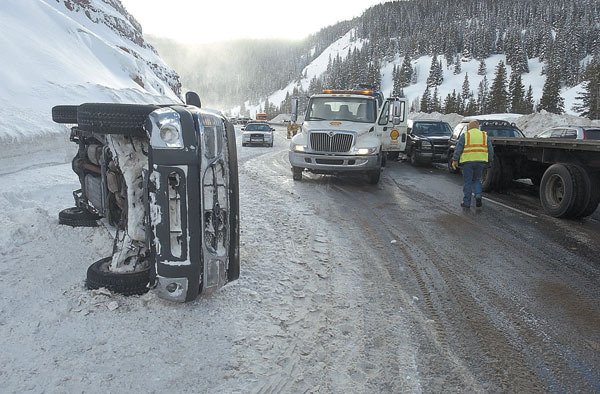
“If they want young kids up there and ostensibly their parents, why aren’t they figuring out some way to fix the transportation issues, get behind a mass transit, train, bus … sort of deal to get people there,” Childers said. “That much car travel, not only is causing a bottleneck in the economy, but just putting how much more carbon into the air?”
Could Olympics boost a ski train?
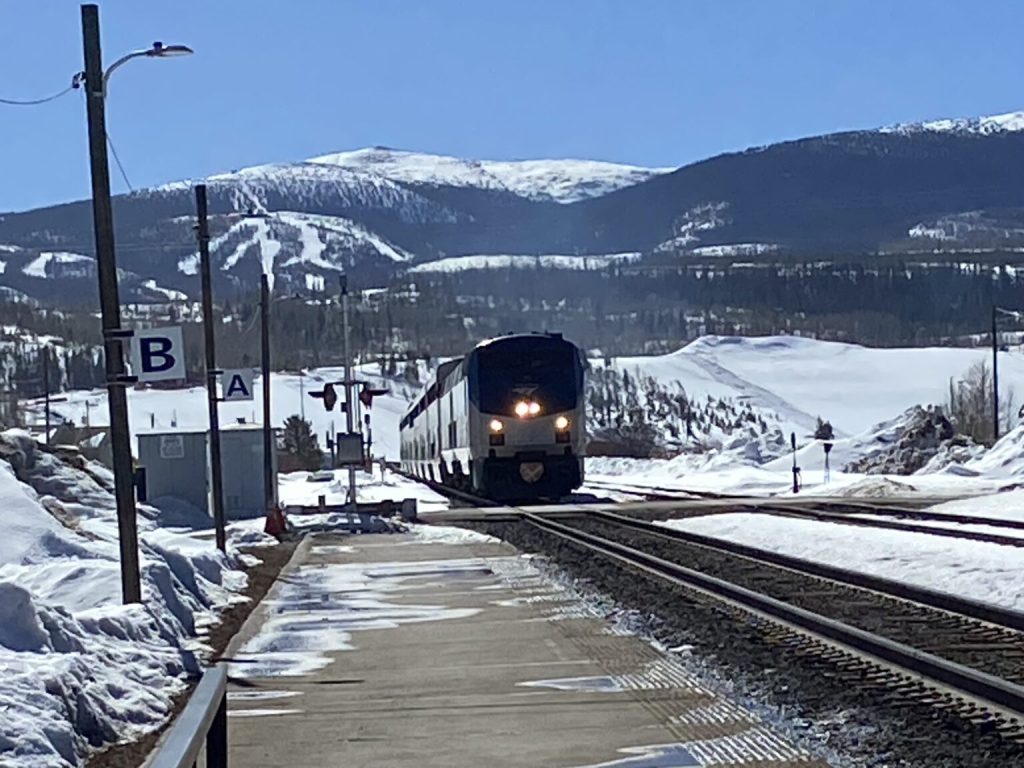
A growing group of young rail advocates in both Colorado and Utah says ski trains should be connecting the nation’s two best ski states by the time the Olympic torch arrives in Salt Lake City in 2034.
“We’re not really participating in the Olympics, but with Salt Lake City getting another shot at the Olympics, one of the obvious opportunities we’re going to have is investing in rail capacity to open up another way to get to the Olympic Games,” said James Flattum, president and co-founder of Greater Denver Transit and a supporter of Colorado’s Western Rail Coalition.
The WRC is pushing hard for a state study of reviving the dormant Tennessee Pass Line through Eagle County between Glenwood Springs and Leadville. But the group also supports both Mountain Rail between Denver and Steamboat Springs, which kicks off its first phase with service to Granby next year, and proposed daily passenger service between Denver and Grand Junction with stops in western Eagle County. That service, he said, is key to an intercity link.
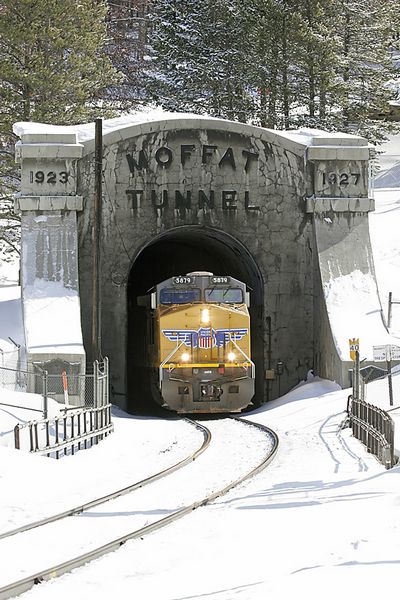
“For two states that are both extremely passionate about recreation, this is going to be a corridor that I would like to be able to take a trip with our partners in Utah over the Moffat (Tunnel) and get to watch the Winter Olympics when they come to Salt Lake,” Flattum said.
Utah passenger rail advocates have joined the Western Rail Coalition and share that vision, but they add it will be a heavier lift with Salt Lake’s lawmakers than it has been with the Colorado Legislature in recent years, which has approved dedicated funding for passenger rail and helped build out robust bus service through the Colorado Department of Transportation.
Mike Christensen, executive director of Utah Rail Passengers Association, said he lived in Germany and gained an appreciation there for public transit to the point of ditching his car 10 years ago in favor of e-biking and taking trains and buses in his hometown of Salt Lake City — something made easier by the 2002 Olympic investment in light rail.
“Fortunately, we’ve made massive investments a bicycle infrastructure here in Salt Lake City that has just made a huge difference,” Christensen said. “We’ve also made a lot of investments in our rail system. But the big problem is we haven’t been making public transit investments beyond the Wasatch Front metro area.”
And that’s where he sees a heavy lift for connecting a ski-train network from Utah to Colorado in time for the 2034 Winter Olympics. The Utah Legislature, he said, has a track record of underfunding existing rail infrastructure and tourism initiatives in favor of extractive industries and “shiny objects” such Advanced Air Mobility (what he calls “flying cars”) and a proposed gondola up Little Cottonwood Canyon he said won’t actually connect to existing mass transit.
In general, Christensen argues Americans have abandoned rail despite its pivotal role in the development of the West because railroad companies are Wall Street conglomerates squeezing out profits instead of focusing on public good.
Asked if he thinks a ski-train network linking Denver and Salt Lake is realistic by 2034, Christensen said, “I think, to quote Winston Churchill, Americans will always do the right thing after they’ve exhausted all the other options.”
Original reporting from vaildaily.com