Aspen Ideas Festival: Journalism’s next chapter
Kimberly Nicoletti Follow
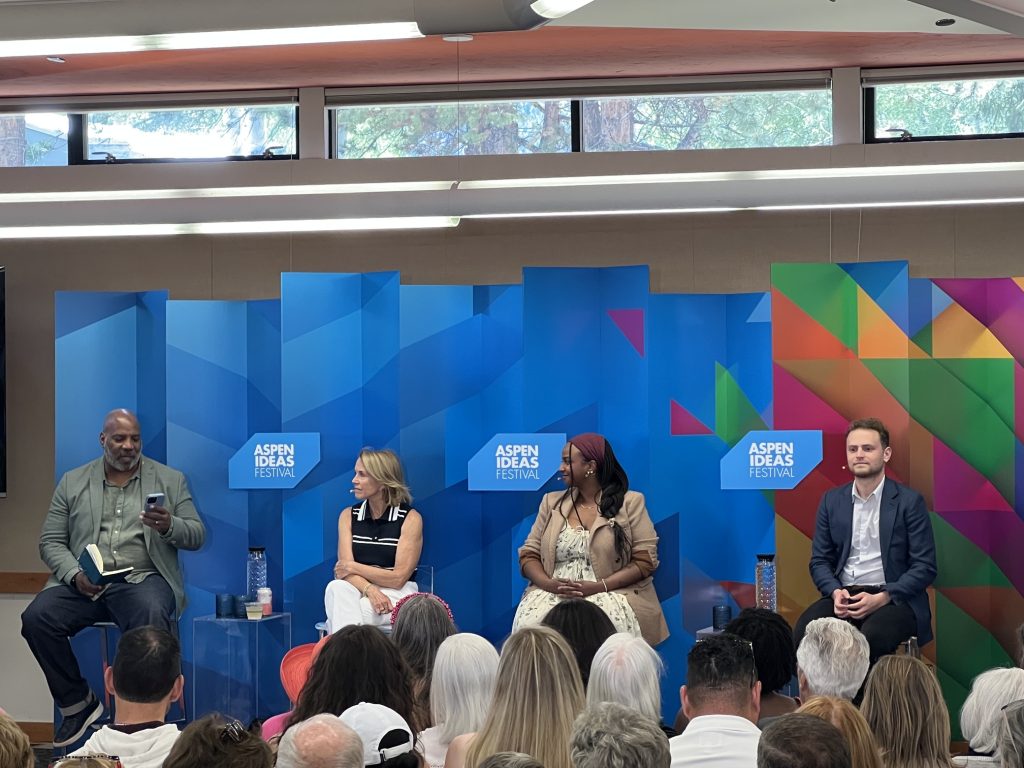
Kimberly Nicoletti/Courtesy photo
In the past two decades, 40% of local newspapers nationwide have folded, leaving approximately 50 million Americans with limited or no access to a reliable source of local news, according to a report by Northwestern University. Fewer than 1,000 daily print newspapers still exist in the United States, and they’re vanishing at a rate of two per week. That leaves one in seven Americans living in a “desert” of news, without local coverage, said Katie Couric, renowned journalist and founder of Katie Couric Media.
“It’s a really horrible situation,” she said Saturday afternoon during a standing-room only session titled Journalism’s Next Chapter at Aspen Ideas in the Koch Building’s Lauder Room, adding that many local and national organizations are trying to address it, but they haven’t quite kept up with the pace of local newspapers’ decline.
Jerusalem Demsas, founder of the online media company The Argument, and Aaron Parnas, an independent journalist, political commentator, strategist and attorney with 5.3 million followers on TikTok, completed the panel, moderated by Jelani Cobb, dean of the Columbia Journalism School.
Parnas pointed out the job losses as a result of local media decline, largely driven by financial pressures and digital shifts.
Viewership data indicates that Americans who still watch traditional television news sources are typically 50 or older, according to the Pew Research Center.
Parnas noted that many young people don’t know where to get accurate information, and that AI can be very dangerous. For example, when he asked AI for a factual photo of President Trump, it generated a false one. He — and the rest of the panelists — support teaching everyone, young and old, where and how to obtain factual information.
The problem often stems from content creators posting information with little or no fact checking, as compared to legacy media, which moved relatively slowly but included employees whose sole jobs involved fact checking before releasing stories to the public. While many digital content creators do meticulously check accuracy, many aren’t so exact.
Parnas approaches his posts as if he were speaking in front of a judge. Yet, stating false information on social media obviously does not carry the consequences of speaking in a court of law. He said there will never be 100% accuracy on social media, which is why consumers should become media literate.
Part of that involves asking why a source is stating what it is and questioning its trustworthiness, Couric said, pointing out that it’s a bit like the Wild West these days, with views coming “left, right and center,” along with mis- and mal-information.
Much of the panel focused on the differences and similarities of legacy media and new media. Couric joked that she’s the “avatar” of legacy media, adding that she got into journalism when “harassed” was two words instead of one (say it aloud, and you’ll get the joke).
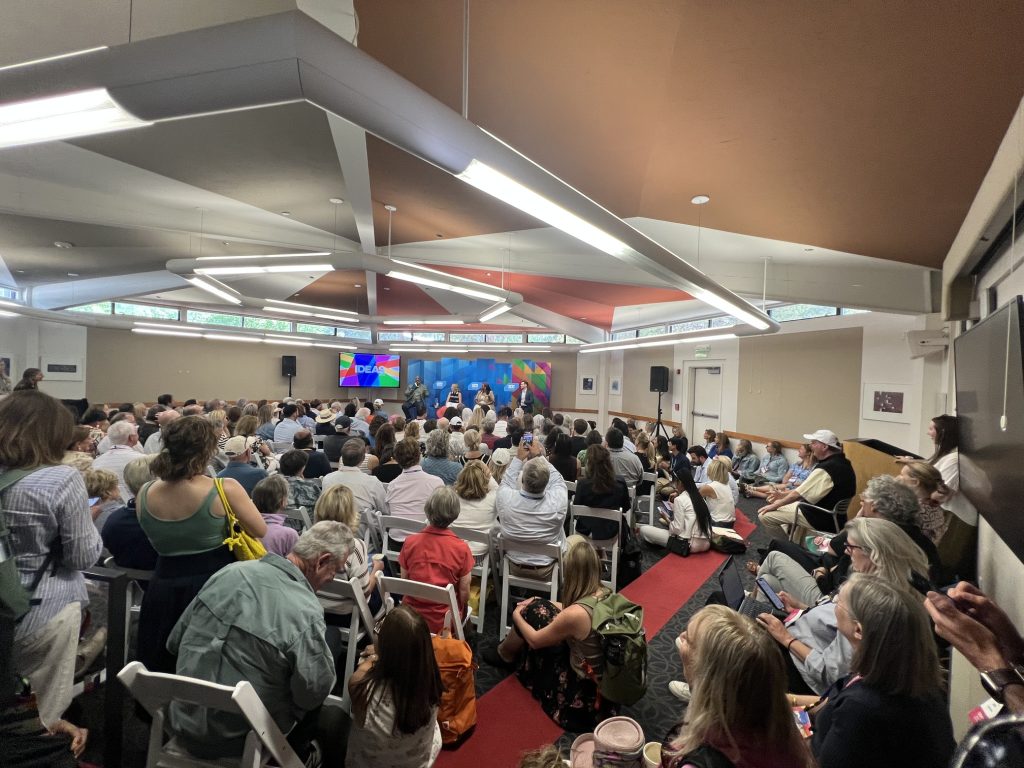
While legacy media refers to traditional, pre-internet forms of mass communication, from television and radio to newspapers and magazines, panelists agreed that just about everything fits into the new media category these days, because even legacy brands are adapting to the way people obtain news in the modern age. For example, traditional newspapers now write “explainers,” or stories about, say, boxing explained, rather than just relying on breaking news — it’s a method they picked up from digital media.
“When you have upcoming generations that get their news digitally, you have to adapt,” Parnas said, pointing out that new media is simply an evolution of the traditional form.
And yet, there was a time when a CBS executive thought it was beneath the outlet to be on Twitter, Couric said, saying there initially was an unwillingness to change their ways, but now legacy media see themselves as dying on the vine, so they must adapt.
New media is challenging the problems that exist in legacy media, such as how slow it can be when multiple editors review a piece before releasing it. New media emphasizes immediacy, Parnas said.
The relationship between legacy and new media has become a symbiotic one, Demsas said, adding that the relationship between the two is often underrated, but that journalists (and other digital influencers) are riffing on ideas that traditional media originally reports.
Clearly, social media is a de-centralizing force, she said, adding that another big shift involves AI — the conversation of which now includes who will be in charge of deciding what “truth” is. As Couric pointed out, what people believe is factual often differs, and they may or may not disseminate information ethically.
And, yet, once society starts restricting speech, “you will restrict free speech,” Parnas said.
Overall, the issue remains complex — and not necessarily well regulated.
“The idea of being an author is very new … society is still grappling with that,” Demsas said.
The ability to create one’s own content has allowed all kinds of people — from those who don’t self-impose strict guidelines regarding disseminating information to highly trained and experienced journalists like Couric — to speak out on topics they believe are important. Couric said she’s much more liberated to speak out on issues she feels need to be brought to light, compared to the overall freedom she experienced working for a network.
“It has re-energized me,” she said. “It’s just really given me a new, second life journalistically that I wouldn’t have had if I stayed in network television.”

Aspen Ideas Festival: Journalism’s next chapter
In the past two decades, 40% of local newspapers nationwide have folded, leaving approximately 50 million Americans with limited or no access to a reliable source of local news, according to a report by Northwestern University.