Changemaker Speaker Series features Albert Lin in: Exploring Human Frontiers
Kimberly Nicoletti Follow
Courtesy photo
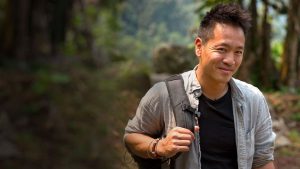
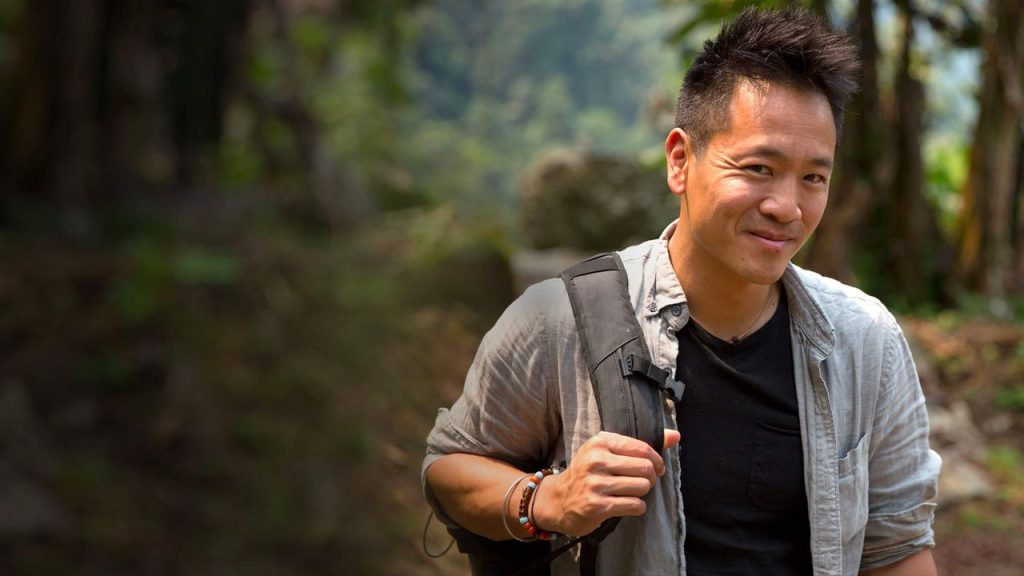
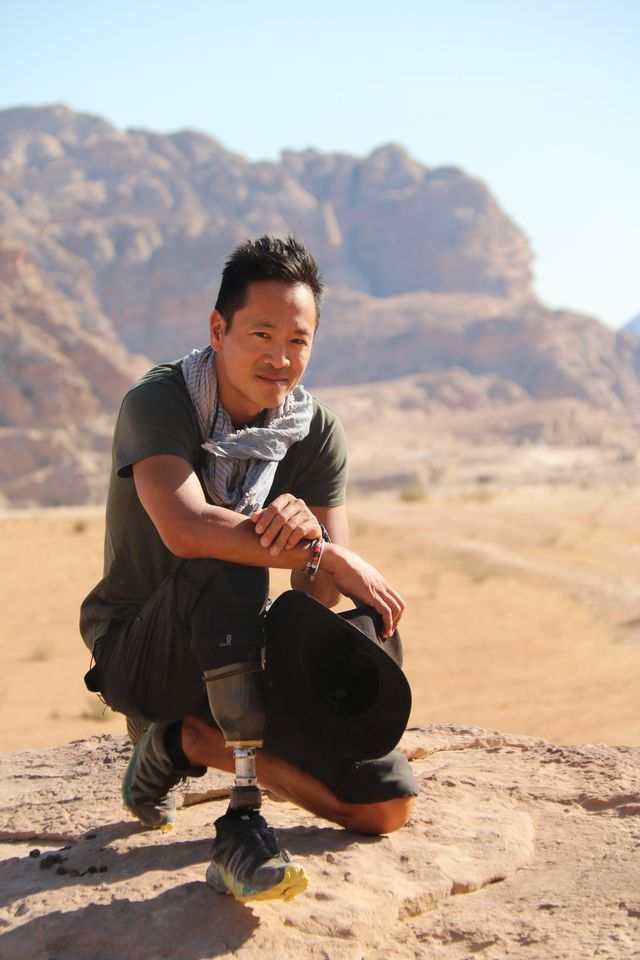
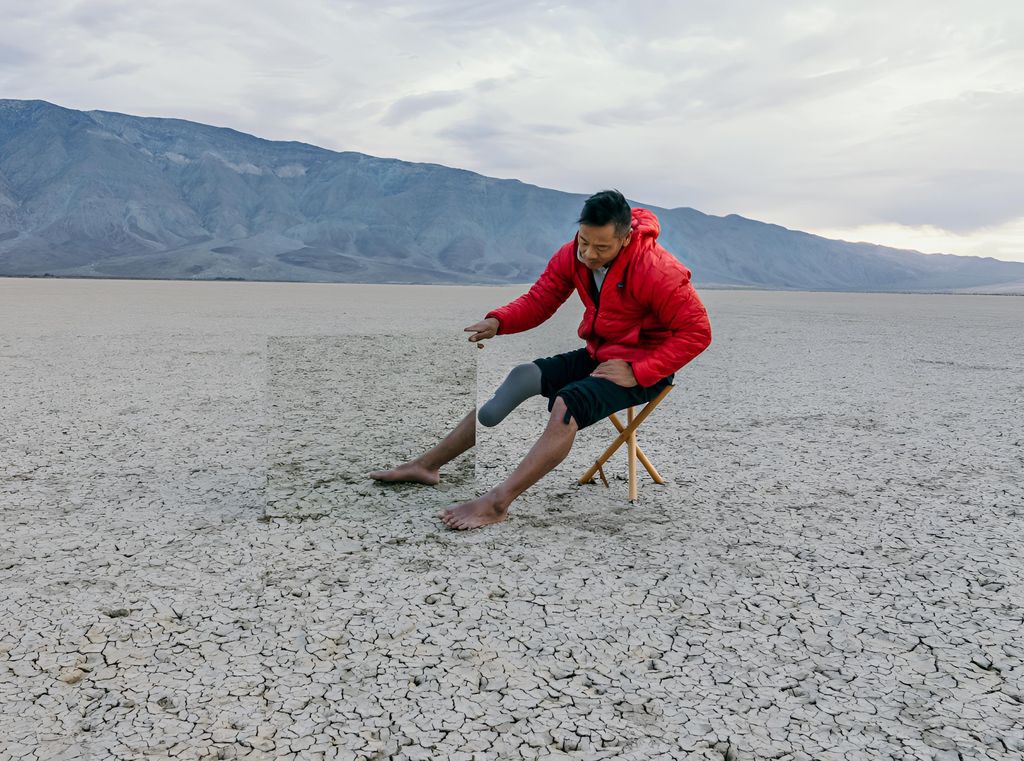
National Geographic Explorer Albert Lin’s academic training as an engineer and scientist stands out in his extraordinary ability to draw from both ancient and modern wisdom. He rewired his brain after suffering severe chronic pain upon losing his lower leg in 2016. He also helped heal his son, who wasn’t able to breathe on his own after a brain injury and now has finished high school with straight A-pluses and is skiing extreme terrain again.
Lin speaks at the Changemaker Series at 7:30 p.m. Sept. 17 at Wheeler Opera House.
Perhaps best known for his “Lost Cities Revealed with Albert Lin” series through National Geographic, in which he employs advanced technology to discover and map out hidden ruins of some of the earliest civilizations, the award-winning scientist merged ancient wisdom with modern neuroscience to heal himself and his son.
While he has spent his life searching for the roots of the ancient past, he has also spent his entire academic career exploring cutting-edge science. As a result, he fuses knowledge from the earliest dawn of civilizations with what he imagines the near future — particularly AI — will bring.
Thursday, he discusses what it means to be human in a rapidly changing world, including the ever-evolving relationship between mind, body, culture and technology. He blends science, storytelling and his own experience to highlight how the most important journeys often begin within oneself.
“I learned very carefully about the process of rewiring my brain. For me, it was do or die,” Lin said. “When I lost my leg, it got really weird. The kinds of things that I was dealing with were beyond where modern science had an answer — things like phantom limb pain and caring for a part of your body that literally doesn’t exist. So when I’ve been looking at things like ancient wisdom, it’s tapping into these questions that might be more esoteric — more in the realm of what it means to be human beyond what we’ve distilled down to modern science alone.”
He recently received a grant to share the story of the oldest major medical operation on record, based on a 31,000-year-old preserved skeleton, which had the same amputation as Lin.
“You can actually see the stone tool cut marks that have healed over time. And you can imagine 31,000 years ago, there was no modern science, but somehow they figured out how to do this,” he said, adding that handprints on the walls within the burial ground indicate, to him, the people who cared for the deceased person, representing a deep emotional bond.
He sees our innate human disposition to care for each other as a significant portion of his healing.
“What healed me was looking at everything (about) how my mind works — how everything works to try to rewire itself, which is rooted in ritual and tradition and practice and tools that have been dating all the way back to our origins. But it’s also rooted in this completely invisible thing, which is how I receive support from this community that lifted me back up. It’s that ancient — and something that we shouldn’t forget,” he said.
When his son, who was a competitive big mountain skier, suffered a traumatic brain injury from extreme skiing, he said it was as if his whole life had been guiding him in how to best support his son’s healing.
“It gets down to these moments at the very edge where you’re interpreting the subtlest signals, from a line on a monitor to try to understand what someone needs before they can even move or talk,” he said. “He came from having a severe traumatic brain injury where his entire identity — his memory, his ability to even control his own heart rate or his breathing — had all been wiped. It got down to the most fundamental of the reasons that I have had this career. I’ve always thought I was looking for my past or my roots, and then I realized somewhere along the way that I was looking for what it was that I felt as a human, what it means to be human — all of a sudden, I have to help this being become human again.”
He reached out to communities he had interacted with professionally worldwide to integrate interventions ranging from circadian rhythms, binaural music, chanting and movement to diet, neuroplasticity and much more.
“Having gone through my own journey of losing my leg and having to rewire, I got into this idea that our realities are created in our mind, and the plasticity of our brain can be manipulated to help allow us to use that superpower of human imagination. And then I had to put it right toward my son,” he said.
While community and interventions significantly contributed to his son’s recovery, his son believes recovery ultimately revolves around becoming who you’re meant to be.
“He had this pretty incredible experience where he could remember what he saw on the other side of existence. He has these memories that are really profound from the time that he was in the coma, right at the edge,” Lin said. “He talks about spirituality in a way that shifted a lot of our vibe in those first weeks. And then he brought with him this ability to do things that we didn’t even know he could do, and then he started getting to this place where he wouldn’t kill an ant — he wouldn’t hurt anything.”
His son, Charlie Lin, transformed from not walking to accomplishing 16 steps on a slack line within months. He also began playing piano and guitar.
“All of a sudden, he can play an entire song just by hearing it once, and he said that his brain, what he’s experiencing (is) what it would feel like to be a phone, with all your apps wiped away, so you’re completely clear. And now you can see all these patterns. It makes a lot of sense (because) you’re rewiring all these things,” Lin said.
His son’s experience helped him better understand the mechanics of the conscious and subconscious brain, specifically, “how we control everything, from how we hear sounds and sift through them to how we regulate our autonomic nervous system,” he said. “And I realize how mysterious the human experience really is.”
Just over a year after the traumatic ski accident, his 16-year-old son now shares his story in support of people with brain injuries, assuring them that they’re not alone.
With his son’s physical and spiritual experiences in mind, as well as his own expeditions studying ancient civilizations, Lin now confronts the question of who we are as humans, especially with the development AI.
“I think I found those answers not just looking for ancient ruins, but I found them right in my own backyard with my kid,” he said.
Ultimately, he views his personal journey of transformation and his career studying ancient civilizations as intimately intertwined.
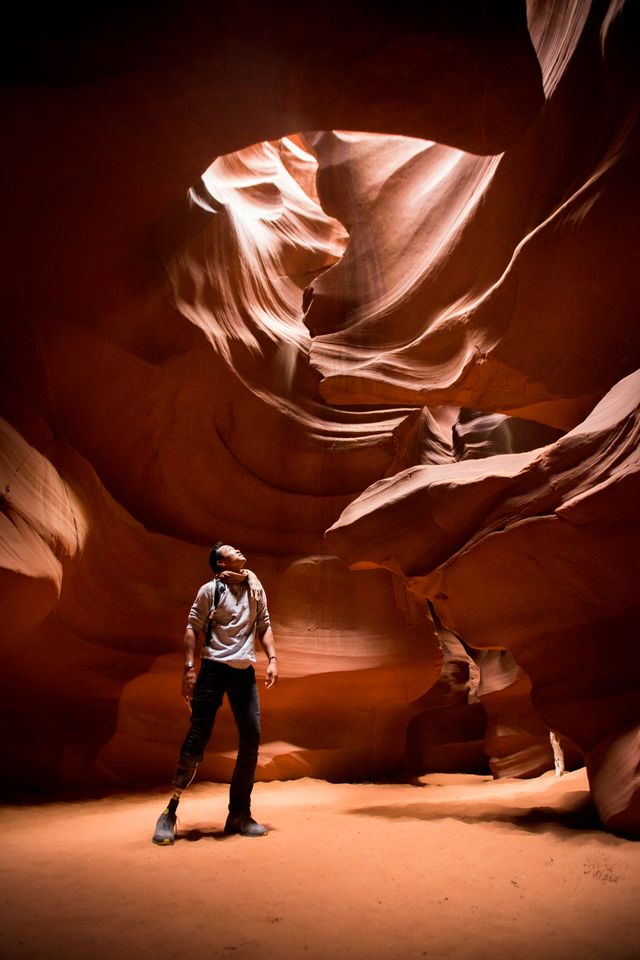
“I see the ancient past is informed by how I’ve experienced my life and how I’ve gone and explored it. Those ancient worlds have also, in reverse, influenced the course of how I’ve approached certain things and the lessons that I’ve learned along the way from all these incredible communities, all these incredible people throughout the world and throughout times. I feel super grateful in that I’ve had this career and this life where I’ve been able to basically transect much of the ecologies of our planet and the timeline of our evolution as human. And I hope to try to bring back these adventures and these stories (to audiences),” he said. “I try to distill down a little bit of what I’ve seen out there and how it relates to anyone.”
He views AI as a tool, which allowed him to sift through daunting amounts of information when his son laid on the brink of death. Yet, he acknowledges its potential down sides, including the fact that it’s not a complete book of knowledge, since it only represents digitized information; it hasn’t entirely accrued ancient wisdom.
“I think about this as a moment that we might be in where we could do something pretty fundamental at a ‘what it means to be human’ level, not in a scary way, but rather in what our possibilities are,” he said, adding that he and others are striving to digitize formerly lost texts from early civilizations.
He loves visiting Aspen and relates deeply to ski towns, as his son is a competitive skier, and Lin himself returned to skiing using a prosthetic. Every weekend, his family would spend eight hours one way to drive from the beach to the mountains to chase snow.
“It’s the one place where I could really move fast again, and I love flying down a mountain. I mean, I absolutely love moving fast,” he said. “We’re crazy about skiing.”