Beyond the Algorithm: Flourishing across difference
Alexandra Hudson on dignity, disagreement and rebuilding human connection in an age of fragmentation
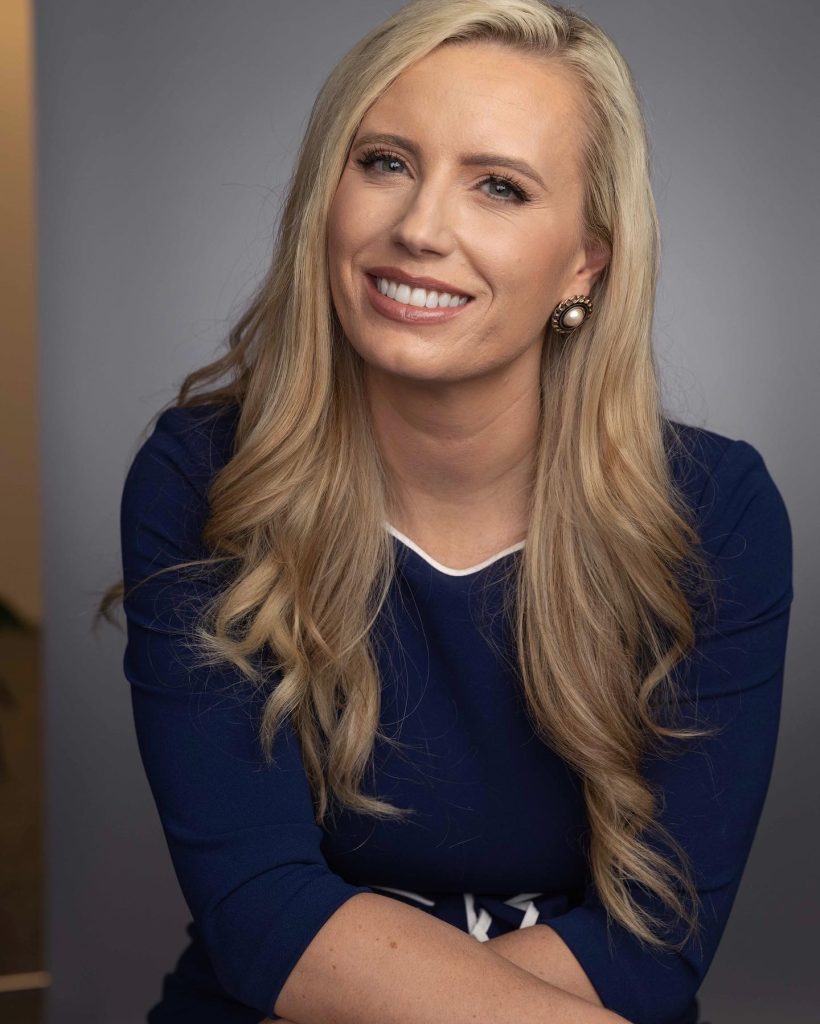
Courtesy photo
Modern society has become infinitely connected whilst growing increasingly uncomfortable with actual human interaction. We speak constantly, broadcast endlessly, and yet many of the institutions that once taught people how to disagree, gather, forgive and coexist now feel exhausted. Public life has become performative. Politics has become existential. Even ordinary conversations have become loaded with suspicion.
For Alexandra Hudson, author of “The Soul of Civility: Timeless Principles to Heal Society and Ourselves,” the problem is not simply polarization or technology. It is something deeper: a growing inability to see one another clearly as human beings.
Bryan: What first drew you toward the questions around civility and human connection?
Alexandra: In some ways, this was always my destiny. My mother was known widely as “The Manners Lady,” an etiquette expert who spent years teaching manners, hospitality and social grace. She raised my brothers and me around etiquette, propriety, hospitality and graciousness. But I was always allergic to authority. I didn’t just want to know what we did socially — I wanted to know why.
Then later, when I worked in Washington, D.C., I encountered something that really unsettled me. I met people who were polished and polite, but underneath that polish they could be manipulative and transactional. I realized politeness and civility are not the same thing.
That became the foundation for the book.
Bryan: That distinction between civility and politeness is really the central thesis of your work. Why do you think modern society confuses the two so often?
Alexandra: Because politeness is performative and civility is moral. Politeness is often about appearances or social maneuvering. Civility is something deeper. It requires recognizing the humanity and dignity of another person, even when you disagree with them.
One of the great misconceptions of our time is that civility means niceness or the absence of disagreement. It doesn’t. Sometimes civility requires difficult honesty. The real crisis we’re facing is not simply political polarization. It’s dehumanization.
Bryan: We’re living through a strange moment culturally. Technology has connected everyone, but it also feels like people are becoming more isolated and tribal.
Alexandra: Yes, but I think it’s important not to misdiagnose the problem. People often say the issue is social media or politics or algorithms. Those things may intensify certain tendencies, but they didn’t create the underlying problem. Human beings have always struggled with division, ego, tribalism and selfishness.
One of my favorite thinkers, Blaise Pascal, said the human condition is defined by both the greatness and wretchedness of man. I think that’s exactly right. Human beings are capable of astonishing beauty and compassion, but also cruelty and vanity. Technology didn’t invent that tension. It amplified it.
Bryan: If the problem is deeper than politics or technology, where does the solution begin?
Alexandra: Hyper locally. Hyper individually.
I don’t believe there’s a silver bullet. Culture is built through millions of tiny decisions and interactions. My grandmother understood the importance of ordinary human encounters: Knowing your neighbor’s name, looking your grocery clerk in the eye, taking genuine interest in another person’s culture or experience.
Bryan: She sounds like a wise woman, what else did she leave you with?
Alexandra: That one gracious life can echo across generations. We hear a lot about cycles of trauma and cruelty, but we don’t talk enough about the opposite — that goodness compounds too. I call it “the mellifluous echo of the magnanimous soul.”
My grandmother treated every person she encountered as sacred. That shaped my mother. It shaped me. It now shapes my children. We underestimate how much power ordinary decency carries, the potential for it to echo through generations.
Bryan: You’ve started turning these ideas into actual civic gatherings and initiatives around the country. What have you learned from that process?
Alexandra: That people are starving for this. A few weeks ago, we hosted 50 leaders from across politics, media, education and public life in our home in Indianapolis. We brought together people who would likely never otherwise share a room together.
The purpose wasn’t agreement. It was flourishing across difference. That phrase is really important to me. The goal is not ideological uniformity. The goal is building a society where disagreement brings out the best in us rather than the worst.
Bryan: How do we institutionalize that? How do we build it into society itself?
Alexandra: Through people first. Institutions matter enormously, but institutions are ultimately inhabited by human beings. And human beings are shaped by habits, relationships, rituals, conversations and examples.
That’s why I care so much about shared meals, salons, civic gatherings, reading groups and local leadership. Civilization is actually built in small places. Not through grand abstractions alone, but through repeated acts of trust, forgiveness, curiosity and hospitality.
Bryan: Last question. After everything you’ve studied and experienced, are you hopeful?
Alexandra: Deeply hopeful. Not because I think human beings are perfect — we’re not. But we are capable of tremendous goodness.
I see that everywhere. I see it in local communities. I see it in parents, educators, mayors and neighbors trying to rebuild connection in a fractured world.
Civilization is not sustained automatically. It has to be cultivated. But I believe people are hungry for meaning, hungry for community and hungry to rediscover one another’s humanity again. And that gives me hope.
In an age increasingly shaped by algorithms, outrage and transactional relationships, Alexandra Hudson’s work points toward something quieter and more difficult: the deliberate rebuilding of trust, dignity and human connection one interaction at a time. Her argument is not that society needs less disagreement, but that it needs deeper humanity beneath it.
Bryan Welker lives and breathes business and marketing in the Roaring Fork Valley and beyond. He is President, Co-founder, and CRO of WDR Aspen, a boutique marketing agency that develops tailored marketing solutions. Who should we interview next? Reach out and let us know bryan@wdraspen.com.





Colorado’s approaching monsoon season and El Niño conditions create hope for above-normal rainfall
Colorado is headed toward a potentially wetter-than-normal summer, with promises of an active monsoon season and growing confidence in developing El Niño conditions.