Aspen’s Shadow Mountain art display will soon need renovation
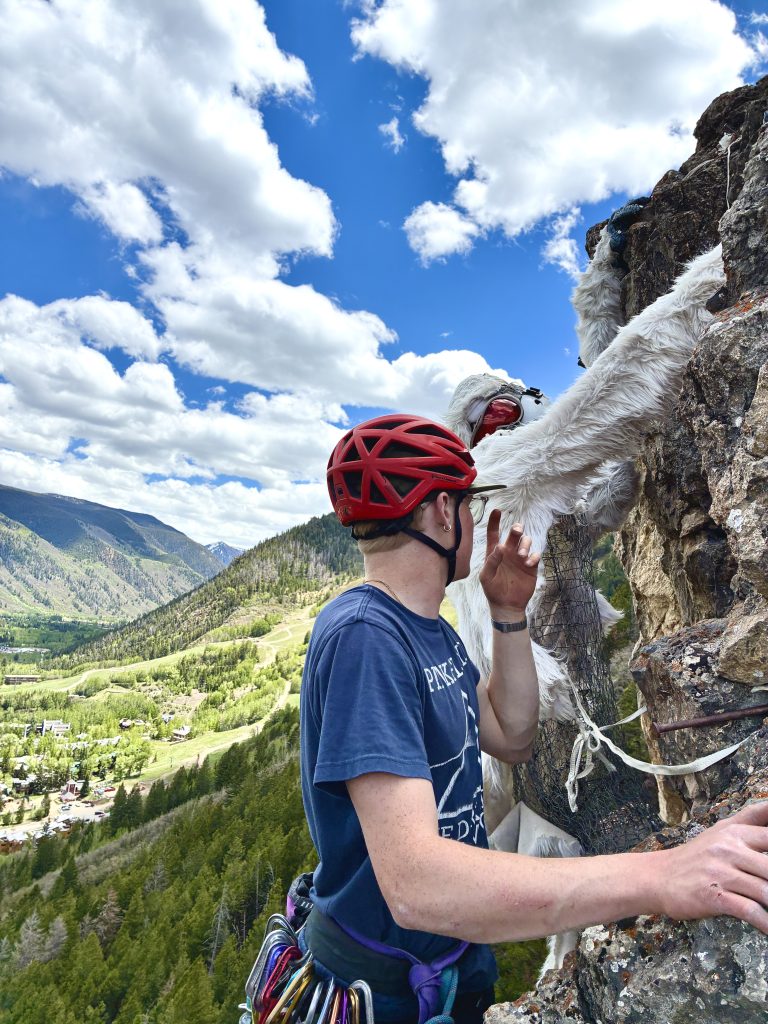
Beau Toepfer/Courtesy photo
On Shadow Mountain, looming over Aspen, is a slowly deteriorating 10-foot tall yeti climbing an improbable-looking rock face nicknamed “The Grey Ghost.”
The yeti appeared right before Thanksgiving in fall 2020 during the COVID-19 lockdown.
“It was during COVID, during the slow dog days of COVID fall, and something needed a little action,” one of the artists said. The artists have requested to remain anonymous but identified themselves as “long-term locals.”
The yeti has become a staple local art installation that is recognized by many the city’s residents and workers. As it continues to deteriorate, it is nearing time for the statue to be renovated.
The yeti sits at the top of a rock climbing route called “The Grey Ghost,” which was first climbed by renowned climber Harvey Carter — one of the first climbers on Independence Pass. According to local climber Colter Hinchliffe, his routes are recognizable from the manky pitons he hammered into cracks in the wall in the 1940s-2000s, often loose and cutting-edge when he first climbed them. According to Hinchliffe, “The Grey Ghost” receives a grade of about 5.8 R/X, or moderately difficult but dangerous, demanding the climber be protected using almost entirely traditional climbing protection like cams and nuts that can be removed by the climber’s partner.
According to Hinchliffe, if he hadn’t been treading lightly on the route’s rock, he easily could’ve broken off a block that would’ve killed local Chris Davenport who was belaying from below. Local climber Sam Smith, who climbed the route on Thursday, added that being on the route was close to the most terrified he has ever been.
According to Aspen City Council Member John Doyle, who claims to be familiar with the yeti artists, those who installed the piece are rock climbers who were already familiar with the route. He added that the artist(s) chose a yeti because “they were just really fond of Yetis, and they believe (in them).”
Doyle also noted that Aspen has a history of large, free-hanging public art displays by anonymous artists dating back to the 1990s. According to him, in the mid 1990s, a local who remains anonymous to this day climbed a tree to hang a banner from the 8th Street bridge for Bill Clinton’s visit. The banner read “Inhale to the Chief.”
“It’s a really cool statement on public art and local character,” Doyle said.
According to one of the anonymous yeti artists, a top rope was used to install the beast, where the climber dropped down from above by rope. The statue was nailed into the mountain with landscape spikes but is starting to deteriorate. At almost 6-years-old, much of the fur is beginning to fall off the wire frame body. While the artists don’t have any current plans to refurbish the statue due to the difficulty of access and dangerous nature of the rock, they do hope to eventually restore it.
“Going into the height of summer? Nothing will probably happen, but maybe in the fall,” one of the artists said.
The artists noted they didn’t have a clear message when they installed the yeti other than their fondness for the mythical creature. According to the artists, the statue is “life-sized” for abominable snowmen and is meant to mimic the real thing.
“Keep believing in the Yeti spirit,” one of the artists said. “Keep it alive.”
Aspen’s Shadow Mountain art display will soon need renovation
On Shadow Mountain, looming over the city of Aspen, is a slowly deteriorating 10-foot tall yeti climbing an improbable-looking rock face nicknamed “The Grey Ghost.”



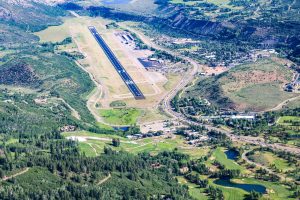
Over 20 Aspen businesses plan to shut down in some capacity for 2027 airport closure
Aspen Chamber Resort Association presented to the Aspen/Pitkin County Housing Authority Board Wednesday on potential impacts to the workforce during the 2027 Aspen/Pitkin County Airport closure to help guide initial conversations about waiving required work hours for employee housing.