Willoughby: Aspen and the folk era
Tim Willoughby Follow
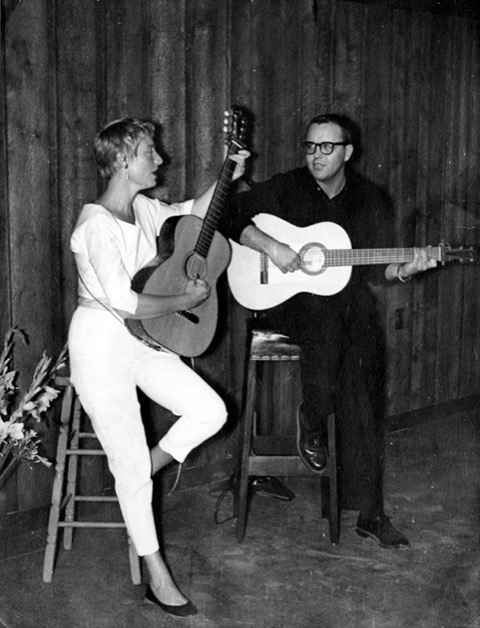
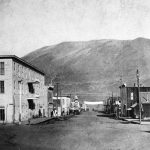
Aspen Historical Society/Courtesy photo
The folk era of the 1950s and early 1960s was far different for musicians than in modern times. Their performances were mostly in small nightclubs and college campuses. Some of the nightclubs were critical to introducing them to fans, for hearing others folk artists, for forming groups, connecting with record producers and for recording live albums.
Nightclubs in New York in Greenwich Village — like Gerde’s Folk City, the Village Vanguard and the Bitter End — were some of the most important. On the West Coast, the Hungry I in San Francisco was the most famous. Los Angeles clubs, like the Ash Grove and the Troubadour, dominated in the early 1960s. Aspen, while a tiny town, was an important venue, too.
Gerde’s and the Bitter End were the training grounds for Bob Dylan and Joan Baez. The Bitter End featured a hootenanny, open-mic program, for aspiring folk artists; live recordings were made by Pete Seeger, The Chad Mitchell Trio and Peter Paul and Mary. The Village Vanguard was more important in the early 1950s and was one of the venues for the Weavers (Pete Seeger was a member).
The Hungry I accelerated the rise of the Kingston Trio, one of the first major folk groups to have significant record sales. It was also important for Glenn Yarborough, and in the 1960s, when folk was transitioning to popular, the We Five. It and several other folk clubs were also where major comedians, like Lenny Bruce and Mort Sahl, were introduced.
The Ash Grove had an important role in the early Limeliters’ rise in popularity, including the location for their first live album recording. It also helped Bud and Travis. The Troubadour’s influence was not so much on the folk artists, but it was where many ’60s stars were introduced to music by folk musicians; members of The Byrds and The Eagles, Joni Mitchell and others took advantage of its hootenanny open mic.
Aspen started the folk era with an appearance of one of the ’50s biggest stars: Burl Ives. He performed soon after the Wheeler was refurbished.
In 1957, Sheldon Rich acquired the nightclub building that he renamed the Limelite. One of his first acts was Glenn Yarbrough and Marilyn Child (see photo). Child performed often at the Limelite by herself, often for weeks at a time. She also worked on Broadway. At one of the Limelite performances with Yarbrough, the president of Electra Records was there, and he signed them up for a recording that was done in 1958.
Rich also brought in Bob Gibson in 1957. He was known for his banjo playing, songs he wrote and his performance energy. He had already recorded for Decca Records. He performed solo and also with Child. He lived in Aspen into 1961, performing also at the Jerome and The Red Onion. In 1960, he recorded an album, “Ski Songs” — many of you may have heard others perform his songs. He sung them often at the apres-ski time, and at the Jerome for a while, he did a performances, with dinner, for children. He recorded several albums and was well-known by other folk artists. However, his career did not expand because (allegedly) he had a drinking problem and, while booked at the Hungry I, failed to show up one evening.
Yarbough, with family members who lived down valley at the Lazy Glenn, took out a lease on the Limelite in 1958. He brought in other folk musicians including Judy Collins. One performer he brought in was Alex Hassilev. The two of them added Lou Gottlieb to form a trio, the Limeliters, becoming one of the most known and popular folk groups of the period.
In the early ’60s, the Abbey Cellar opened on Mill Street and booked folk artists for weeks-long periods of time. Most notable were Pat and Victoria Garvey and the Irish Rovers.
Tim Willoughby’s family story parallels Aspen’s. He began sharing folklore while teaching at Aspen Country Day School and Colorado Mountain College. Now a tourist in his native town, he views it with historical perspective. Reach him at redmtn2@comcast.net.



Over 20 Aspen businesses plan to shut down in some capacity for 2027 airport closure
Aspen Chamber Resort Association presented to the Aspen/Pitkin County Housing Authority Board Wednesday on potential impacts to the workforce during the 2027 Aspen/Pitkin County Airport closure to help guide initial conversations about waiving required work hours for employee housing.