Aspen U to host author talk on recentering feminism around ‘freedom’ not ‘equality’
Josie Taris Follow

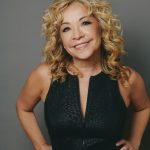
Credit Kristin Cofer/Courtesy Marcie Bianco
“I am not free until we are free.”
It’s a sentiment echoed throughout the history of feminism and intersectionality. A new book argues that freedom — and not equality — should be the center of the movement, and the author is coming to Aspen.
In “Breaking Free: The Lie of Equality and the Feminist Fight for Freedom,” Marcie Bianco tackles how the pursuit of equality has failed the feminist movement and how centering “freedom” as a new goal for the movement will result in liberation from oppression for everyone.
She will be discussing her book at 6 p.m. in the Monarch Room at the Limelight Hotel in Aspen on Thursday, Feb. 15.
The free event with her is a part of Aspen U, a series by AspenOne’s sustainability department. The program was originally intended to give Aspen Skiing Company (SkiCo)employees access to the Sustainability Department. It has now expanded to free educational talks and events for both AspenOne employees and community members. The schedule is available on the Aspen Snowmass website.
“This is what Aspen is all about: face-to-face civil conversation with interesting thinkers,” said Auden Schendler, senior vice president of sustainability at SkiCo, in an email. “It’s incredible to have a place where the whole community can meet and engage. Limelight has become like a grange hall. It’s part of how this community thrives. ”
Bianco is a writer and cultural critic. She is also an editor for the award-winning quarterly magazine Stanford Social Innovation Review.
Explore Booksellers will sell copies of her book for signing at the event. She will be at the Limelight at 5 p.m. and after the talk.
Ahead of the talk, The Aspen Times caught up with Bianco on some themes of the book. The following conversation has been edited for length and clarity.
What: Aspen U talk with “Breaking Free: The Lie of Equality and the Feminist Fight for Freedom” author Marcie Bianco
When: Doors open at 5 p.m. Talk at 6 p.m. Book signing before and after.
Cost: Free; Explore Booksellers will sell copies of the book at the event for signing.
Aspen Times: When did you first get the idea to write your book? And what prompted you to do so now, instead of sometime in the future?
Marcie Bianco: The kernel of the book begins in my childhood. I was in rural South Jersey playing outside with friends, and I was told that around the age of eight or nine I had to wear a shirt because “I was a girl.” My brothers didn’t have to, or other people didn’t have to. And that was the kernel of the idea that made me question (gender roles) later. Of course, I wasn’t a fully-conscientious person as a child, but I thought, “Oh, gosh, we’re different. We’re not treated the same.” I began writing about ethics related to freedom and equality in my Ph.D. dissertation, which was writing the ethics of the plays of Christopher Marlowe, a contemporary of William Shakespeare, and I thought Shakespeare was very much a humanist who wrote inside a Christian morality. And Marlowe was the opposite. Since coming into my own feminism and just living my life, freedom is something I’ve always been interested in — especially in America, especially after 9/11 when we had cultural language like “freedom fries,” which was absolutely ridiculous. I was thinking about how freedom has been articulated in this country and how equality has been articulated. Being a lesbian within the broader LGBTQ community, there always seems to be this almost embarrassed policy push for “We need equal rights, but we don’t want anything else. We just want to be the same as you.” And for me, personally, I don’t want to be the same as everyone else. And I thought, “Why are we hemming ourselves in, especially to these policies, these created institutions that were built by white men for white men in the United States?” So all of these different moments kind of coalesced.
AT: The feminist fight for “equality” has a long history in both action and language. Where do you see equality falling short for the feminist movement?
MB: In my book, I talk about the three major types of discourses around equality: legal equality, economic equality, and social equality. They’re all interconnected, like how we treat each other socially and how we regard each other informs the policies policymakers, and politicians create that people champion and fight for. Equality … it’s almost like a breadcrumb for women and queer people. It’s almost like a dream deferred in the sense. We can take voting rights as one example. We have a constitutional amendment guaranteeing the equal right to vote. And yet, who has historically been able to access those rights? Who has not been impeded by various forms of structural and social discrimination? We’ve seen the assault on reproductive rights, which is healthcare, both for those seeking reproductive healthcare and those seeking gender-affirming healthcare, which is, again, just healthcare. The issues that are affecting us today are not issues of equality, but there are issues of freedom, issues of privacy; there are issues of bodily autonomy, there are issues of freedom of movement of crossing state lines — these are issues of freedom. I get a lot of pushback from equality feminists, who were really focused on the Equal Rights Amendment. I don’t want to be disrespectful of their work. I just don’t think the ERA is going to be the cure-all to the mechanisms of oppression and discrimination, facing not only women but queer people, as well.
AT: You say in your book that feminists should place “freedom” as the new North Star in the movement. Freedom from what?
MB: Historically, freedom has been articulated in a kind of dichotomy of “freedom from” and “freedom to.” I look at it more holistically. I define it as an ongoing process, a lifelong process of self-creation, of world-building, rooted in accountability and care. But in order to be free from oppression — structural, systemic, or otherwise — we need this mindset shift to understand that our freedoms are not in competition with each other. The kind of white freedom mindset, that Ta-Nehisi Coates and the late historian Tyler Stovall both call out in their work, is the idea that freedom only works through suppression and domination. But that is not freedom. Freedom pulls from a longer trajectory of Black feminism, specifically, but I think Black activists and freedom fighters more broadly. It’s this idea that our freedoms are mutually connected, that I am not free unless you are free. Understanding that that tenet means — that I need to fight for other people’s freedom to create a collective freedom — a world that is more free, if that’s what I want.
AT: What is freedom as you see it for feminists?
MB: Freedom is something that is personally felt and experienced, and also collectively experienced, meaning that I don’t have to wait for some institution to grant me equal rights. I really believe that freedom can be lived and experienced outside of the strictures of equality, outside what these institutions are supposed to do and how they claim to protect and care for us.
AT: Something I’ve noticed trending on social media lately is the fallacy of “choice feminism” as it serves as a scapegoat for white feminism to forget intersectionality. What are your thoughts on that?
MB: I start a chapter of my book with a personal anecdote of how my brother co-opted the language of “my body, my choice” to defend his choice to not get the coronavirus vaccination. This appropriation of the feminist mantra is so vague and smooth-brained in order to be kind of innocuous. This appropriation collapses the difference between two very distinct issues, right?: a global public health crisis around a viral disease and a personal medical decision. Freedom is a collective endeavor, ultimately, and I have an entire section in a chapter called “How Equality Gave Us Choice Feminism.” The language and logic of equality feminism produced the lie that women can make choices for themselves for their benefit alone, right?, and that doing so is somehow a feminist victory. This idea that for every single woman, all their choices are equal and democratic, and therefore, because they can make a choice it’s somehow feminist, without consideration of the impact of that choice. That’s the distinction that I’m trying to draw.
AT: What do you hope your readers gain from reading “Breaking Free: The Lie of Equality and the Feminist Fight for Freedom”?
MB: This is an ideas book because ideas shape our language and our actions. These are challenging ideas and ideas that really go against a kind of social conditioning, especially feminists have gone through. But I’m hoping readers consider: Why is it we want equality or have wanted equality? What is a given to us? Where have the limitations been? I think especially for women, equality has really hemmed in our power and our pleasure. And I discuss both of those things; they’re dirty for women, right? Women should not want power, they should not want pleasure because both of those forces threaten the status quo of the patriarchal society. And when we’ve been given equality, again, we limit ourselves. We limit the expanse of our political imagination.