Aspen City Council questions fees for Lumberyard Employer Partnership Program

Grace West Follow
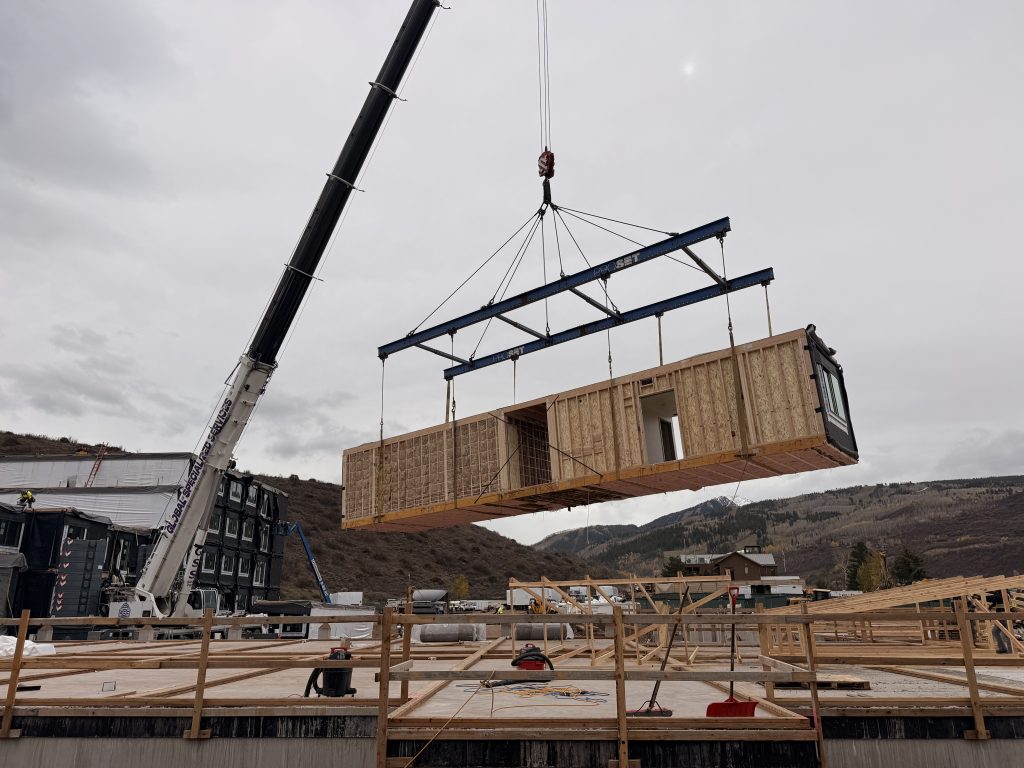
Grace West/The Aspen Times
Aspen City Council discussed the annual fee structure for the Lumberyard Affordable Housing Project’s proposed Employer Partnership Program at a work session on Monday, with council members expressing concerns with pricing of program fees and power dynamics between employer and employee.
The Lumberyard Employer Partnership Program is intended to give employers priority access to the Lumberyard housing lottery for eligible employees. In August, the city invited local business representatives to a workshop to help shape the program.
“We had a robust conversation at that workshop,” said Chris Everson, project manager.
According to Everson, consistent discussion topics at the workshop were employer participation, capacity allocation, employee eligibility, program value and fees, program administration and key policies and terms.
The program is capped at 50 units total, per Aspen City Council’s request, with a 25 maximum per building, preserving 227 units for other eligible applicants.
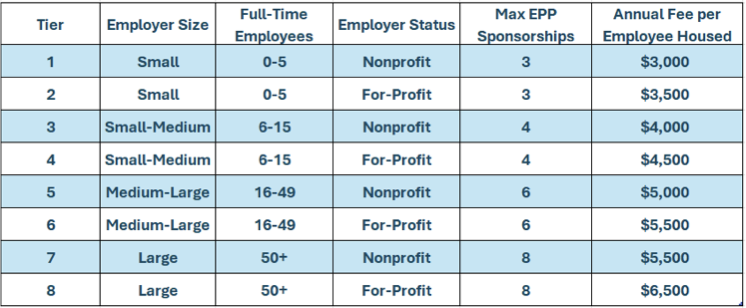
As of now, the program proposes an eight-tier annual fee structure based on two measurable criterias: employer size and nonprofit/for-profit status. While employers pay the fee, employees must meet Aspen/Pitkin County Housing Authority requirements, obtain a lease and pay rent directly to property operators as part of the program.
Annual fees for employers are expected to range from $3,000 to $6,500 per employee housed, with a lesser fee for a smaller employer, and a higher fee for a larger employer. The maximum number of employees an employer can sponsor for a unit also depends on employer size.
But Council Member Bill Guth suggested the fees might be too low.
“These fees are way too low, like orders of magnitude low,” Guth said. “The least amount of money you’re going to pay for a free market, one-bedroom apartment in Aspen right now is $5,000 a month. We are talking about $5,000 a year to secure subsidized housing?”
Aspen Mayor Rachael Richards said that she fears higher fees would give employers too much leverage over employees, such as deliberately underpaying their employees or preventing them from getting a raise in their job.
“I don’t want the housing to become a pressure on the employee because the employer controls it,” Richards said. “How do we build in some employee protections?”
Council Member Sam Rose echoed her concern with employee protection in the event of a dispute between employee and employer and how “that unit gets handled and how that case gets handled.”
Council Member Christine Benedetti said that she would like to see priorities for small and small-medium employers, noting that nonprofit employers should have a lower rate compared to for-profit employers.
“I think that this [program] will really be more meaningful for smaller businesses and smaller organizations than the larger ones in the long run,” Benedetti said.
Council Member John Doyle agreed with her point of wanting to see smaller employers prioritized.
“Most of our remaining mom-and-pop businesses are smaller businesses, and we should be doing as much as we can to help them remain,” Doyle said.
Richards suggested that council revisit this topic in the future, evaluate revisions and “try to come up with something a little more finalized.”

Aspen City Council questions fees for Lumberyard Employer Partnership Program
Aspen City Council discussed the annual fee structure for the Lumberyard Affordable Housing Project’s proposed Employer Partnership Program at a work session Monday, with council members expressing concerns with pricing of program fees and power dynamics between employer and employee.





Aspen amends no overnight parking rule in downtown
The city of Aspen is reducing the no overnight parking timeframe in the commercial core by an hour this winter, in an attempt to help support local businesses and those who recreate early.