WineInk: The remarkable wines of San Leonardo

Kelly J. Hayes Follow
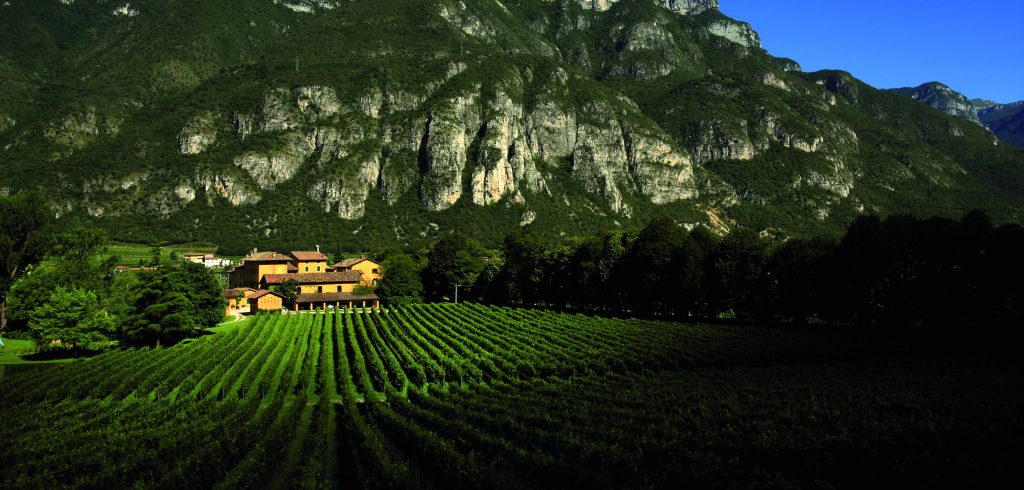
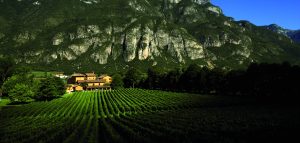
Tenuta San Leonardo/Courtesy photo
It may seem to some like a simple thing, but while on a recent Zoom call with Anselmo Guerrieri Gonzaga, proprietor of Tenuta San Leonardo in Trentino, Italy, I was struck by a remarkable convergence of ancient art and modern-day technology.
In a virtual tour for journalists this past week, Anselmo wielded an iPhone as he walked across the grounds of his winery, introducing us to the exquisite beauty of the property from beneath an umbrella due to afternoon showers, a common occurrence in the spring in Trentino. “Our associate in winemaking is the weather,” Anselmo said with a shrug.
After proudly, but modestly, showing us images of the inside of the winery, a magnificent collection of antique tractors and pointing out a stand of blooming roses, a signature of the property, he said, “Oh, I must show you one more thing!” and ran to open the door of an ancient building. Once inside, Anselmo twisted his iPhone toward a magnificent painting on the ceiling of the building, which he said was an ancient chapel. He explained that the fresco he was showing us dated back centuries to when this land was home to a monastery that had been used by the monks for both agriculture and viticultural purposes. The estate’s history has been traced to 1215. So here I was, 5,000 miles away in Colorado, “looking live” at these beautiful frescos in a winery chapel from centuries past, in real time, on the screen of my laptop. Like I said, remarkable.
But that was just one of the remarkable things about the virtual hour spent with Anselmo and the signature wines of San Leonardo.
Of the many thousands of wineries in Italy, Tenuta San Leonardo is, inarguably, one of the most distinctive and prestigious properties in the wine-centric nation. It has been in the hands of Anselmo’s family, the Guerrieri Gonzagas, for just over 300 years. The family began a tradition of winemaking here in 1724. Anselmo has been at the helm since 2012.
Located in the northeast quadrant of the boot, in the southern corner of the Trentino wine region, San Leonardo sits in the shadow of towering Monte Baldo, a mountain often referred to as “Europe’s Garden” for its extreme biodiversity of plant species. Each afternoon a wind generated by the currents of nearby Lake Garda brings fresh breezes up the valley and across the vineyards.
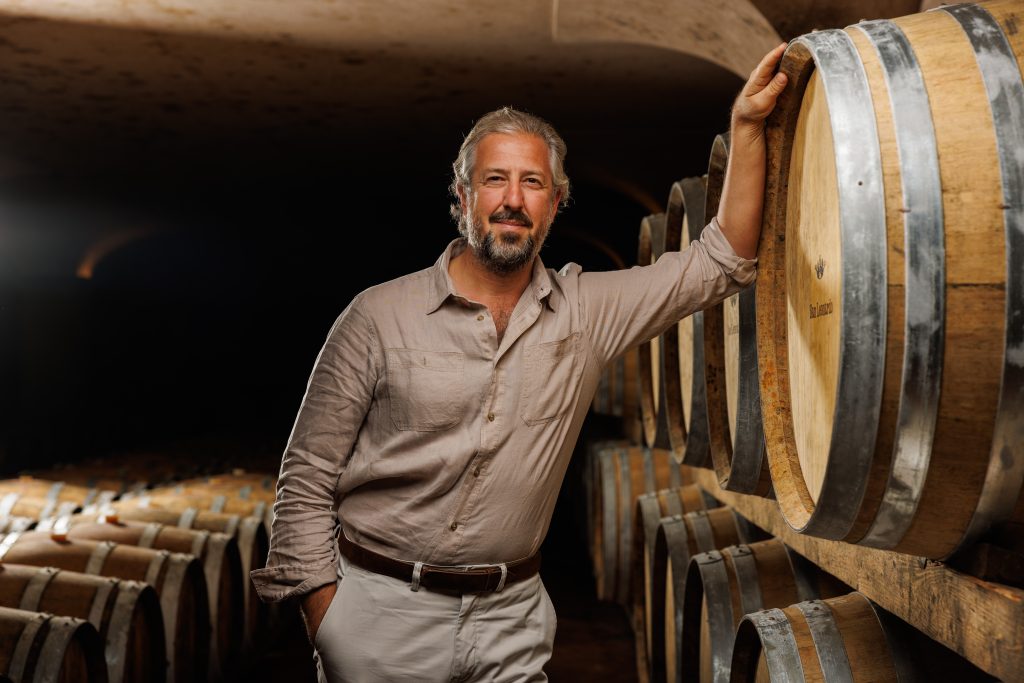
The glacier-formed valley where the winery is based is filled with various soil types, including clay, glacial sands and limestone. It turns out this combination is perfect for the path taken by the Guerrieri Gonzaga family. “The earth is the soul of our craft,” Anselmo said, reflecting an adage first noted by his father, Carlo Guerrieri Gonzaga, who helped will San Leonardo to greatness for over five decades.
The obvious question is “What kind of wines do they make?” and one may initially think of the traditional Italian varieties like nebbiolo or sangiovese or perhaps teroldego, the red grape that is prevalent in Trentino. But that is another one of the remarkable things about San Leonardo, the winery portfolio and vineyards are built on Bordeaux varieties. Yes, these Italian wines from San Leonardo are made from carmenère, merlot and cabernet sauvignon.
In the late 1800s, merlot and what was then thought to be cabernet franc (genetic imaging later proved it to be a different Bordeaux variety, carmenère) were planted on the property, but it was not until 1974, when Carlo Guerrieri Gonzaga took control of the winery, that a Bordeaux strategy took root. Carlo had studied oenology in Lausanne (under famed French enologist Émile Peynaud) and spent time as a consultant in Tuscany under Marchese Mario Incisa della Rocchetta at his Tenuta San Guido in the late 1960s and early 1970s. He was enamored with the trinity of French grapes and was in Tuscany to see the groundbreaking introduction of Sassicaia, the wine dubbed to be the first “Super Tuscan,” in 1968. It was a blend of cabernet sauvignon and cabernet franc.
Carlo returned to his ancestral home in Trentino and planted cabernet sauvignon in 1978 on the San Leonardo vineyards. He introduced the first vintage of the eponymous San Leonardo, a blend of cabernet sauvignon, merlot and carmenère in 1982, and it instantly became recognized as an outstanding wine from an unexpected source. Now in his late 80s, his signature remains a feature on every bottle.
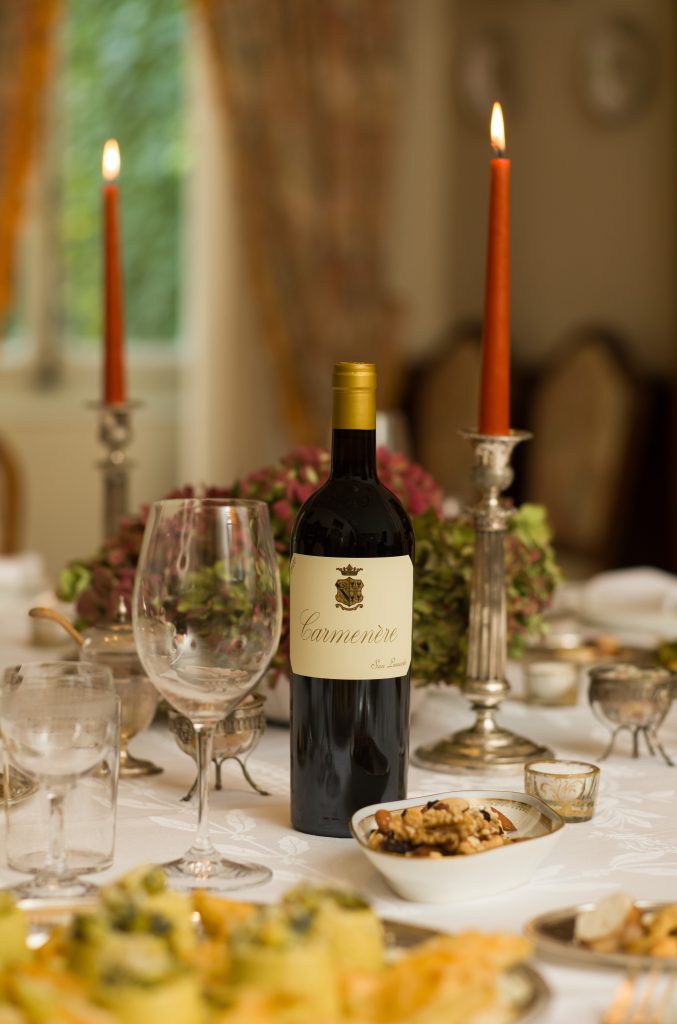
French grapes grown in Italian vineyards are not unheard of, but the wines of San Leonardo are truly unique. Organically-grown, aged in concrete tanks and French oak, they reflect the inherent beauty of the grape varieties from which they are sourced and what Anselmo calls the “shape of the place” where they are made.
On the Zoom call, Anselmo led our group through a tasting of four of the estate’s wines. We began with a wine that is called Terre di San Leonardo from the 2022 vintage that sells in the U.S. for around $25 a bottle, a remarkable value. The wine is made from younger vines from the same grapes as the San Leonardo flagship wine, which itself is a dynamic bargain at just $115 a bottle. Compare that to Napa Bordeaux blends that are twice, or more, the price. The elegance of the Italian benchmark is stunning.
Next up was a merlot-led blend, the 2021 Villa Gresti di San Leonardo, named after the home of the Guerrieri Gonzagas. Though it was the same grapes, the differential in the blend made it a completely different wine from the Terre di San Leonardo. We followed that with a bottling of 100% Carmenère from the 2020 vintage. It was, and there is that word again, a remarkable wine. Red as rubies in the glass, the wine was soft and subtle on the palate, coming in with a restrained 12% alcohol level. It was a wine that was made for sipping and contemplation.
The winery is revered by Italian oenophiles for the understated elegance and refined character of their terroir-driven wines. In 2025 Gambero Rosso, Italy’s premier wine, food and travel consortium, named Tenuta San Leonardo as its 2025 Winery of the Year and, since 1988, 27 of its wines have garnered the coveted Tre Bicchierri (three glasses) award.
A remarkable accomplishment.