WineInk: A grape to give thanks for

Kelly J. Hayes Follow

Courtesy photo
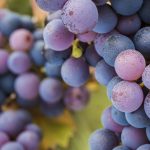
The calendar has turned the page to November, which means that we are now on the cusp of the Thanksgiving wine buying season. And, given that the foods of the season (yes, turkey and duck are the staples) go so well with the many different styles of pinot noir, it is the perfect time to explore the wonders of the grape.
According to statistics, cabernet sauvignon is the most favored red wine grape in America, and it is also the most heavily planted red varietal in the world. While I have no reason to quarrel with the numbers, I often refer to the old refrain first uttered by Mark Twain, “Lies, damn lies and statistics.” That’s because, in my anecdotal evidence in a thousand conversations and more with wine drinkers, the most popular red variety amongst regular drinkers is pinot noir.
Ask someone what their favorite red wine grape is and, at least in my experience, the answer that is most frequently given is “Pinot.” Virtually every restaurant wine list, especially in this town, has pinot noir offerings by both the glass and the bottle that prove popularity.
Few grape varieties are as versatile, as difficult to grow, as transitory and as admired as pinot noir is by wine connoisseurs and winemakers. Long deemed to be fussy, pinot noir is, none-the-less, grown around the world in some of the most unlikely places one might expect. While its origins are unclear, what is known is that it was prized by Cistercian Monks in 1330, who cultivated the grape in the Burgundy region of France. Today, it grows in vineyards in over 20 countries in places as diverse as California, Oregon, Argentina, Italy, South Africa and Australia.
One could say that pinot noir is the global grape.
From Central Otago, on the southernmost flanks of New Zealand’s South Island, which lies 45 degrees below the equator, to Ahr in Germany, which, at 50 degrees north is the northernmost red wine growing region on the planet, an estimated 300,000 acres of vineyards are planted to the grape globally. France and the United States lead the way in production, as you might expect, but countries like Austria, Moldavia and, yes, even Great Britain host pinot noir vines. In Germany, pinot noir goes by the moniker of spätburgunder, and in Italy, pinot nero is the regional name.
That said, there has been a decline in pinot noir production over the last few years that mirrors the drop in wine sales overall. According to the California Agricultural Statistics Service, the number of tons of pinot noir crushed in California in the 2025 harvest fell to their lowest levels since 2015, dipping below 200,000 tons from a high of 313,000 tons in 2018. And that is just in California. This is a reflection of a wine market that was over saturated with grapes of all varieties, not just pinot noir.
So, what’s the attraction? Well, for starters, elegance and flavor. Pinot noir can be produced in a number of different styles and each can be, and should be, reflective of its place of origin. But it is the flavor profiles of the wine that makes pinot noir so popular. Typically light- to medium-bodied, pinot noir grapes produce dry wines with soft tannins, and acidity that zings. Most offerings feature medium to moderate alcohol levels that range between 12–15%. The notes of cherries, strawberries and raspberries converge with other flavors ranging from hints of a forest floor to floral and spice notes.
Burgundy wines from the source are a revelation, and the wines of the region, particularly from the 24 Grand Cru regions of the Côte de Nuits, command some of the highest prices of any wines in the world. A trip to Burgundy to see the patchwork, postage stamp-sized vineyards — many of which, to this day, are farmed by horse and hand — is like a trip to Mecca for those who are passionate about pinot noir.
Wines from Burgundy tend to be lighter, elegant and, in some cases, transcendent. The takeaway taste from the best of these wines exudes the flavor of their terroir, that would be the aroma of the earth and flowers and mushrooms and soils and, well, everything, including the manure that is found in the fields where the grapes are grown. Once you taste it, you never forget it.
California is home to perhaps the greatest number of different regions where pinot thrives, including Sonoma and the Sta. Rita Hills on the Central Coast just north of Santa Barbara. While traditionally many of California’s pinot noir producers once favored bigger, more intense expressions of the variety, there is today an established movement of winemakers who are inclined to pick their grapes a little earlier and to maintain lower levels of alcohol, producing wines which are more subtle in style.
In Oregon, the Willamette Valley is the “Burgundy of the Northwest.” Here, producers and consumers celebrate the beauty of the pinot noir grape with near religious fervor. They also tout the ability of the region, with its varied soils and cooling climate, to be the perfect place to grow the grape.
In the southern hemisphere, New Zealand, particularly the South Island regions of Central Otago and Marlborough, has been lauded as being perfect places for producing cool climate pinot noir wines. The biodynamic wines of Rippon from Wanaka on the south island are elegant with a hint of racy spices and an herbaceous quality that takes you to the land of the Kiwis.
As you begin to think about what you plan on pouring with your Thanksgiving repast this year, consider the versatility of pinot noir wines. They are sure to please both your and your guests’ palates this holiday season.
A passing
This past Friday, on the same day that WineInk celebrated its 1,000th edition, Marvin Shanken passed away in New York City. You may not know Shanken, but if you are into wine, you surely know his publication, Wine Spectator. Shanken acquired a struggling wine-centric newsletter in 1979 and turned it into what is arguably the most influential wine magazine in the industry.
I never met Mr. Shanken, but like thousands of other wine lovers, I was educated and entertained by the writers and editors who produced Wine Spectator. In fact, I think it is fair to say that WineInk would not have come into existence if I had not had the template of Wine Spectator stories to introduce me to the greater world of wine writing.
A toast to you, Marvin.



Aspen amends no overnight parking rule in downtown
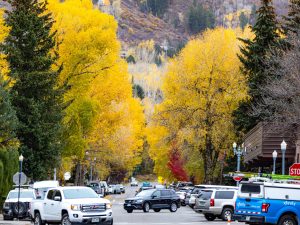
The city of Aspen is reducing the no overnight parking timeframe in the commercial core by an hour this winter, in an attempt to help support local businesses and those who recreate early.