‘Turtles’: bravery and dignity in Kurdish Iraq
ALL |
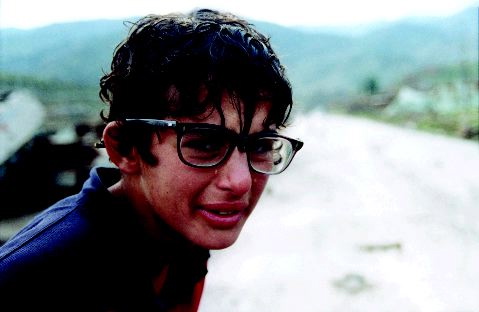
In its early stages, “Turtles Can Fly” shapes up as a romance, a love story with several twists. The setting is a remote corner of northern Iraq, where word of the coming American invasion slowly, unreliably filters in through rumors and CNN reports that none of the villagers can translate. The two characters being bitten, or not, by the love bug are also unlikely subjects for a romance. Kak, the leader of a pack of young boys and known as Satellite, is 13; Agrin not even that. In some ways, the relationship between the two is familiar. Every time Agrin (Avaz Latif) falls within Satellite’s gaze, Satellite (Soran Ebrahim) is stopped in his tracks by her cuteness and her remoteness. But given the atmosphere, this romance has a heavier weight than the standard puppy love. With the grown-up population largely missing from the scene – presumably decimated a decade earlier by Saddam Hussein’s slaughter of the Kurds – and amidst a setting of refugee camps, minefields and ramshackle housing, Satellite and Agrin have been thrown into premature adulthood.
Satellite, in fact, is practically a village elder. His nickname comes from his procuring of satellite dishes and other technological hardware for the village, just one of his jobs. Agrin has developed her own world weariness by having to take charge of the toddler Riga, a task that has not only coarsened her to any flirtations, but has driven her to thoughts of suicide.The no-go romance has enormous potential, especially in the fascinating character of Satellite, who sees nothing but opportunity in his demolished village. But just as that stage is set, writer-director Bahman Ghobadi shifts the focus to an even more poignant relationship.
Agrin’s brother Hyenkov (Hirsh Feyssal) is around the same age as Satellite, but is in most other ways his exact opposite. Where Satellite is a legitimate villager, Hyenkov, like his sister, is a refugee, which puts him on a different social level. Satellite is physically robust, leading his gang up the surrounding hillsides to search for mines, which he later sells or trades; Hyenkov has no arms. Of most significance, Satellite sees the world as inviting, much as the children in John Boorman’s “Hope and Glory” saw bombed-out London as their playground. Hyenkov’s life is nothing but a burden, as he looks after his sister and Riga in a situation that is likely to go from bad to worse.As Satellite and Hyenkov become entwined, both as enemies and partners, the similarities of their situations are illuminated. Both have been thrust into positions that require them to transcend their adolescence and take on adult roles. Their existence is sorrowful. It is a world of children who lack limbs and parents, of haunted memories and a frightening, uncertain future, of not enough food and water and too much danger.
But as much as it details the despair, “Turtles Can Fly” exposes the bravery and dignity of Satellite and Hyenkov. For all their differences, the two young men have in common not only the instinct for self-preservation, but for protecting those around them. “Turtles Can Fly” makes a seamless blending of the horrific and the inspirational.”Turtles Can Fly” shows Sunday and Monday, May 8-9, at 7:30 p.m. at the Wheeler Opera House. IFC Films presents a film written, produced and directed by Bahman Ghobadi. Classified: No MPAA rating. Running time: 95 minutes. Stewart Oksenhorn’s e-mail address is stewart@aspentimes.com
Viral ‘Buttercorn’ band to perform in Basalt
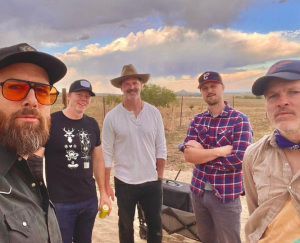
Heading from Boulder to Basalt, Sun Jr. will hit the stage at 8 p.m. May 9 at The Arts Campus at Willits.