Saddle Sore: The return of the pigeons
Tony Vagneur Follow

Tony Vagneur/Courtesy photo
This is pretty much a “shiny” town now; the once-cracked and uneven sidewalks are smooth and reasonably safe. City rules say property owners must keep them shoveled after each snowstorm. The older buildings in town have either been torn down, or spruced up with repairs, new windows and new paint. We’ve moved on, or have we?
Back in the 1950s, it was a different place — not worse, just different. The music school had no campus, other than the tent, and vacant buildings around town provided practice rooms for study. A walk down any street in the core would be accompanied by the sounds of pianos, violins, cellos, other instruments, and voices, coming from the Wheeler, the Aspen Block, the building immediately adjacent, the Red Brick, and others. To me, it wasn’t noise — it was the beauty of music in Aspen’s summer.
A strong memory for me is coming out of the post office, which at the time was housed in the corner of the Elk’s building, now home to Ute Mountaineer. Pigeons everywhere, mostly on the sides of buildings on the tops of window sills, along roof edges, and hobbling down the sidewalks, heads down, pecking along for tiny tidbits of sustenance. They weren’t afraid of music, although the occasional backfiring car might send them aloft. I suspect Anais Nin visited Aspen back then, when she wrote, “Descendants of pigeons once fed by Keats, Byron, George Sand, Chopin, and many other famous lovers are still being fed, and the sudden sound when they all rise together, frightened away, is like the sound of giant sails flapping.”
When it happened it’s hard to place, but one day there were simply no more pigeons in town. How others felt, it’s difficult to say, but my grandmother and I missed them. Rumors abounded, just as they do today, as to what might have happened. The popular theory — whispered more than stated — was that someone had poisoned them, likely a newcomer, although it seemed curious that robins and other species still flew about, but not so much in the downtown area. Maybe a cataclysmic event somewhere in the universe sent warning vibrations that only pigeons could feel.
Whatever, the pigeons were gone. Shortly thereafter, the downtown music was gone too, shifted to new spaces elsewhere. A tragedy, it seems. However, an opera singer with a deeply powerful, resonant voice spent the summer across the alley behind Cecelia Marolt’s house on Bleeker. We used to ride our bikes by, hoping we’d catch him practicing his arias.
Things change, as people say, and the other day, walking by Rubey Park, there was a noticeable flock of pigeons, scouring the sidewalk and planters for tidbits left by bus riders and others. Perhaps they’ve been there before, but it’s the first time this writer has noticed them. Naturally, all the memories mentioned above flooded over me, and my curiosity was piqued.
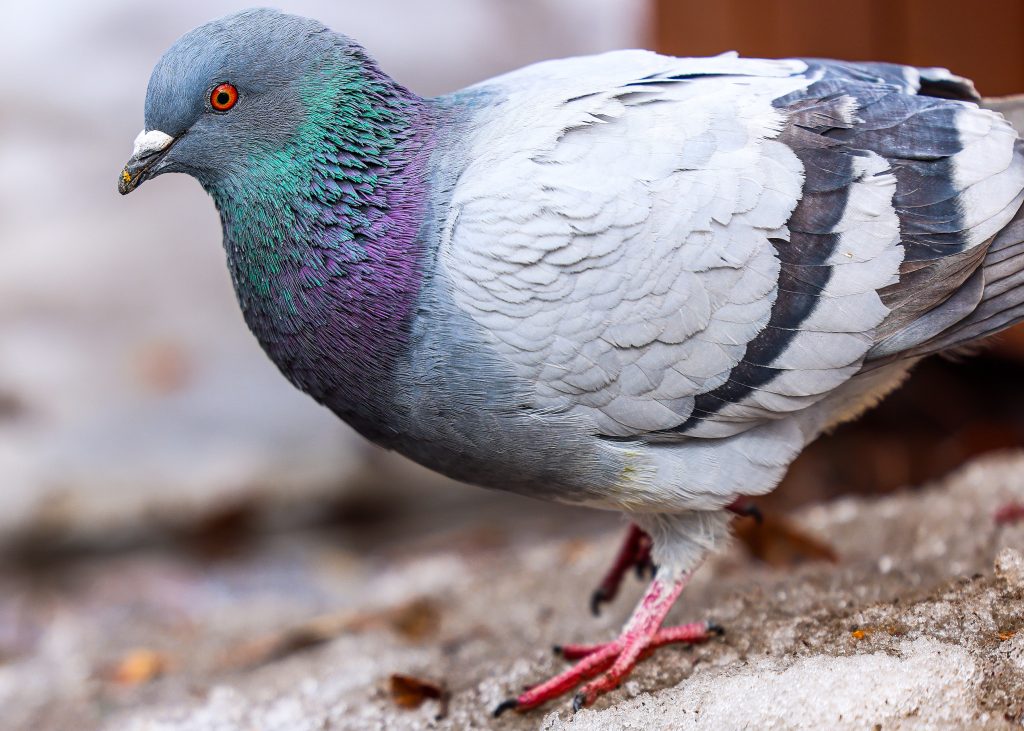
Many pigeons made the area of my horse pasture their home this summer, about 25 or 30 of them. It seemed odd, sharing space with geese. Two sightings in the same valley after all these years feels like more than coincidence.
Pigeons thrive in imperfect places. They like cracks, ledges, scavenged food, human chaos. What better place to hang out than a bus depot.
Aspen tries hard to look polished, almost over-groomed in some places, and there’s always the undercurrent of “messy vitality” and what happened to it? Maybe we don’t have control over everything, and some things are not up to us.
With a sensitive ear to the ground, the return of the pigeons might be one of the beginning signs that Aspen is still capable of being alive in the untidy, natural way many of us remember.
Like moving water finding its natural gravitational course, maybe returning pigeons are a reminder that town is still a place where life will do what it wants, despite the wishes of some in another direction.
Tony Vagneur writes here on Saturdays and welcomes your comments at ajv@sopris.net.