POWDR reaches settlement with ski resort customer who sued over Copper Mountain’s ‘resort surcharge’
Neither the ski resort customer who filed the lawsuit nor Copper Mountain or POWDR, which owns the resort, responded to inquiries about the terms of the settlement

Cody Jones/Summit Daily News
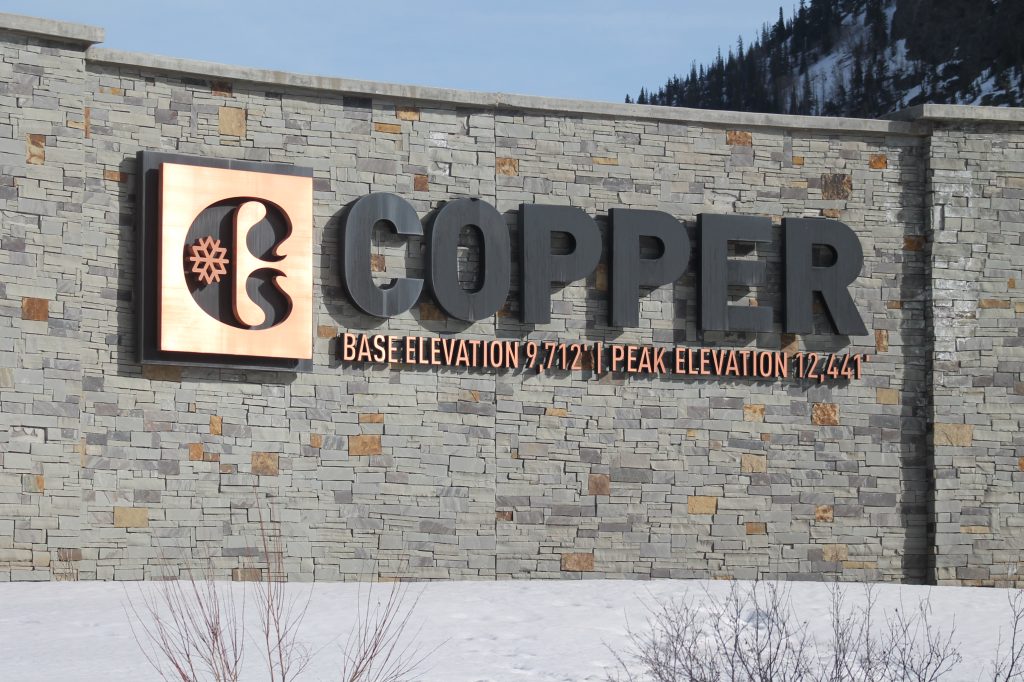
A settlement has been reached in a Summit County lawsuit that questioned the legality of a resort surcharge imposed on purchases at Copper Mountain.
The settlement, the terms of which were not disclosed in legal filings, was announced in a joint filing by attorneys for Gary Chaney, the customer who sued the resort, and POWDR Corp., which owns Copper, on Nov. 26.
In statements, POWDR Vice President of Communications Stacey Hutchinson and Mirko Kruse, a partner at the law firm representing Chaney, both said, “the lawsuit was resolved to the satisfaction of both parties.” Neither provided information about the details of the settlement. Hutchinson had previously called the lawsuit “baseless.”
Chaney originally filed the class-action lawsuit on behalf of himself and other Copper Mountain customers on May 12, claiming that the resort surcharge imposed on purchases violated the Colorado Consumer Protection Act. The lawsuit, which sought monetary damages and asked a court to end what Chaney called “deceptive trade practices,” named the resort and POWDR as defendants in the case.
“POWDR has a practice of advertising goods and services at prices lower than what it charges at the register,” the complaint filed in the case stated. “When the customer goes to pay, POWDR charges up to 9% more than the price advertised, plus 6.375% in tax. This practice is deceptive and unlawful.”
The complaint included photos of Copper Mountain’s menus, which it stated do not disclose the surcharge, and of receipts, which the lawsuit claimed were usually only provided upon request, showing the surcharge costs on top of the listed price. In most instances, the surcharge is listed as 7%, but the complaint also included an instance during the spring break season in March when the surcharge was listed on a receipt as 9%. Spring break is one of the busiest times of year for Colorado ski resorts.
In one case, a burger listed on the menu at the Aerie Food Court for $20 cost an additional $1.40 due to the resort surcharge. In another example, the complaint stated that Downhill Dukes — an outdoor bar and restaurant in Copper’s Center Village — did not list the surcharge on its menu, but that the surcharge added an additional $1.19 on top of the listed $17 cost for large pretzel bites.
The complaint claimed that POWDR is engaging in “deceptive trade practices” by advertising goods while intending not to sell them as advertised and making false statements about the prices of items. The complaint stated that the surcharge “induces consumers into purchasing goods and services by falsely advertising goods and services at lower prices than what is charged at the register.”
“Unlike Summit County and/or Colorado State Sale Tax, the Copper Mountain Resort Surcharge is not a government-mandated tax, nor is it a government imposed fee,” the complaint stated. “… The Copper Mountain Resort Surcharge is an additional revenue source POWDR uses to support its business operations and satisfy its private contractual obligations with affiliated entities and business partners.”
The parties anticipate filing a joint stipulation to dismiss the case with prejudice, meaning Chaney cannot refile the case later on, within the next four weeks, according to court documents filed in the case.

PHOTOS: Inaugural Snowmass Mountainside Music Festival sounds off on Fanny Hill
The free music festival in Snowmass Village was headlined by American Authors, Richy Mitch & The Coal Miners, and Pecos & The Rooftops.