Next Week in Music: Big-name pinch-hitters coming to the rescue
Harvey Steiman Follow
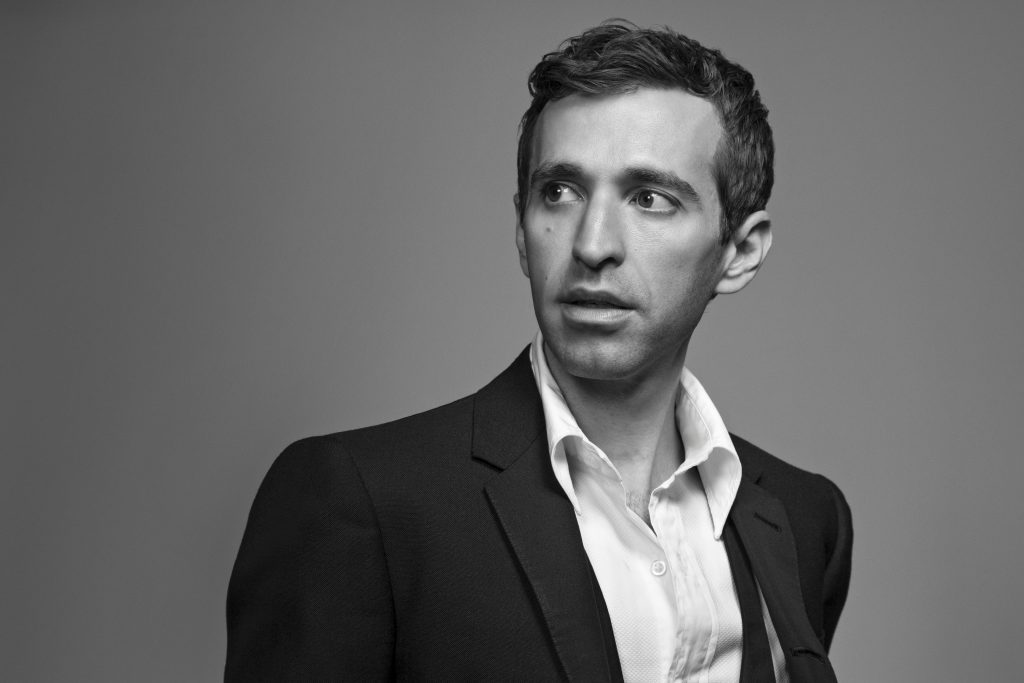
AMFS/Courtesy photo
The Aspen Music Festival went into scramble mode on Wednesday when star mezzo-soprano Joyce DiDonato was injured and had to cancel two high-profile Aspen performances next week. They found a couple of winners.
The tale makes an appropriate introduction to my new weekly column that focuses on the music that most interests me in next week’s programs.
Originally, DiDonato had planned a delicious-sounding recital with Patrick Summers, who co-directs the Aspen Opera Theater and VocalARTS for next Wednesday. She was also to sing next Sunday in a new work by Matthew Aucoin, the first in a series of Aspen Music Festival commissions to encourage leading contemporary composers to write their first symphonies and premiere them here.
Countertenor Anthony Ross Costanzo will be singing with Summers on piano for Wednesday’s recital. Costanzo is already here to sing the starring role of Oberon in Benjamin Britten’s opera Midsummer Night’s Dream July 20-22. Among the most elite in the rapidly growing world of countertenors — male singers who can sing like a woman — he has starred often at the Metropolitan Opera, including a career-defining turn in the title role of Philip Glass’s “Akhnaten” and a sensitive Orpheus in Gluck’s “Orféo ed Euridice.”
Costanzo and Summers were still putting a program together for the recital at my deadline, but Summers promised at least some Handel arias mixed with contemporary music. Summers conducted the orchestra when Costanzo won the Metropolitan Opera National Council Auditions in 2009, singing Handel, the first countertenor to win that competition. And Costanzo sang Handel’s Julius Caesar in Houston in 2017 with Summers conducting.
I suggested to Summers that what makes Costanzo so special is the vivid expression of humanity to everything he sings.
“Oh yes,” he responded, “that, and the voice, which is absolutely specular. I’ve worked with the greatest singers of our generation and most of the generation before me. He’s up there with the best.”
While DiDonato would have been making her Aspen debut, Aucoin has become a critical cog in Aspen, as Patrick Chamberlain, vice president for artistic administration, underlined.
“He conducted Mozart’s opera ‘The Marriage of Figaro’ and has worked with young composers here,” he said.
His “Music for New Bodies” was presented here two years ago. My review noted how the music shimmered, creating sound sculptures of both transparency and density. It was accessible, and it only got thorny when it needed to.
Aucoin’s opera “Eurydice” was a big hit at Los Angeles Opera and the Metropolitan in New York.
The first-symphony project was inspired by what Chamberlain describes as a “dearth of long-form works for orchestra,” because composers today are often relegated to brief pieces to open concerts.
“What if that had been true in Brahms’ time?” Chamberlain asked. “We would be missing so much music we treasure today. Fifty years from now, people will be asking where is Aucoin’s symphony, or Nico Muhly’s?”
Therein lies a bit of a quandary. Composers seem reluctant to call even their longer works a “symphony,” with or without a number. Aucoin’s is titled “Two Thresholds (Symphony).”
Chamberlain’s take: “When you call it a symphony, there’s the weight of history. You’re going to be compared with every composer from Haydn to Mahler.”
Mahler, in fact, avoided the word “symphony” for what should have been his Tenth Symphony because Beethoven never wrote a tenth. He called it “Das Lied von der Erde,” a symphony of voices.
Another Mahler symphony, his Fourth, was Aucoin’s model for “Two Thresholds,” “especially the idea of bringing in the voice at the end,” Chamberlain noted. “He ended up with voice at the beginning too, and he said he needed to add a second voice at the end. We said, sure.”
Though the vocal part was written for Joyce DiDonato, the festival may have hit the jackpot with Christine Goerke. The great soprano, known for her Wagner heroines, has also appeared as Eboli in Verdi’s “Don Carlos,” a role noted for its powerful low notes. Goerke test-drove Aucoin’s music, sitting at her piano and singing from the score.
“She said she loved it,” Chamberlain reported and can’t wait to sing it.
The conductor, Cristian Măcelaru, is a product of the festival’s conducting academy who has carved out a highly regarded career with the world’s great orchestras, including directorships at Orchestre National de France and the Cincinnati Symphony.
“We chose him for this,” Chamberlain said. “He has the ability to digest a complex new score, distilling the music and bring out what it’s trying to say. He was game to take this on.”
Best-laid plans, and all that, but it sure looks like Aspen audiences are in for a couple of treats.
Harvey Steiman has been writing about the Aspen Musical for more than 30 years. His reviews appear in The Aspen Times on Tuesdays.
Harvey Steiman has been writing about the Aspen Music Festival for 31 years. His reviews appear Tuesdays and Saturdays in The Aspen Times.


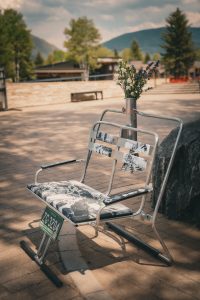
Aspen Snowmass offers chance to bid on Nell and Bell chairs
The Bell Mountain and The Little Nell chairlifts, which have carried skiers and snowboarders up Aspen Mountain for nearly 120 combined years, are coming down to make way for the new Nell Bell lift — and heading to auction for a once-in-a-lifetime chance for the public to take one home.