Nat Geo Explorer comes to Aspen with what it means to be truly human while living with wolves

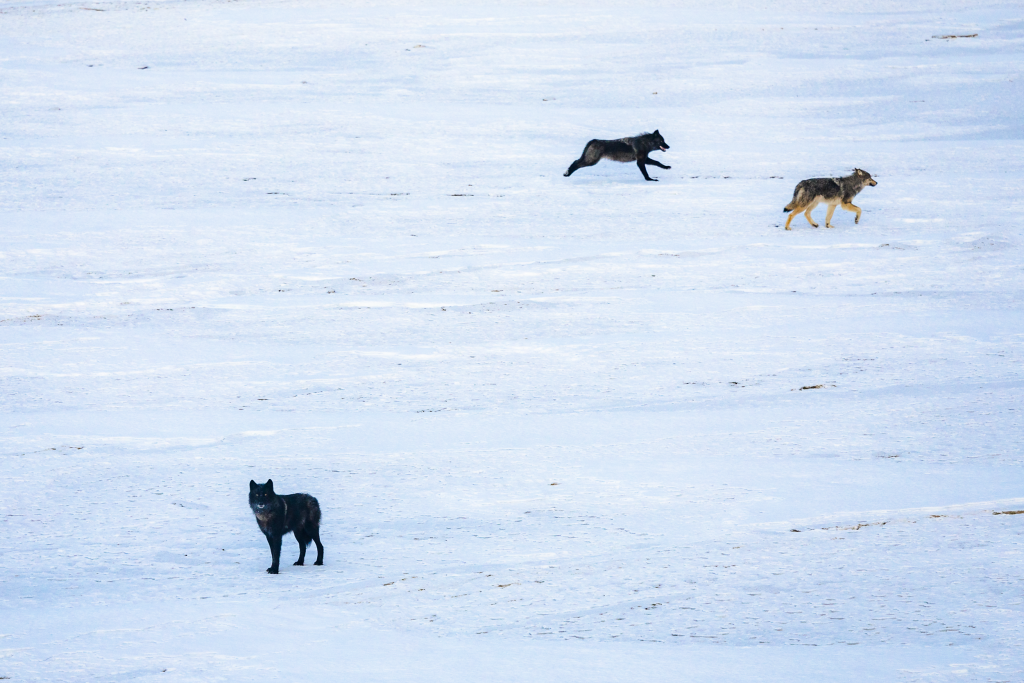
Colorado Parks and Wildlife/Courtesy photo
National Geographic Explorer Ronan Donovan, a wildlife biologist turned conservation photographer, will be coming to the Wheeler Opera House in Aspen on Dec. 16 to explore what it means to be human in the face of living with wolves.
Donovan’s first ever talk in Aspen will take place from 7 to 8:30 p.m. as part of the Wheeler Opera House’s Changemaker Speaker Series and in partnership with the Aspen Center for Environmental Studies. According to the event’s website, the talk will look into what it means to be human through connection with other social mammals.
“I think that we’re at this interesting time in human history where we’re very much rushing away from the past, in the sense of a land-based connection and an animal-based connection to the natural world,” Donovan said. “We’re in this interesting in-between … this restless middle state where we don’t want to go back, we want to go forward, but we don’t know what forward is.”
In Donovan’s experience observing and learning from a number of species, including wolves, the best way to understand the past and inform the future is to “remember that we’re animals.”
He added, “We’re bound by the same laws as other animals in terms of what makes us healthy and what makes us whole, what makes our children healthy and whole. We all feel more connected in the natural world to ourselves. It’s why a lot of people live or spend time in places like Aspen.”
Donovan has had the firsthand opportunity to witness wolves from the arctic to the Greater Yellowstone Ecosystem to his friend’s property in Basalt. He told The Aspen Times that these “wise beings” can teach community members how to reflect on their own behavior and identify the ways we’ve become imbalanced, at conflict with weather, fire, weeds, insects, and more.
“Wolves reflect back to us the ways that we are not in balance with both the natural world and ourselves,” Donovan said. “A conflict with nature is really a conflict within ourselves.”
Donovan points to those in Asia who have lived with predators and livestock like sheep for centuries, or to the fact that wolves and bears are living as close as 50 miles outside of Rome and were never eradicated.
“That, to me, is something that is inspiring to think of,” Donovan said. “There are ways to live in the modern world that also lives in relationship to the more human world. Maybe we can make some changes in how we interact with landscapes and how we raise our food on landscapes.”
Donovan also highlighted Alderspring Ranch CEO and Co-Founder Glenn Elzinga as an example of the potential for coexistence, who visited Carbondale in October to share how he learned from and lives with wolves.
“I look at coexistence as the opportunity for humans in the modern sense to reevaluate how they live on the land, take from the land, and use the land,” Donovan said. “That’s the idea around coexistence — you actually learn from the natural world, how to work with it.”
Both CEO of ACES Chris Lane and Wheeler Opera House Executive Director Mike Harrington expressed their excitement to have Donovan come and share these concepts with the community.
“When I was a little kid, I would go to my grandmother’s house and she had National Geographic everywhere,” Lane said. “I was raised on National Geographic. Ronan is the guy I dreamed many decades ago of being.”
According to Lane, ACES’ “sweet spot” in educating for environmental stewardship and sustainability is storytelling, which is exactly what Donovan is doing.
“What we do best is connect people to the natural world,” Lane said. “Ronan is the perfect fit for that. The way he makes that connection between human nature and wolf nature … I think given that we are in the middle of a reintroduction of wolves in Colorado, that has value directly to everyone here.”
Lane is hoping that those who attend the talk feel inspired to continue the conversation with those who hold differing viewpoints, a sentiment echoed by Harrington.
“I hope that we introduce some audience members to the topics being discussed,” Harrington said. “I hope that they’re exposed to something new and their understanding of the topic is expanded in some way … One of the key tenants of how I have been looking to operate the Wheeler has been around this notion of putting the Wheeler in the center of the cultural conversations that are happening in Aspen.”
Lane also wants those who attend Donovan’s talk to feel motivated to begin making changes to coexist better with wolves and the natural world.
“We think we don’t need to give anymore,” Lane said. “Humans are going to have to give, we’re going to have to make some sacrifices so we can coexist. It’s not going to happen by accident.”
According to Donovan, he’s hoping people walk away from his talk at the Wheeler with a “sense of curiosity” and a willingness to look at individual and community relationships in the Roaring Fork Valley with the natural world.
“The opportunity in the Roaring Fork is to welcome wolves and all that they bring, which is going to be a lot of discussion around humans, wolves, cows, recreation,” Donovan said. “And all of these are discussions that need to be had. Wolves bring a lot of people to the table, to the conversation.”
To buy tickets for Donovan’s talk, visit https://wheeleroperahouse.com/event/ronan-donovan-exploring-our-wild-nature/. For more information on the Changemaker Speaker Series, visit https://wheeleroperahouse.com/series/changemaker-speaker-series/.