March saw declines in lodging, short-term rentals for Snowmass
Optimism persists for summer

Austin Colbert/The Aspen Times
The Snowmass Monthly Research Update for March showed that an increase in the average daily rate of rooms was not enough to counterbalance the drop in lodging demand.
According to the data provided by DestiMetrics, reporting lodging properties in Snowmass experienced an 18.5% decline in room night demand this March compared to March 2025. Room supply also decreased by 3.3% year-over-year.
“As a result, lodging occupancy fell by 15.7% year-over-year to average 61.2% for the month,” the report states.
While the average daily rate growth increased in March — as the report confirmed it has all year — by 1.7% year-over-year to settle at $835, that growth “was not enough to offset the weakened demand,” according to the report.
As a result, lodging revenue dropped 17.1% compared to one year prior, to total $20 million for the month.
Year-to-date, total lodging revenue is down 5.9%.
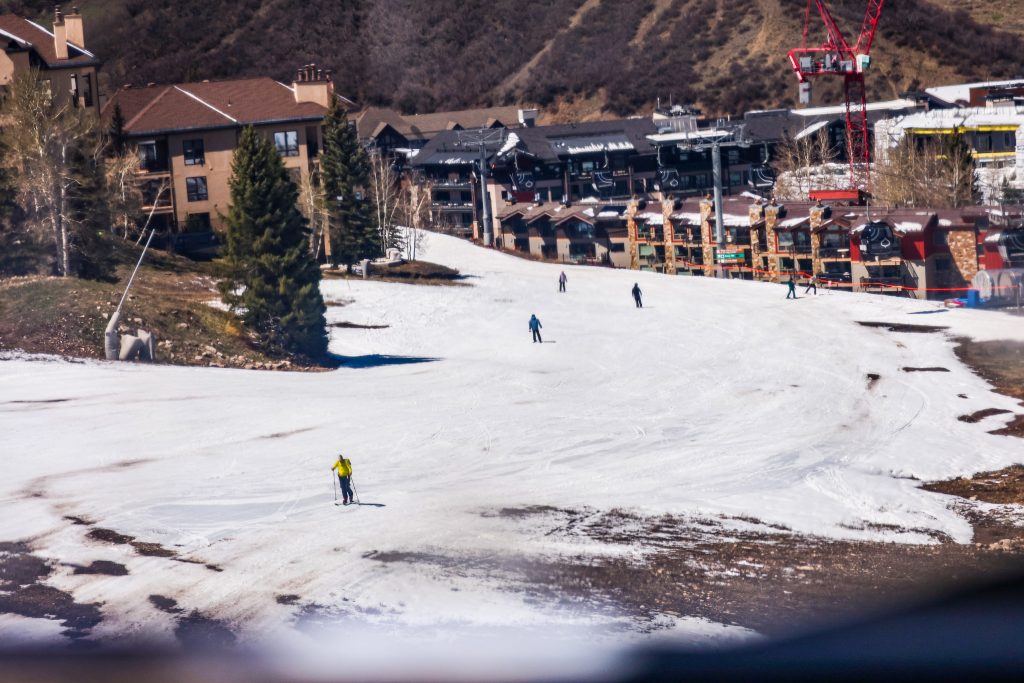
“We don’t have specific data on why March occupancy was lower, but anecdotally would say the low snow year contributed to it,” Julia Theisen, tourism director for Snowmass Tourism, told The Aspen Times.
Demand at Airbnb and Vrbo short-term rentals also decreased in March, after nine reported months of “consistent increases,” the data shows. Demand fell 11.9% compared to last March, with the number of active listings increasing by 5.4% from March 2025. The increase in available bookings paired with the booking decrease caused occupancy to drop 15.6% year-over-year to average 64.2% this March.
Average daily rate among short-term rentals also declined, down 0.9% year-over-year at $1,184 for the month.
The decreased average daily rate along with the “significant decline in demand,” according to the report, drove revenue down 12.7% compared to last March, to $19.3 million for the month.
Theisen noted that restaurant and retail were most affected by the loss of revenue.
The best of Snowmass, weekly.
Sign up for the weekly newsletter: SnowmassSun.com/newsletter.
The March decline in Snowmass aligned with a 7.9% drop in total passenger volume at the Aspen/Pitkin County Airport that same month, from 101,865 total passengers in March 2025 to 93,810 total passengers in March 2026.
This March decline is also on track with broader regional insights across the West Region Mountain Market Summary for the month, where March occupancy was down “a dismal 12%” across the West, the report reads. Seasonal occupancy declined to 6.7% year-over-year. Average daily rates also dropped down 5.6% as suppliers attempted to incentivize bookings, “nearing numbers we last saw in March 2021 as resorts struggled with pre-vaccine COVID,” the summary states.
The report also highlights, however, that the summer season is already seeing occupancy up 4%, average daily rates up 6.5% and revenue per available room up 10.8% for the region.
“Fortunately, mountain travel has done an excellent job of pivoting from winter recreation to year-round
destination tourism, and we’re heading into a summer that at this early stage is looking strong,” the report states. “While booking pace took a hit this month, the summer season has a good foundation.”
The update notes that low snowpacks mean an opportunity to get hikers, bikers and paddlers out earlier than usual.
Yet economic issues could still potentially stall the summer season, the report cautions, including gas price increases and inflation that spiked in March remaining elevated.
“We move forward with optimism based on the numbers, caution based on the economy and weather and some sense of relief that, at least at this stage, destinations have turned a corner to a brighter season ahead,” the report concludes in the regional insights section.
And yet, Snowmass is currently pacing 10% down overall in occupancy projections for the summer as of March 31, Theisen said, although average daily rate is pacing up.
“We are seeing a continued trend of shorter booking windows,” Theisen said, “so anticipate that the April and May reports will show some fill in for summer occupancy.”