How Latino voters influenced Colorado’s Democratic shift amid historic nationwide turnout
The Colorado Latino Agenda found that Latino voters shifted toward supporting Democrats in the midterm election, citing economic and immigration concerns

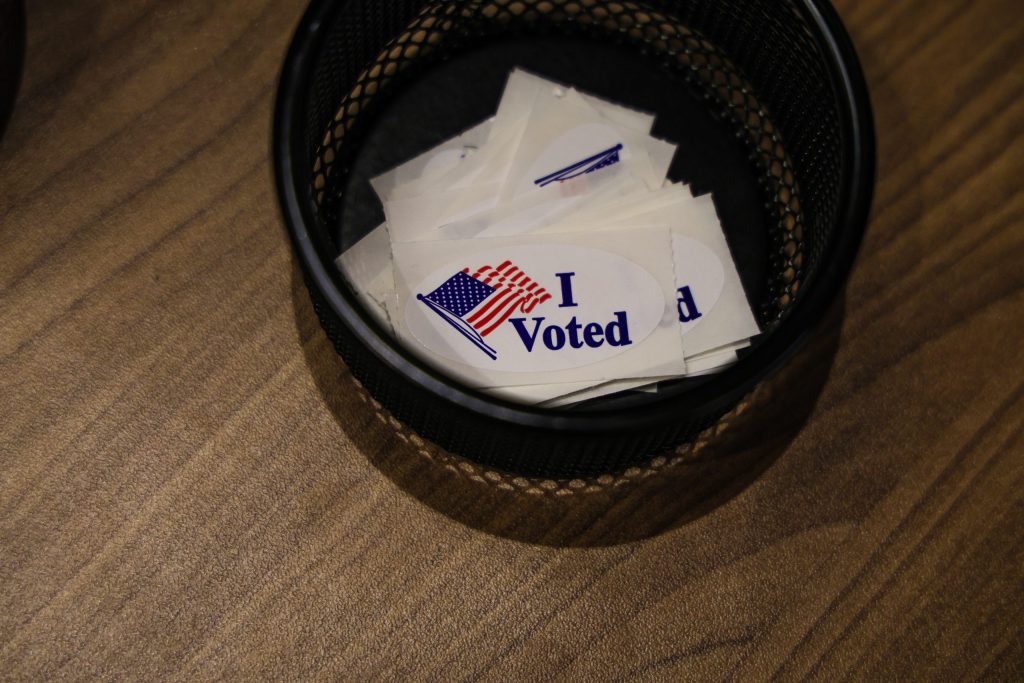
Chris Dillmann/Vail Daily archive
Amid a historic turnout among Latino voters during the midterm election, Latinos in Colorado played a notable role in helping elect Democrats to state and federal seats. Exit polling shows new and long-time voters were driven not by party loyalty, but by economic pressures and concerns about immigration overreach.
Key findings from Colorado Latino Agenda’s biannual exit poll found that the majority of Latino voters — who represent the second-largest and second-fastest-growing ethnic voting bloc in the state — provided strong support for Democrats on Nov. 3.
The exit poll, commissioned by the Colorado Latino Agenda, surveyed 500 registered voters who identify as Latino between Oct. 19 and Nov. 3, with oversamples in Congressional Districts 1 and 8. The Colorado Latino Agenda is an initiative of Glenwood Springs-based Voces Unidas and the Colorado Organization for Latina Opportunity and Reproductive Rights.
Latino voters represent 17% of the overall electorate in Colorado. Roughly 67% of Latino voters in the state said they supported Democratic congressional candidates during the midterm, a 4% increase from 2024. Roughly 65% of respondents voted for Attorney General Phil Weiser in the gubernatorial race and 67% voted for Sen. John Hickenlooper in the U.S. Senate race, both of whom won their seats.
Latino support also contributed to wins for key congressional battles in Colorado — including the state’s 1st and 8th Congressional Districts — where Latino voters backed Democratic candidates by more than a 2-1 margin over Republicans. In Colorado’s 8th Congressional District, an 11-percentage-point increase in Democratic support from Latino voters between 2024 and 2026 helped flip the district to blue, electing Democrat Manny Rutinel over Republican incumbent Gabe Evans.
“The scale of what happened on Tuesday is already clear,” said Alex Sanchez, president and CEO of Voces Unidas. “We saw an El Niño-level blue tsunami swept from Texas to Arizona, and right here in Colorado.”
The support for Democrats in the midterms comes after findings from the 2026 Colorado Latino Policy Agenda survey revealed that — for the first time in six years — more Latinos said they believed the state was moving in the wrong direction than the right direction. Of the 66% who indicated they felt the country was moving in the wrong direction, 75% blamed Trump — up by almost 10 percentage points from 2025.
The shift in Latino voters supporting Democrats — and the increase in those who participated in the election — is a clear signal that Latinos are more loyal to the concerns of their community than they are to a particular party, said Gabe Sanchez, vice president of research at BSP Research. He added that the newly elected Democrats could just as easily lose that support if they fail to deliver on their campaign promises.
“Latinos are not party voters; they’re policy voters,” said Gabe Sanchez. “And as a consequence of that, I think there’s an opportunity for Democrats who did well in this election cycle with Latinos, but that opportunity obviously can be wasted if these expectations among Latino voters are not met.”
Latino voters cite the economy, immigration overreach as top issues
Rather than voting to support a particular party or candidate, the largest percentage of poll respondents — 36% — said their ballot was reflective of the issues most impacting their communities.
Latino voters overwhelmingly listed the economy as their top priority going into the midterms. Forty-four percent of respondents cited inflation and the cost of living as the top concerns for the federal government to address, with a greater 51% listing them as their top issues for the state to pursue.
Nearly half of respondents in the poll stated that groceries and food costs were creating financial pressure on their household, with 40% listing rent or mortgage costs and 38% listing gas prices as significant economic stressors. Other priorities closely aligning with inflation for Latino voters were improving wages, lowering healthcare costs and creating affordable housing, according to polling results.
When asked which party voters believed would do the best job at addressing their top concerns, 56% of respondents sided with Democrats. The other 44% either weren’t sure (3%), or were split between trusting Republicans (23%), both (12%) or neither (7%).
“Our hope as an organization is that the new governor in Colorado, the new legislature and the new leadership in Congress hopefully turn (their promises) into results, because we cannot mistake our support for unconditional loyalty and risk the same fate as those who have failed our communities before,” said Alex Sanchez.
Immigration policy also took center stage during the midterms. Approximately 73% of Latino voters also said that immigration played a significant role in how they voted during the midterms, including 52% of Republican voters.
Of the voters who said their decision was influenced by immigration enforcement in the United States, 59% said they were worried about keeping families together. Forty-seven percent also said they cared about preventing racial profiling and civil rights violations.
“Not only was (protecting immigrant rights) rounding out the top level of priorities, but it more than doubled in priorities since 2024,” said Gabe Sanchez. “We clearly think that was part of the energy and enthusiasm that drove a lot of Latinos to the ballot box across the state of Colorado in this cycle.”
Despite the impact of Latino votes in the midterm election, three out of every five Colorado respondents said they were not contacted by a candidate, political party, campaign or other group to discuss issues or encourage them to vote. Spanish speakers, those with less education, lower incomes and independent voters were among the least likely to be contacted.
Alex Sanchez said that the lack of information being provided to Latino voters likely contributed to confusion over certain ballot measures.
Many Latino voters, 39%, who participated in the exit poll expressed confusion over the way Colorado’s ballot measures were written. While voters largely agreed with the underlying values of various measures, support for the measures varied widely due to the large proportion who reported either not understanding or not voting on the measures, according to the exit poll.
Midterms see historic voter turnout among Latinos
Nationally, the midterms saw historic turnout among Latino voters. According to a 2026 voter poll released by UnidosUS and the Latino Community Foundation, roughly 17% of Latino voters cast ballots in their first federal election, while 41% returned to voting for the first time since 2022, the majority of whom were under 30 years old.
“While the numbers are still coming in, what we know so far indicates that this will undoubtedly be the largest turnout of Latino voters ever in a midterm election,” said Janet Murguía, president of UnidosUS. “It’s estimated that as many as 14.5 million Hispanics went to the polls. And I can’t help but reflect on the fact that President Trump asked voters across the country to pretend like he was on the ballot, and our observation is that Latino voters did just that by resoundingly rejecting his extreme policies and actions, and anyone who rubber stamped them.”
Similar to Colorado, Latino voters across the country listed economic concerns and the cost of groceries as leading issues, and displayed what Murguía called a “wholesale rejection of the Trump administration’s deportation campaign.”
“Half of the Latino population have nothing left over after they pay their bills, or might even be struggling to make their bills each month, and more than 4 in 10 expect that the continuation of Trump’s economic policies would make them worse off in the next year,” said Gary Segura, president of BSP research.
For several Latino voters, the midterms represented their first time participating in an election as economic issues triggered broader activism. A significant portion of new Latino voters were also those aging into the electorate, according to UnidosUS data.





Aspen Snowmass records highest snow totals of any Colorado ski resort
Aspen Snowmass reported up to 8 inches in 24 hours as of Thursday morning across all four mountains, the highest snow totals of any Colorado ski resort following Wednesday night’s storm.