Health kicks off Aspen Ideas on June 22-25
Kimberly Nicoletti Follow
Austin Colbert/The Aspen Times
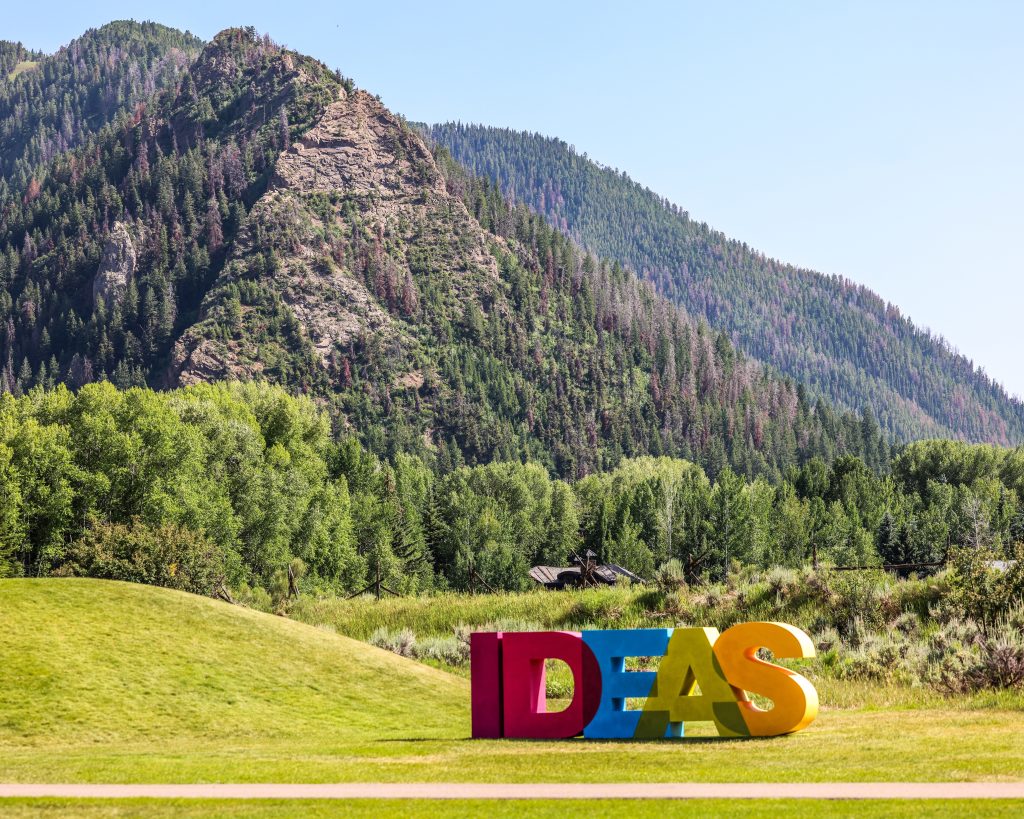
Since 2014, Aspen Ideas: Health has preceded the Aspen Ideas festivals. This year, from June 22-25, it offers more than 60 sessions with seven program tracks revolving around patient care, new treatments and technology, longevity and vitality, creativity, medical enterprise, leadership and how health-related questions often lack black or white answers.
The tracks are simply an organizing principle; you can attend any sessions you’d like. However, if you’re most interested in one track, the program specifies which sessions belong to which tracks.
“I don’t know anybody who goes to every session in one single track. People go to individual sessions based upon their interest and who’s going to speak,” Ruth Katz, director of Aspen Ideas Health and vice president of the Aspen Institute, said.
There’s no track dedicated to artificial intelligence since it currently permeates all aspects of healthcare. However, plenty of sessions address the hot topic. In fact, one of the closing speakers features Priscilla Chan, a pediatrician and co-founder of Biohub. She aims to advance biomedical research and technology to help cure, prevent or manage diseases by combining AI and biology to discover new insights into human biology.
The three-day event generates stimulating conversations about new innovations, as well as deep dives into emerging transformations in healthcare. It also provides experientials, from morning yoga, sound healing and meditation to guided walks at the Maroon Bells, bird watching and art tours. Evenings brim with dining from local food vendors, live music, talks and book signings.
A special community series, designed for those living in the Roaring Fork Valley, highlight topics such as longevity in high elevation, healthcare in the mountains and digital healthcare in Aspen, specifically wearables. You don’t have to buy an entire Aspen Ideas: Health pass to attend; tickets are $20 each.
“We did this one year before, and it was a big hit, and we’re doing it again this year. We’ve tailored topics to issues that hit close to home, home being the valley itself,” she said. “Local experts are on the panels, as well as experts who have participated in Aspen Ideas: Health.”
Ezekiel J. Emanuel, author of “Eat Your Ice Cream: Six Simple Rules for a Long and Healthy Life,” will talk about longevity — and, of course, ice cream will be available afterward. Richard Becker, the new CEO of Aspen Valley Health, joins Kathleen Sebelius, the former U.S. Secretary of Health and Human Services, in discussing healthcare in the mountains.
The nearly year-long process of putting the conference together starts with a survey of attendees to find out what they’d like to see more and less of. Then, seven members identify essential topics in healthcare to identify overall themes, refining each through elimination and addition over about two months. By November, they pair lists down to six or seven tracks and ask experts to speak.
One track that remains consistent every year involves innovation, from specific diseases like cancer to AI.
“We consider new stuff that people may not have heard of,” she said. “I hope that people two years from now, when something new becomes mainstream, will say, ‘I heard about that first at Aspen Ideas Health.'”
The committee strives to present balanced perspectives on issues. This year, a track titled Gray Matters doesn’t revolve around growing old, but, rather, the fact that many issues in healthcare don’t have black-or-white answers.
“For that track, we will definitely have people with different opinions who talk about the grayness of whatever the issues may be,” she said.
The committee choses speakers based on expertise and those who are up-and-coming and highly regarded in the field.
Attendees obtain new awareness and perspectives by attending the festival.
“Mainly, they gain a lot of knowledge, and hopefully they hear different perspectives on many health issues and come away from their experience at Aspen Ideas Health thinking, ‘I never thought about X that way,'” she said.
And, participants have plenty of fun.
“We never have been a typical or ordinary medical conference. We view health in a much broader way,” she said. “We are a community. Everybody there is interested from different perspectives in one topic: health and wellbeing. Connections are made between people who’ve never met, among organizations that didn’t know that they were involved in the same kind of work. We have many instances where people go off, and they collaborate, and they do great things together as a result of being introduced and spending time together at Aspen Ideas: Health.”
When curating sessions, they keep in mind that not only healthcare professionals, but also the general public attend. In fact, the year the festival launched, one of the speakers was a young woman in Oregon dying from brain cancer wanting a legal right to die. When she did pass away, her husband became an advocate to establish state laws for the right to die. Now, 13 states legally protect the option for terminally-ill patients.
“It all started at Aspen Idea’s Health. He’s not a health professional, but he’s interested in health issues and made connections there,” she said.
Another example stems from a woman with a daughter who was deaf. She met a few of the FDA commissioners at the festival to learn more about how the FDA approval process works and became an advocate for over-the-counter sales of hearing aids without a prescription, testifying before Congress and convincing one of the main players in FDA approval to support the measure.
“It has made hearing aids much more accessible to millions of Americans,” she said.
Each session lasts about 50 minutes, allowing for about 10-15 minutes for questions from the audience, as well as time to talk to speakers before or after presentations — and throughout the conference.
“That’s very important for us and for the attendees,” she said. “I’ve seen speakers sit down on the grass and continue conversations that began after their sessions. They’re very accessible.”
Ben Roy brings empty-nester energy to new Aspen comedy set
Comedian Ben Roy is returning to Aspen with an all new comedy set for two nights of laughs.