Ospreys return to Western Colorado for the season

Izzy Wagner Follow
Georgette Parrish/Courtesy photo
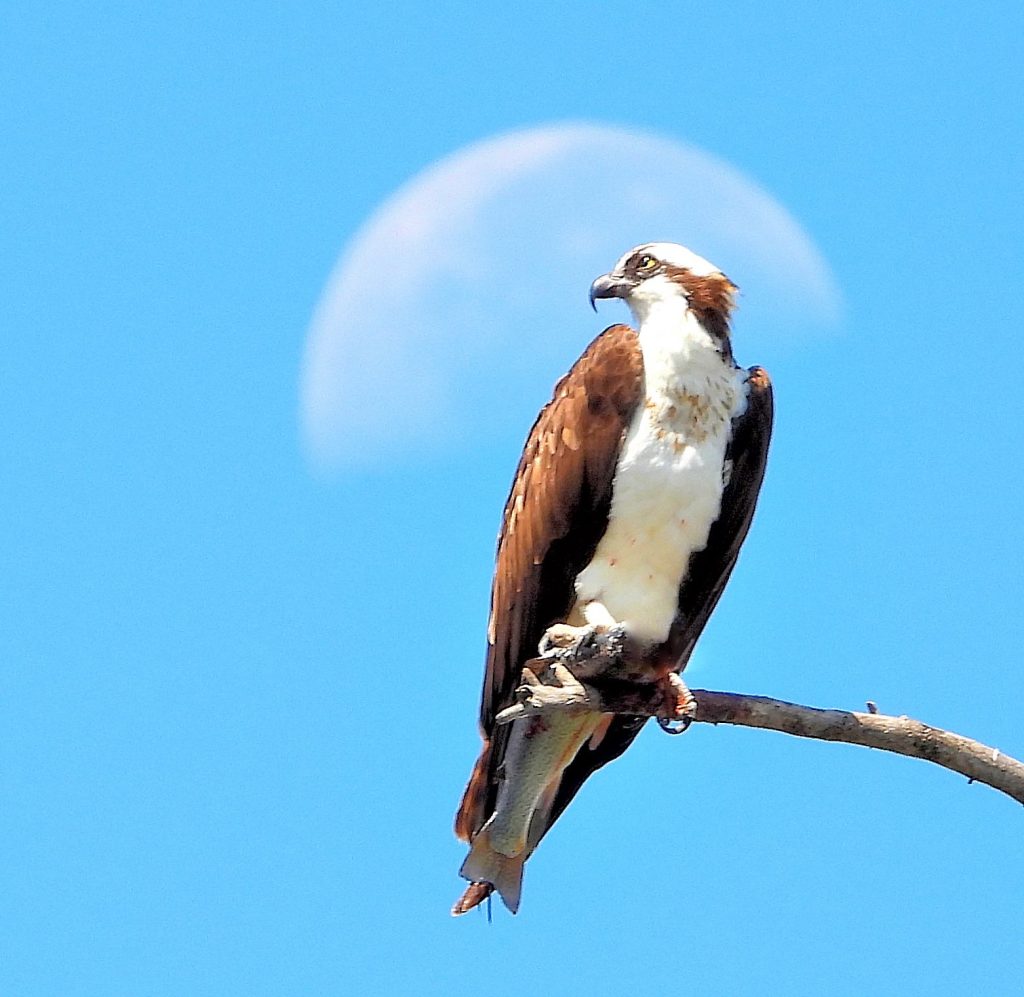
Grand Lake’s beloved osprey family returned to their nest near Shadow Mountain Lake on April 10.
Kent Roorda, who maintains a livestream of the osprey nest, said the family of ospreys vacated their Grand County home in October, but the mother and father returned right on time for spring. Most breeding ospreys in North America migrate to Central and South America for the winter, according to Cornell Lab.
“It is always a big relief and pleasure to see both the male and female each spring,” Roorda wrote in an email. “Each of them has traveled thousands of miles since we last saw them. … If only they could talk and tell us about their travels.”
The couple will soon start their spring cleaning, Roorda said, as they renew their nest for another breeding season. Their breeding months range from January through May. Osprey pairs are generally monogamous and often mate for life.
After the nest is prepped and ready, the ospreys will mate hundreds of times before eggs are laid. The birds stay quite busy throughout the entire breeding season, Roorda said.
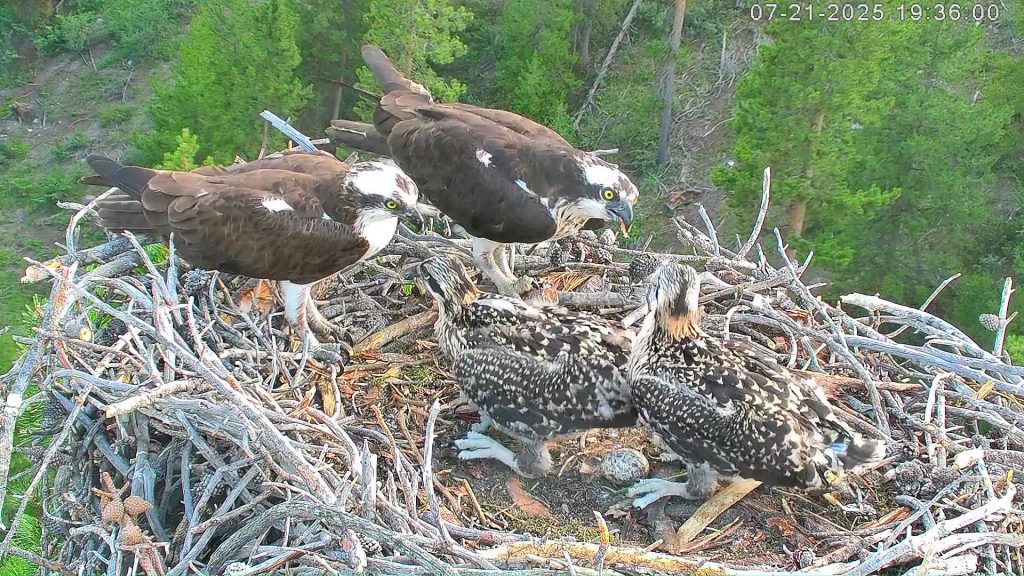
About ospreys
These birds are also known as the fish hawk due to their keen fishing skills. Fish make up 99% of their diet, and they are equipped with specialized barbs on the pads of their feet, hooked talons and a reversible outer toe to help them snatch fish from the water, according to the National Wildlife Federation.
Due to their fishy diets, ospreys nest along rivers, lakes, wetlands and coastal marshes. They also tend to nest on telephone poles, pilings, channel markers and other structures in or near bodies of water. Bald eagles and great horned owls sometimes prey on adults, while snakes and raccoons occasionally take eggs and chicks, according to the wildlife federation.
They prefer warmth, so breeding pairs in Canada and the northern United States generally migrate far down south for the winter. An Osprey may log more than 160,000 migration miles during its 15-to-20-year lifetime, according to Cornell Lab’s All About Birds.
To view a livestream of the nest, visit Osprey-Camera.Click2stream.com.
Original reporting from skyhinews.com
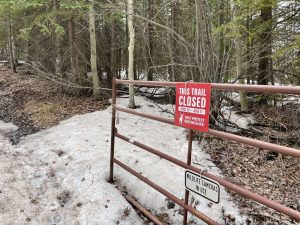
Snowmass Village announces seasonal trail closures
Snowmass Village will be temporarily closing Anaerobic Nightmare, Sequel and Tom Blake trails during the last week of April as part of the town’s annual seasonal wildlife protection program.




Get on ‘board’ with Aspen’s newest charcuterie board business
Borde + Kurv offers handmade boards, along with baskets, spanning everything from brunch to charcuterie to dessert — with thoughtfully sourced and mostly local produce evoking European flavor and tradition.