Former Aspen Times staffer files lawsuit against newspaper

Former Aspen Times staffer Andrew Travers this week filed a lawsuit against The Aspen Times, Ogden Newspapers, and Swift Communications, alleging he was wrongfully terminated after publishing previously spiked columns and internal communications.
The suit was filed in Pitkin County District Court on Tuesday by Denver-based firm Killmer, Lane & Newman LLP on behalf of Travers. It claims, among other things, breach of contract and wrongful discharge in violation of public policy.
Travers is seeking compensatory damages that include monetary and non-monetary damages (such as emotional pain, suffering, mental anguish, loss of enjoyment of life, and medical bills), as well as injunctive relief, including reinstatement of employment.
Travers’ attorney, Darold Killmer, when reached by phone, said “reinstatement of employment” was listed as a potential remedy if Travers wins the lawsuit, but it was not a guarantee that Travers would pursue employment with the Times.
Cameron Nutting Williams, the chief revenue officer for Ogden Newspapers, in an email, wrote: “While we have not yet received any official notification of this lawsuit, we continue to strongly disagree with Mr. Travers’ characterization of this situation and deny any unlawful conduct.”
Travers worked as the arts and entertainment editor, then the editor of the Aspen Times Weekly. After the resignation of former editor David Krause, Travers accepted the role of editor at the daily, according to the suit.
When OKO Group purchased the Lift IA property on Aspen Mountain in March 2022 for $76.25 million, the Times covered the purchase, focusing on OKO Group’s principle owner, Soviet-born Vladislav Doronin. Community outrage over the sale from the Norway Island LLC — a partnership including Jim DeFrancia of Lowe’s Development, Jeff Gorsuch, and Bryan Peterson that had bought the parcel from the Aspen Skiing Co. eight months prior for $10 million — to OKO Group led to letters to the editor and local columns that were critical of the deal and of Doronin in particular.
Doronin filed a defamation lawsuit on April 13, 2022, which was eventually settled out of court in May of 2022. During settlement negotiations, the Times restricted Doronin-related coverage. Krause tendered his resignation in late April of 2022 and departed in May.
After weeks of talks with The Aspen Times and its leadership team, Travers accepted the editor position on June 8, 2022. He was fired June 10, 2022, after publishing a previously held column about the controversy, which included internal emails, as claimed in the suit. That column remained on The Aspen Times’ website, but the internal emails were removed.
Several of the Times’ editorial staff left the paper during the settlement negotiations with OKO Group or thereafter, including current Aspen Daily News Managing Editor Rick Carroll, reporter Scott Condon, Aspen Public Radio reporter Kaya Williams, and former reporter Carolyn Sackariason, who now works in the City of Aspen’s communications department.
The suit calls for a jury trial. Killmer said that settlement talks, going back approximately six months, were not successful.
Travers is currently employed with the Aspen Institute as the Bayer Center’s Penner Manager of Educational Programs.
The defendants will have 21 days to file an answer to the complaint or a motion to dismiss from the date of being served.
WineInk: Wine matters
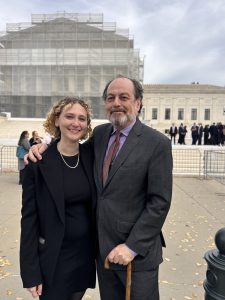
While they don’t serve wine at the Supreme Court of the United States, a wine company recently served as a focal point for a monumental ruling by the Court. Last Friday, while much of Aspen was tuned into the Olympics and Aspen local Alex Ferreira’s gold medal-winning run, the Supreme Court issued a much-anticipated ruling in a case originally titled V.O.S. Selections, Inc. v. Trump. The Court, in a 6-3 decision, determined that the Trump administration’s use of the International Emergency Economic Powers Act (IEEPA) to justify the sweeping “Liberation Day” tariffs exceeded the President’s authority. The lawsuit had argued that the Administration did not have authority to impose across-the-board, worldwide tariffs without the approval of Congress. The majority of the Court agreed.