Former Aspen One employees purchase abandoned mine to destroy leaking methane

Christopher Caskey/Courtesy photo
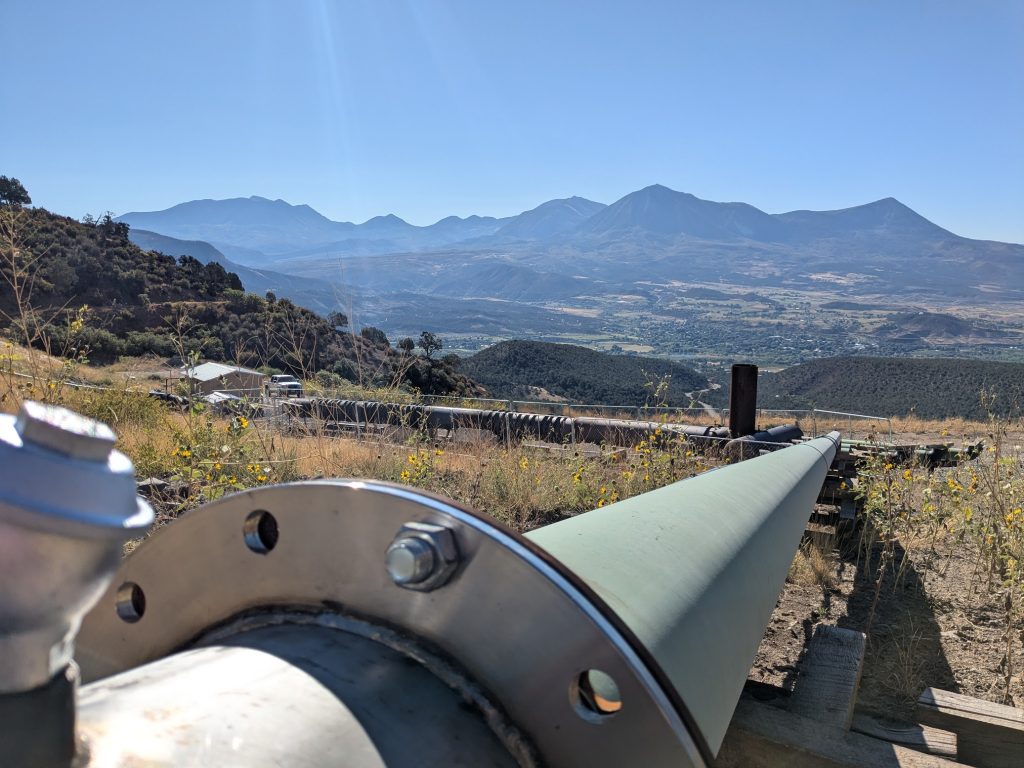
Former Aspen One Senior Vice President of Sustainability Auden Schendler has partnered with former Aspen Skiing Company CFO Matt Jones, as well as Founder of Delta Brick & Climate Company and former Faculty at the Colorado School of Mines Christopher Caskey, to purchase an abandoned mine in Paonia and destroy the methane leaking out of it.
Methane is what Schendler calls “a super potent greenhouse gas” or a “super pollutant” that’s roughly about 84 times as intense as CO2. It’s particularly associated with underground coal mines, although it’s leaking out of the Earth across the country and the globe.
“This is a very destructive gas and your first goal should be destroying it,” Schendler said.
Jones echoed this sentiment, adding, “If you want to address climate now, you’re going to get the most leverage by starting with methane. We’re starting here and we’re shouting it from the rooftops. This works.”
Schendler and Jones worked together on a previous methane initiative while at Aspen One, converting methane captured from the Elk Creek Mine at Somerset into electricity. That project gave them the inspiration to begin addressing methane leaks at abandoned mines around the state, purchasing the one in Paonia in 2023.
“When I retired from the Skiing Company, this is what I wanted to do,” Jones said. “I wanted to give back a little bit and this was an area I had some expertise in.”
Schendler noted that there are a vast number of old mines in Colorado that are leaking methane — despite bulldozing dirt into the entrances to close them off, it doesn’t seal the holes.
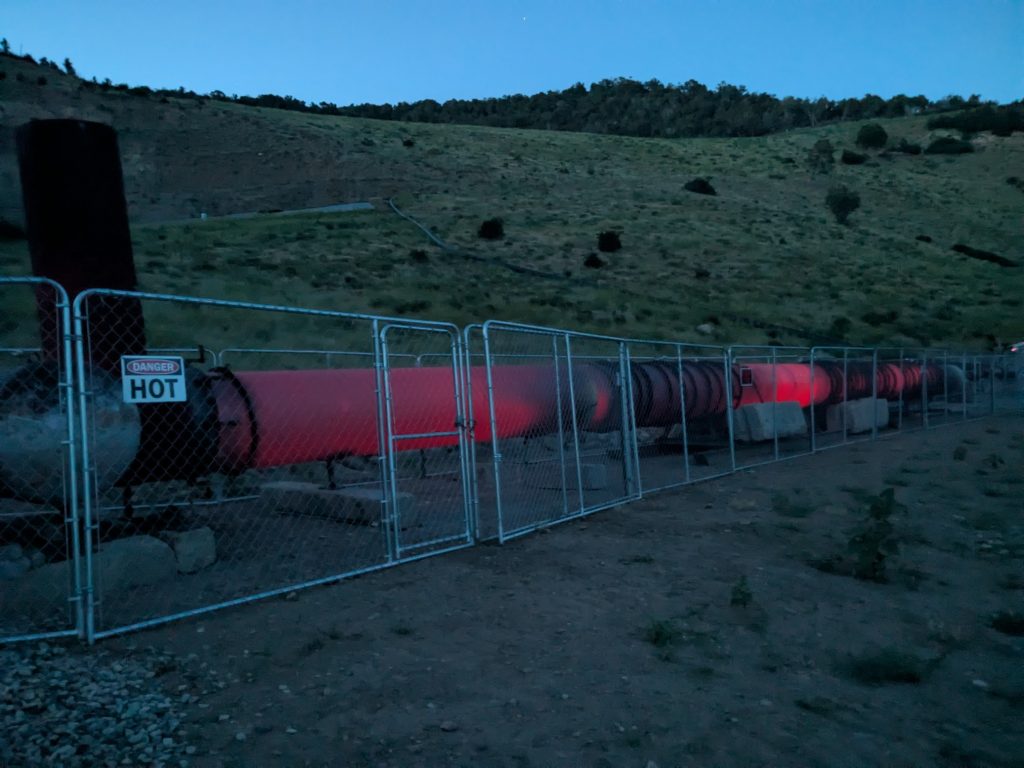
“What we did is we said, we’ll purchase this mine and we’re going to drill a hole into the center of it and we’re going to seal the gaps as much as we can and we’re going to take the methane out and burn it,” Schendler said.
While the land was purchased for $400,000, according to Jones, Schendler confirmed the total money put into this project is roughly $1.4 million when combined with the drilling operations. The goal is to burn off the methane until the gas volume declines, which Schendler and Jones said can occur over a number of decades through this process.
“It’s very cost-effective climate action, because the source is concentrated and all you have to do is burn it to get rid of it,” Caskey said.
Caskey met Schendler and Jones through the energy work at the Elk Creek Mine, and has been working independently through his company to use methane as a heat source for a kiln that manufactures ceramics from mud that’s clogging up Paonia Reservoir. He noted that the work being done at the abandoned mine is equivalent to taking several thousand cars off the road.
While both the Elk Creek Mine project and Caskey’s ceramics company followed a model where methane is converted to power, that is not currently on the table for the Paonia mine project. Jones credited this in large part to the extensive costs it takes to acquire the equipment to convert captured methane to energy — up to 10 times the capital it takes to run their current operation.
“The capital you would use to make electricity, we could do 10 other mines,” Jones said. “If you’re really focused on climate, you really just want to destroy as much of the methane as you can.”
While the mine originally saw a temporary project as a drilling permit was acquired, which captured about 20% of the methane with a rolled out pond liner and a pipe underneath that would fill up as the mine “breathed,” according to Jones, full production went into effect last summer.
What’s happening in Aspen, in one click.
Sign up for daily or weekly newsletters AspenTimes.com/newsletter
“My kids helped me lay down that pond liner, and my son said, ‘that was the best day of my life,'” Jones said. “We knew we were going to be in for a lot of difficult times, but we pushed through and made it happen.”
Holes drilled down about 50 feet into the mine opening were then filled with foam and had a pipe dropped into like a straw. That pipe now funnels the methane up where it gets destroyed.
As of right now, the operation is mostly automated.
The aim for all three partners is to not just continue this work with other mines themselves, but to inspire others to do the same.
“The answer of why we do it is … to model solutions for methane and hope to get others to follow,” Schendler said.
Jones added, “We want to be a model. We want people to copy us. We want to do this and have this succeed so that everybody goes and does this everywhere.”
For those who aren’t able to venture out on their own, the Paonia project is also creating a carbon offset that is currently sold into the California Cap-and-Invest program, although Schendler and Jones stressed they’re hoping to sell the credits directly to companies in order to help fund additional projects.
“If people want to do something but they don’t know exactly what to do, they can help us by buying these credits so we can recycle this into the next mine and the next mine and the next mine,” Jones said.
To learn more, visit https://www.switchbackrestoration.co.
“Take action where you can,” Jones added. “We’re just some dudes who had a good idea and followed through on it. We put our money where our mouth is and it’s working out.”