How is Colorado’s river otter population faring 50 years after reintroduction?
Colorado Parks and Wildlife is seeking public observations to find the answer

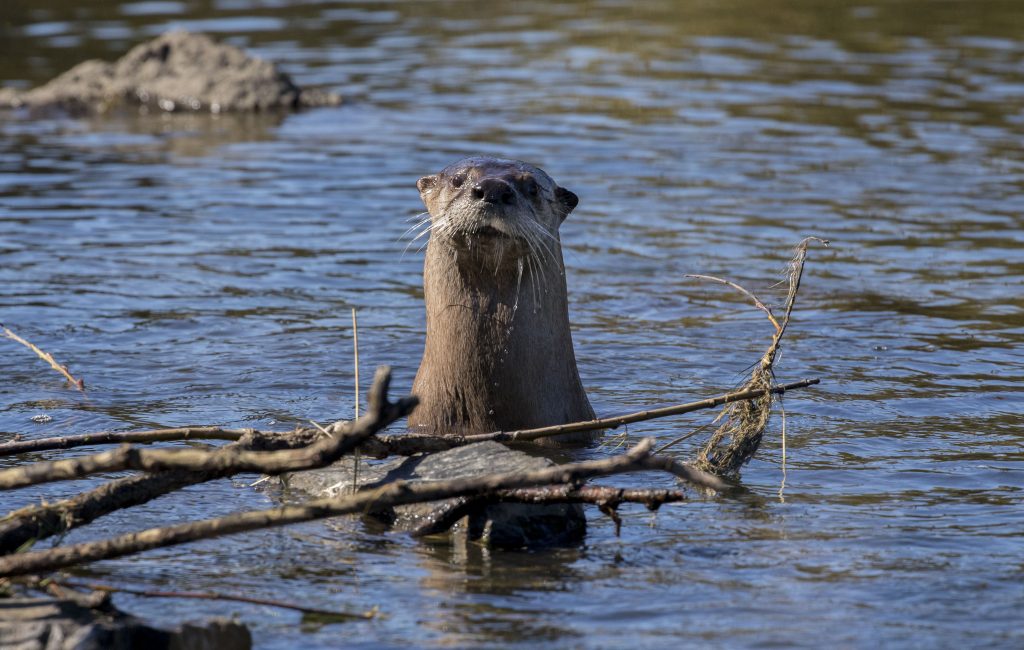
Roy W. Lowe/U.S. Fish and Wildlife Service
Fifty years ago, Colorado Parks and Wildlife took steps to return the river otter to waterways across the state. Now, the agency has dedicated the next 12 months to documenting how the playful, water-loving mammals are doing — and it wants the public’s help.
On Monday, April 13, Parks and Wildlife launched a program to track the success of its reintroduction efforts five decades later. With what it’s calling the Otter YEAR, short for yearlong engagement and assessment of river otters, the wildlife agency will be documenting the places where the mammals live and gauging their population size.
Parks and Wildlife staff and partner organizations will be conducting population surveys and submitting observations through the iNaturalist app — a community science and social network platform that allows users to record, identify and track flora and fauna. The agency has planned efforts in the Yampa, Green, Colorado and Gunnison rivers.
The state wildlife agency is also inviting members of the public to record observations in the app and help build a clear picture of what the animals are up to. The information collected this year will “inform future conservation work, including potential reintroduction efforts into suitable habitats that remain unoccupied,” according to a Parks and Wildlife news release.
“This year’s survey will help us understand the extent of reintroduction success and any limitations to it,” said Bob Inman, Parks and Wildlife’s river otter program manager, in a statement.
To participate in Colorado Parks and Wildlife’s river otter tracking, download the iNaturalist app on your iOS or Android device and search for the “Otter Y.E.A.R. 2026” project.
You can submit photos or other evidence, such as scat or tracks, to the project. CPW asks that you include location details to help its overall data collection.
What is a river otter?
River otters are Colorado’s largest — and longest — aquatic weasel, sharing some key differences and similarities with other species like beavers, muskrats and mink, according to Parks and Wildlife.
The “critical role” that river otters play in maintaining the biodiversity and health of aquatic ecosystems, makes the predator a keystone species, the state wildlife agency said. “If the population is increasing it indicates the ecosystem is healthy,” it added.
The U.S. Fish and Wildlife Service compares river otters’ size to that of an average house cat. Parks and Wildlife reports that most grow to between 3-4.5 feet long. They have a rich, brown-colored coat and a silvery brown belly.
The keystone species are described as comfortable swimmers, playful, determined, energetic and sleek. Otters often stay in groups, compared to the more lonesome beavers and muskrats. As a predator, the river otters eat mostly crayfish, frogs and fish, but will also eat young muskrats and beavers.
Physically, river otters have a long, torpedo-like body with a tube-like tail — compared to the rounder body and bald, wide flat tail of beavers and the rounder body and bald, rate-like tail of muskrats.
According to Parks and Wildlife, otters spend most of their time in the water using their slim body and tails to swim in eel-like patterns.
When swimming, the otter takes the appearance of a periscope, typically keeping only their heads and necks above water, often even stretching their heads higher to look around. Beavers, muskrats and mink all swim flat on the water surface with most of their bodies visible.
When out of the water, otters live in bank dens abandoned by beavers, according to Parks and Wildlife.
Colorado’s river otter reintroduction effort
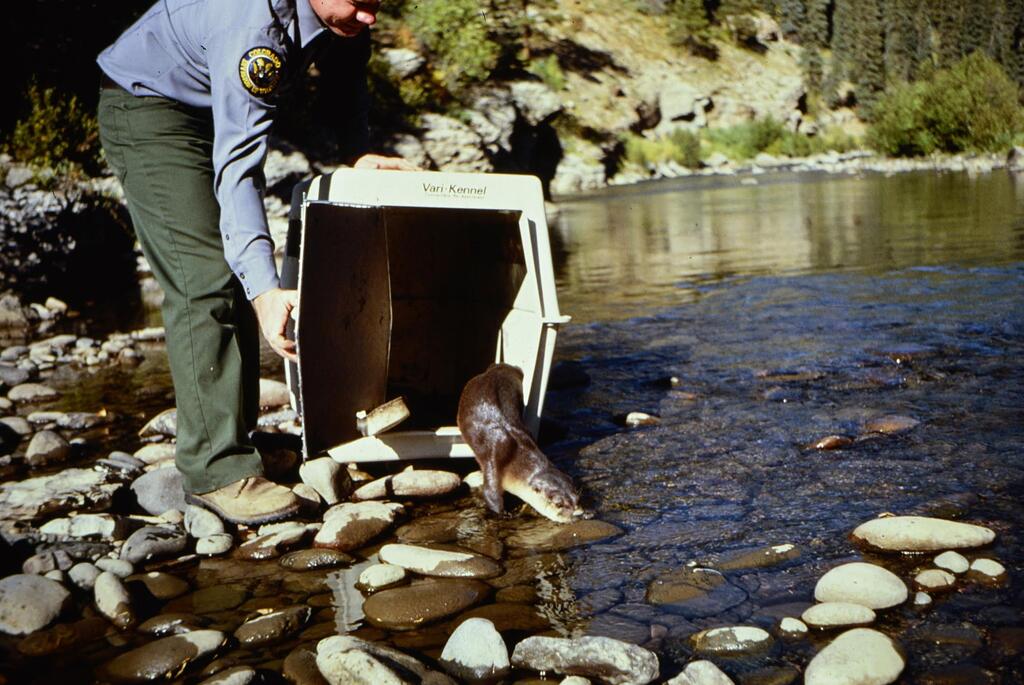
Historically, river otters could be found in every major river in Colorado. However, in the early 1900s, they were eradicated completely due to water pollution as well as unregulated hunting and trapping, according to Parks and Wildlife. They were first listed as state endangered in 1975.
The last confirmed river otter in Colorado was identified and hunted sometime between 1906 and 1909 in the lower canyon of the Yampa River, as reported in Parks and Wildlife’s 2003 river otter conservation plan.
Between 1976 and 1991, the state wildlife agency underwent a reintroduction effort to bring back the keystone species. Around 120 river otters were brought from other states and released in Cheeseman Reservoir, the Gunnison River, the Piedra River, the stretch of the upper Colorado River that runs through Rocky Mountain National Park and the Dolores River.
River otters have since expanded into other waterways like the Roaring Fork, Eagle, Fraser, Blue, Yampa and Green rivers.
This reintroduction effort led river otters to be downlisted from state endangered in Colorado to threatened in 2003.
Colorado Gov. Jared Polis wrapped the 50th anniversary of river otter reintroduction into other big milestones for the state.
“While the nation’s semiquincentennial and Colorado’s sesquicentennial may take the splashy headlines, we are also celebrating an important anniversary for Colorado’s river otters,” Polis said in a statement. “These slippery, but playful, creatures play an important role in strengthening the health of our rivers and we have seen river otter populations successfully spread across the Western Slope ahead of this milestone anniversary of their reintroduction.”





Aspen to see new e-bike fees at Maroon Bells this summer
A new $5 amenity fee will be required of all visitors entering the Maroon Bells Scenic Area on e-bikes this season.