How Colorado is navigating social challenges, political headwinds in the second year of wolf restoration
As the state builds a self-sustaining population of gray wolves, are politics and emotions pushing efforts away from science?

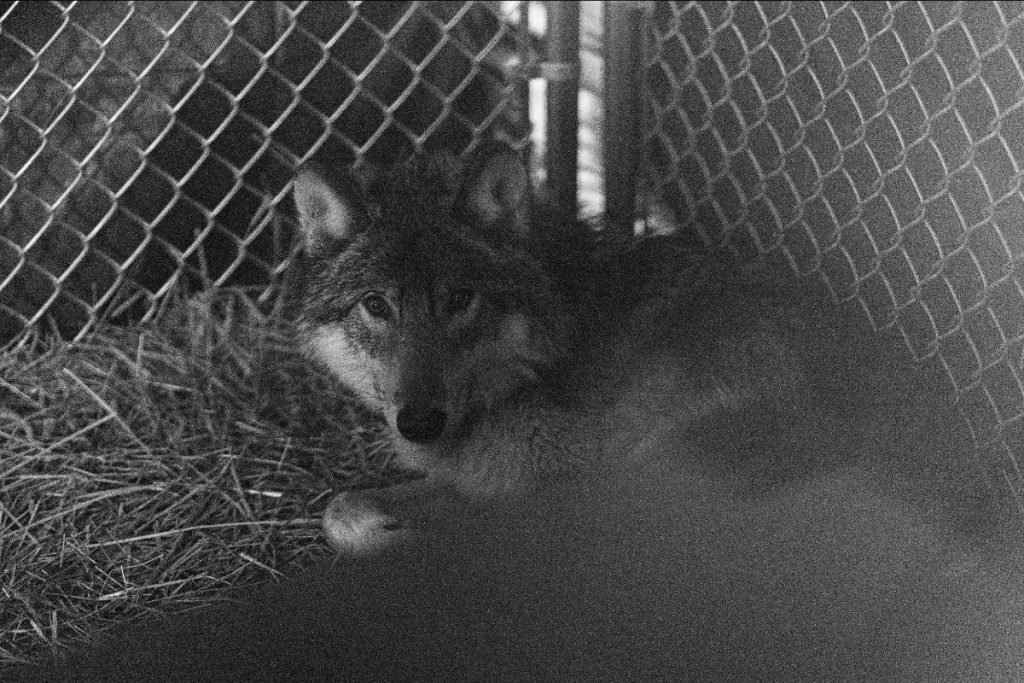
Colorado Parks and Wildlife/Courtesy photo
This is the second story in a two-part series recapping Colorado’s second year of wolf reintroduction.
When Coloradans narrowly passed a ballot measure to reintroduce gray wolves — and help producers prevent conflicts and compensate for losses — it was known that building social tolerance with humans around the predators would be a key element of the reintroduction’s success.
“Gray wolves elicit a lot of emotions across the public that we serve,” said Jeff Davis, the Colorado Parks and Wildlife director, before he was forced to resign this November. “Unfortunately, they’ve had a tragic history but continue to prove their resilience and determination to survive. We all know that when emotions are high, it can be difficult to see the forest for the trees and the unintended consequences of our actions.”
Luke Perkins, public information officer for Parks and Wildlife, said that while the state wildlife agency knew building “social acceptance of restoration efforts” would be part of the process, it “did not place predictions on when and how that would progress.”
During the second year of the restoration, Parks and Wildlife’s leadership, management, and decisions regarding wolves were questioned as producers, communities, and elected officials pushed the agency for greater communication, transparency, and progress on mitigating conflict.
“I think in the first year, there was a lot of confusion about how it would work and what the management rules would be and how that would be handled, so they were kind of waiting to see how the rollout would work,” said Brittany Dixon, executive director of Club 20, an advocacy group representing Western Slope interests. “Year two, the confusion hasn’t gone away, and our producers have tried to work within the system but are finding that it’s very broken and unworkable.”
Carrying over many of the concerns and tensions from 2024, the January wolf releases kicked off 2025 with rumors, misinformation, and transparency concerns from many across the state and on social media.
As ranchers and communities felt like they were kept in the dark during the British Columbia operations, it was the Colorado Wolf Tracker Facebook page — whose membership shares pictures, information, and opinions on wolves and wildlife issues — that broke the news that new wolves were in Colorado. The page tracked a LightHawk plane landing at the Eagle County Regional Airport in Gypsum, connecting it to the operation before it was publicly announced.
The choice to bring wolves from British Columbia was questioned by some — U.S. Reps. Lauren Boebert, Jeff Crank, Gabe Evans, and Jeff Hurd, all of whom are Republicans representing Colorado in Washington, claimed Parks and Wildlife’s import of wolves from British Columbia was illegal and rushed — but applauded by others.
“Getting the wolves from British Columbia that did not have a history of depredation has proven to be slightly more positive with regards to depredation,” said State Sen. Dylan Roberts, D-Dillon. “Some of those wolves have still killed livestock, but I think we’ve seen less conflict from those wolves than the wolves from Oregon that we got in the first year.”
Federal lawmakers’ questions about sourcing wolves from outside the country have continued to cause problems. In October, the newly appointed U.S. Fish and Wildlife Service Director Brian Nesvik imposed a new interpretation of where Colorado can source its gray wolves from, claiming the animals must come from the United States’ Northern Rockies region, where wolves are federally delisted. It’s a decision that has hindered Parks and Wildlife’s plans for a third winter release. To date, it has not found a source and is facing a closing window, according to Perkins.
“Pausing introductions now could introduce long-term costs and complications that far outweigh any short-term logistical or political benefit,” he said. “The discussion of translocations has continued to be incredibly emotionally and politically charged and efforts for this year have been dealt significant setbacks that could hold long-term ramifications for the program.”
Some welcome the idea that this could force a break in wolf releases — something that has failed to actualize through efforts from the state legislature, citizen petitions, and other groups.
Merrit Linke, a Grand County commissioner and rancher, said a pause could help to get more range riders out, get more management practices defined, and clearly administered.
“It might help to take a breath, take a time out, and figure out what the heck we are doing,” Linke said. “If we’re doing flood irrigation in the high country and your ditch is starting to wash out, what’s the first thing you do? You shut off the water and fix the ditch. That, to me, is what’s going on.”
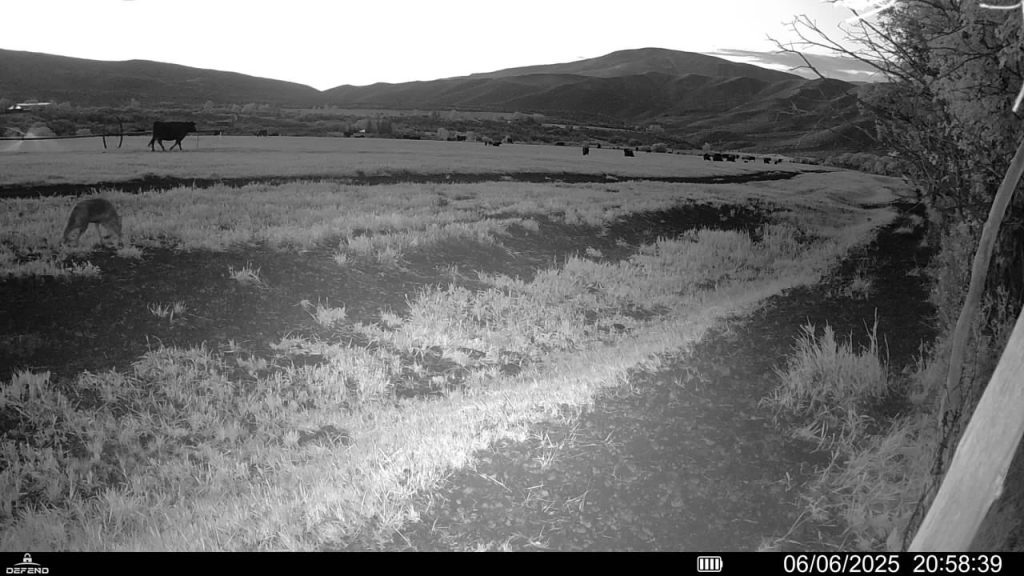
While the British Columbia wolves spurred political challenges, it was the re-release of the surviving Copper Creek wolves — the matriarch and four yearlings — that was among the agency’s most controversial decisions this year. The animals were released in Pitkin County after spending several months in captivity. The animals were removed from the wild after being tied to livestock attacks in Grand County in 2024. Their 2025 relocation ran contrary to the agency’s plan, which recommends against translocating depredating wolves.
Months before his departure from the agency, Davis took full responsibility for this decision, which only grew in controversy after the pack was tied to repeated livestock attacks near the site of their release. It ultimately led Parks and Wildlife to kill its first wolf, a yearling from the pack. While the agency began a search to kill a second yearling, it was unable to locate the responsible animal.
Chris Collins, whose family owns McCabe Ranch in Old Snowmass, said producers in the area felt like they were in the dark when the Copper Creek pack was dropped off in the Capital Creek area.
“CPW needs to do a better job of talking with the ranchers and getting them prepared before calving season, before the wolves show up,” Collins said. “They need to be prepared. We didn’t know until they dumped them in our yard.”
Stakeholders say that the decisions, leadership, and management so far have led to rising mistrust between ranchers and Parks and Wildlife.
“Landowners were promised timely communication and fair compensation,” Dixon said. “Instead, some of those landowners are waiting months for their claims to even be heard, and in some cases, they’ve had to hire legal counsel just to access what they were told would be a fairly straightforward process of support.”
These “broken promises,” as she referred to them, could have significant consequences beyond wolves.
“What I, and our community, continue to get frustrated about is we’re engaging with the agency right now on wolves, but there are so many other issues that we work with CPW on daily,” said Erin Karney Spaur, executive vice president of the Colorado Cattleman’s Association. “It’s really disheartening to see that this single species can alienate so many good people and then put all of those other programs, species, and everything in jeopardy just in the name of saving one species.”
Spaur added that if the program was “left up to producers and an on-the-ground staff and the science-based agency, I have full confidence that they can find a solution where it’s a win-win for all if all options are available and on the table.”
The big, bad wolf
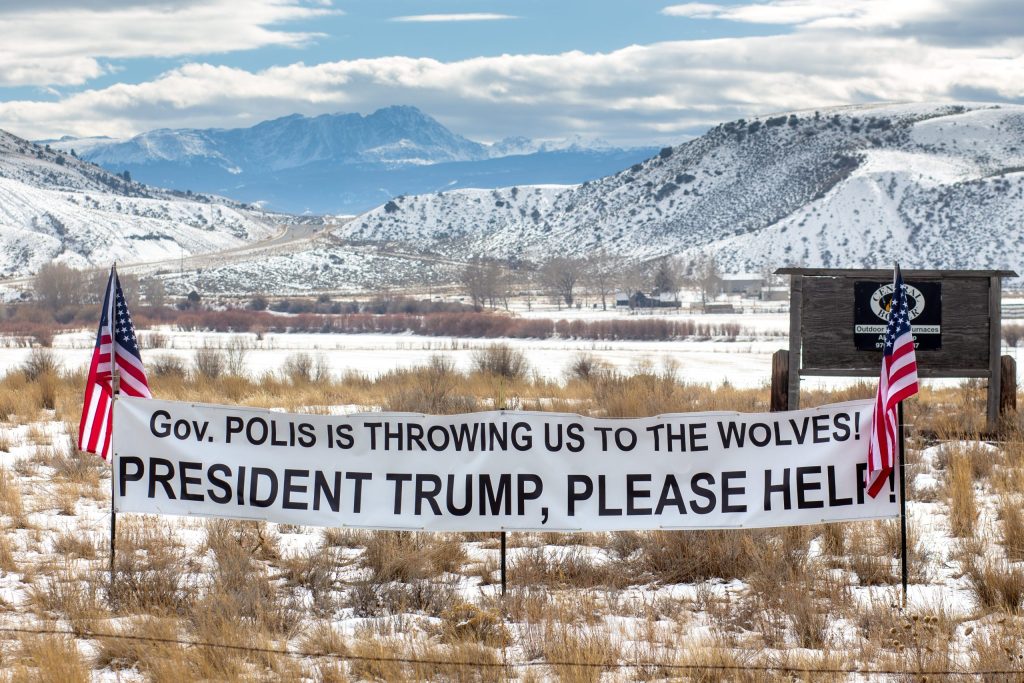
Among many of the stakeholders, there’s a feeling that progress — and finding win-win solutions — is impossible because the whole situation has become politically charged.
“Wolves are animals on the ground — they’re doing what they need to survive, and our producers have accepted that,” Spaur said. “It just feels like it’s become more about politics than wolves on the ground … I think we’re forgetting about the importance of producers on the ground and grazing animals.”
Linke said he believes the biggest challenge is that Parks and Wildlife is managing wolves based on politics and emotions rather than science. He sees this in the agency’s recent decision to re-release of a Copper Creek wolf in Grand County after it went to New Mexico. While this action was part of an agreement between Colorado and New Mexico to return any gray wolves, many, including Linke, felt this went against Parks and Wildlife’s management plan about relocating depredating wolves for a second time.
“(Parks and Wildlife) is not making any strides to build back any trust. They keep doing these things over and over and not taking care of problems,” he said.
“That is a problem because it’s creating adversarial relationships between CPW and the landowners,” he added. “Even here in Grand County, the majority of landowners are telling CPW, when they ask for permission to go on the land — to count deer, count elk, or find a collar, or whatever — they’re saying ‘no.’ And without that landowner cooperation, it’s going to be hard for CPW to do their jobs.”
This is driving a wedge between landowners and local staff, who have long-established relationships, he said.
“It’s not the local guy’s fault,” he added. “They’re getting orders from above, mixed messages from the leadership at (Parks and Wildlife), and the leadership under the gold dome that is telling them what to do, and that’s causing problems.”
Questions around leadership have been common since the restoration’s first year, with many claiming Gov. Jared Polis is calling the shots when it comes to wolves.
“It’s a top-down approach that is hindering some of the progress that needs to be made,” Dixon said. “We would like to see (the CPW staff) empowered by the commission themselves in order to act without some of the red tape, so that the producers can be treated as partners more so than obstacles.”
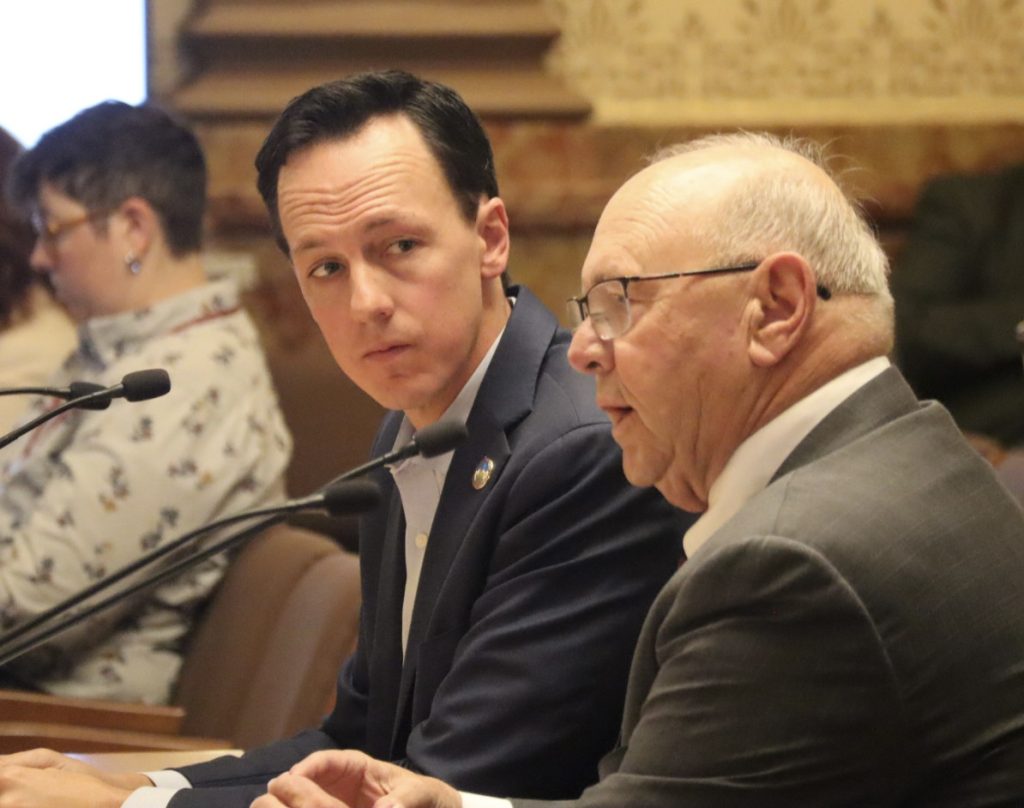
“I think a lot of this does trickle up into the offices in Denver, both at the head of CPW as well as into the governor’s office,” Roberts said. “The original sin of all of these problems is that we rushed into the wolf program.”
In 2023, he was the sponsor of a bill that would have delayed the reintroduction of wolves. However, Polis vetoed the bill, requiring the state to move forward and release its first wolves by Dec. 31, 2023.
“If we had had more time to get mitigation materials in place, to get staff on the ground, to get training and conversations with landowners done, this would have all rolled out much more smoothly,” Roberts said. “While people still would have been opposed to the reintroduction efforts, we would have had less depredation, less conflict, more transparency, and it would have made the thing so much more successful.”
This rushed feeling has many producers feeling defensive, said Chance Jenkins, a Roaring Fork Valley rancher and president of the Holy Cross Cattlemen’s Society.
“That’s never a good place to be because you’re just reacting,” Jenkins said. “I just wish people would understand that there are a lot of ranchers who don’t hate wolves. We hate the situation. The administration has put these wolves on us for nothing more than a vanity project.”
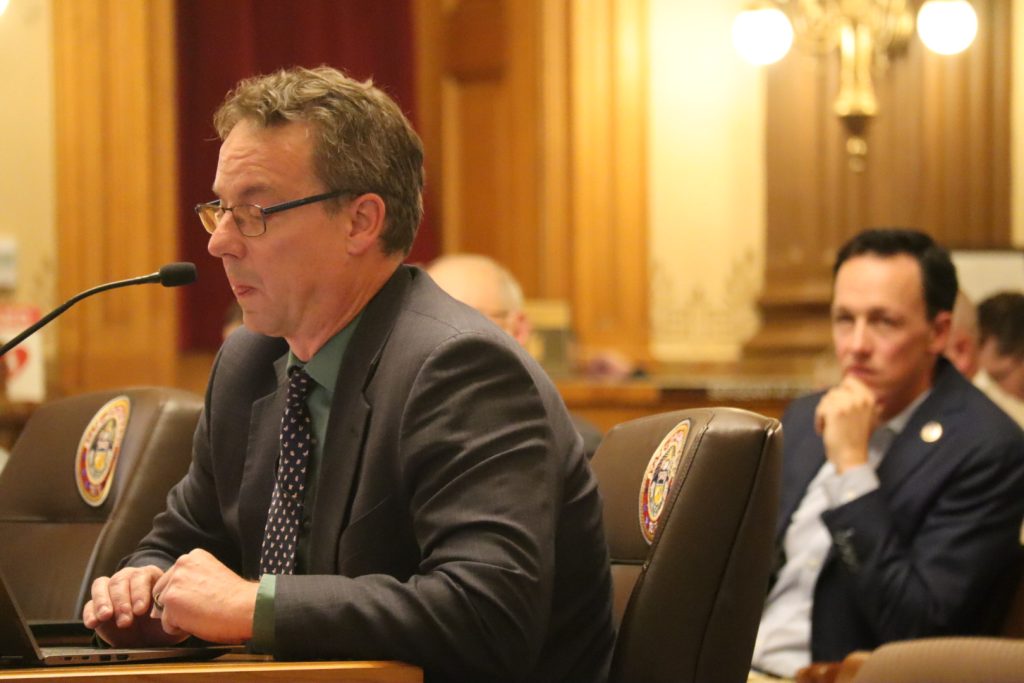
In November, Parks and Wildlife saw a leadership shakeup as Davis was forced to resign from the agency, but it doesn’t necessarily ease concerns.
“I didn’t agree with Davis a lot of the time,” Jenkins said. “But at the end of the day, I really feel like he was going to be as honest as he was allowed to be. So I think what we see now is whoever’s going to be in there is somebody that’s just going to be a yes man to Governor Polis and his husband. That worries us.”
When asked about Polis’ role in the wolf reintroduction, a spokesperson from the governor’s office said: “The governor is responsible for the management of the state government, appoints the Colorado Parks and Wildlife Commission, and, of course, works closely with every cabinet member as Coloradans expect him to.”
“Gov. Polis remains committed to successfully implementing the will of Colorado voters who passed wolf reintroduction and thanks CPW, the commission, and the stakeholders whose collaboration has and will continue to be critical to the success of this continued effort,” the statement continued.
The statement added that Colorado has “come a long way in providing the hardworking farmers and ranchers of Colorado with support, non-lethal deterrents, and the most generous depredation reimbursement in the country, but we understand there is always more to do.”
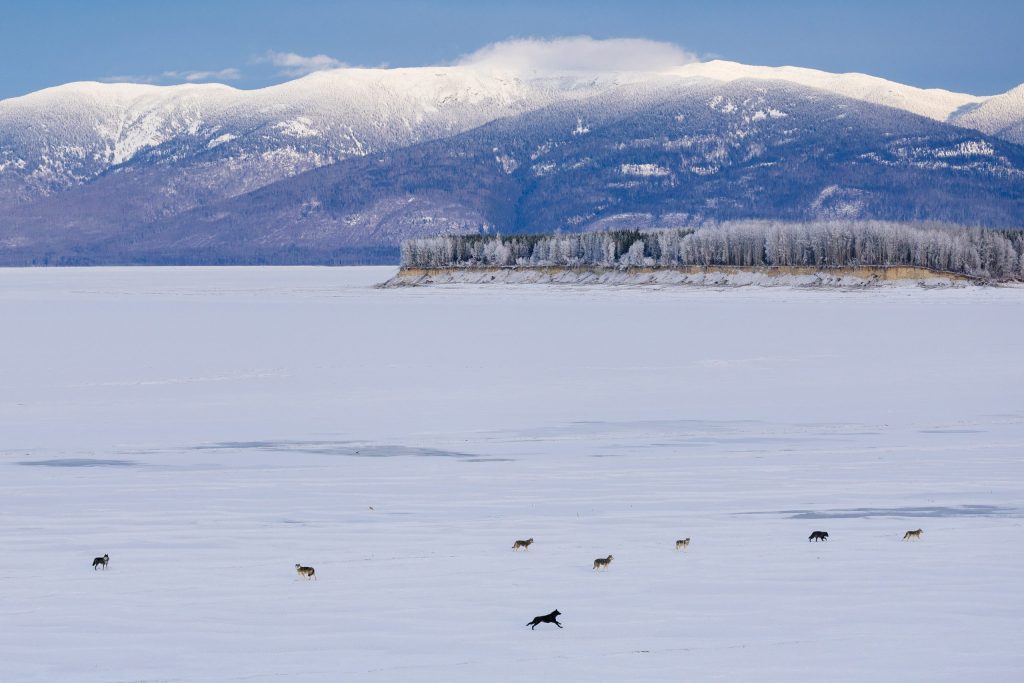
While wildlife advocates also agree that wolves carry a political edge, they point the finger at social and mainstream media.
“Think back to ‘Little Red Riding Hood’ — wolves have always enjoyed a mythical quality, good or bad,” said Rob Edward, co-founder of the Rocky Mountain Wolf Project. “And let’s be clear, they have the capacity to be very fearsome, but also remember, if you have a dog lying at your feet, that is owed to another aspect of wolves — their social nature, curiosity, and incredible intelligence.”
Edward said that when wolves were reintroduced in Yellowstone, “the livestock industry dug in its heels” and has never looked back.
“Social media has put the whole conflict on steroids,” he said. “All you have to do is look at that Facebook group, Colorado Wolf Tracker, to know how those echo chambers contribute to the vitriol and misinformation about what wolves are and what they do.”
Schneider said that “sensationalism is driving a bigger wedge than the wolves themselves.”
Edward added that because Colorado is just starting its reintroduction, “every single (wolf) depredation on livestock becomes a headline,” despite other animals and factors that are killing more heads of cattle.
“Reporters don’t report on every wolf livestock conflict that happens in Montana, Idaho, and Wyoming now because it’s just not news; it’s just part of doing business,” he said. “That’s not to downplay the impact on individual ranchers. We absolutely understand that the economic impact, the stress caused by having to change your daily livestock husbandry routine, can be significant, but people get into the groove after a while and figure it out.”
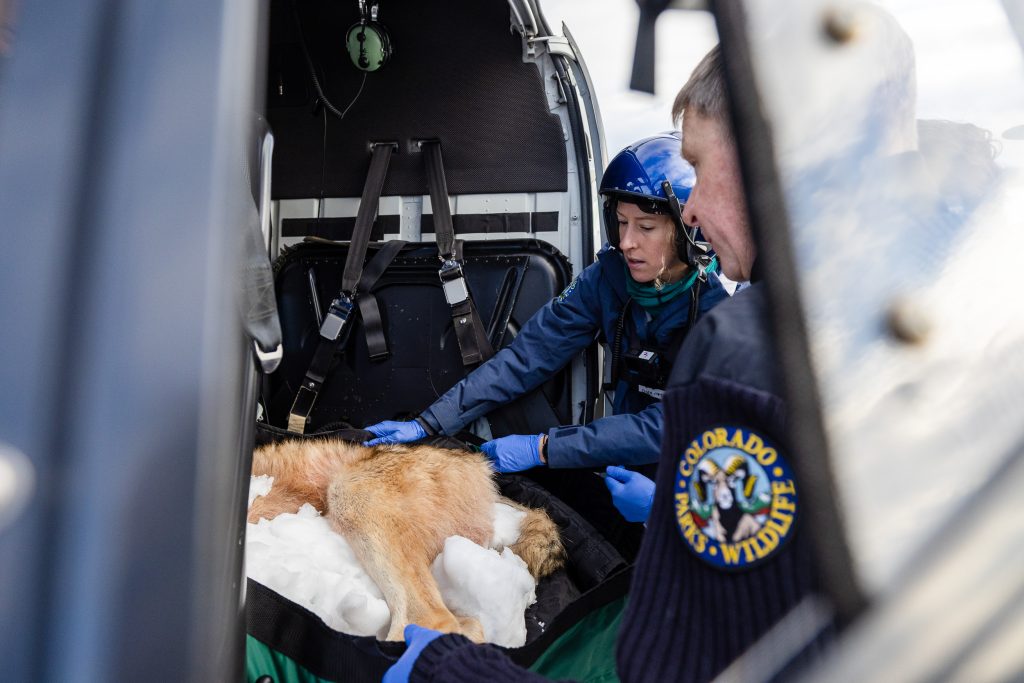
Perkins also said that “stories of successful conflict minimization have not been communicated as widely as they could have been, but it is also hard to tell those stories since it is challenging to quantify things that didn’t happen as a result of these efforts.”
The full story is somewhere beyond the emotions and politics, said Kaitie Schneider, the Colorado wolf representative for the national wildlife advocacy organization, Defenders of Wildlife.
“A lot of the positive things happening aren’t getting that much attention because it doesn’t make for as striking a news headline, and the result is we have a state that feels a lot more fissured,” Schneider said. “We’re not seeing the amount of division in the media on the ground. A lot of positive things are happening.”
Edward remained confident that a more agreed-upon success is still in the cards for the future.
“It’s going to take time,” he said. “I’m very confident that we’re doing the right things to help make the conflict less intense over time. We’ve laid a very strong state infrastructure to help make the program a really successful program.”
Plus, he added, “Failure is not an option; success is statutorily mandated.”
Aspen’s Eric Gutnick pens first poetry book
Part-time Aspen resident Eric Gutnick has released his debut poetry collection, “Heyday of Trek and Travel,” a 72-page book that draws on a lifetime of journeys and decades of visits to town.