Details revealed about the wolf that died in Colorado Parks and Wildlife custody
The King Mountain wolf pack’s patriarch died in January during routine collaring operations

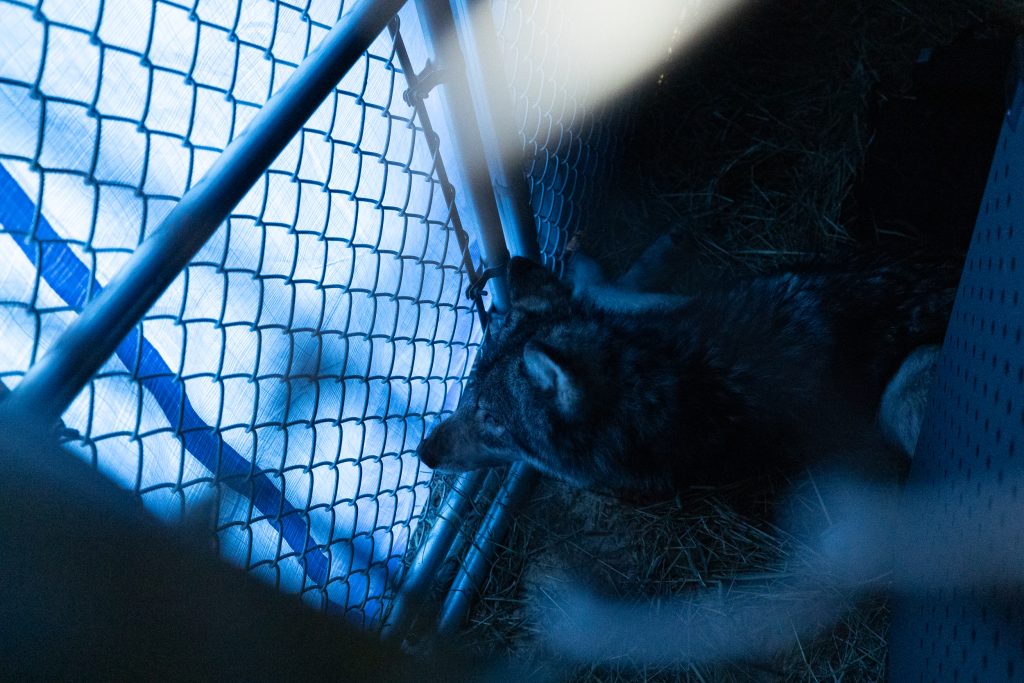
Colorado Parks and Wildlife/Courtesy Photo
Colorado Parks and Wildlife has revealed new information about how a wolf died in its custody in Routt County this January.
The male wolf, tagged 2305, was around 3 years old and among those translocated from Oregon in December 2023. The wolf was the patriarch of the King Mountain wolf pack, which formed in spring 2025. Parks and Wildlife was capturing the wolf and its female mate to replace the batteries on their GPS collar, something the agency aims to do every two to three years.
On Friday, Feb. 27, Parks and Wildlife reported in a news release that the wolf’s necropsy confirmed “capture-related complications” were responsible for its Jan. 28 death.
“These complications led to acute cardiogenic shock, which could have been exacerbated by several different factors, including hyperthermia, exertional/capture myopathy, respiratory distress or drug reaction,” it added.
The King Mountain patriarch was located, pursued, captured, secured and transported concurrently with the pack’s adult female and one of the pack’s pups.
“The female and male wolves were in close proximity to each other during the capture operation,” said Laura Clellan, director of Parks and Wildlife, in the release. “Our staff have combed through every detail to try to determine why the male wolf died while the female wolf had no issues. The evidence and facts within the reports still don’t definitively point to a specific reason why the male wolf experienced such a high level of distress.”
According to the agency, the time between locating the animals to transporting them to the on-the-ground staff was approximately 24 minutes. The patriarch was pursued for around three minutes total before being darted in its upper left hind leg muscle.
“During the capture, 2305 was not panting in any abnormal way (i.e., no obvious signs of distress were observed) and the entire process was noted as short and benign by the capture crew,” according to Parks and Wildlife.
When the wolves were delivered to the Parks and Wildlife handling crew, 2305 was “very hot” compared to the breeding female, prompting the agency to try and lower the male wolf’s temperature.
At this point, the staff members were unable to detect a pulse or signs of breathing and began attempts to revive the animal.
“Approximately 20 minutes after 2305 was delivered to CPW’s initial handling crew, a secondary crew, including CPW’s wildlife veterinarian, arrived and she confirmed respiratory and cardiac arrest,” the agency wrote in its news release. “In addition to attempts to revive 2305 prior to the arrival of the secondary crew, CPW’s wildlife veterinarian then administered emergency drugs intended to increase heart rate while CPR was performed. When no pulse or respirations — as well as a lack of corneal and pupillary reflex — were confirmed, CPR was ceased, and the animal pronounced dead.”
The U.S. Fish and Wildlife Service typically performs necropsies on the wolves that die in Colorado because they are federally listed as endangered. In this instance, however, Parks and Wildlife reported that it received permission from the federal agency to conduct the investigation itself. This was allowed because the death occurred during an internal operation and there was no potential law enforcement investigation. The state wildlife agency reported that an independent third-party veterinary pathologist attended the necropsy and confirmed all results.
The necropsy was conducted on Jan. 29, the day after the wolf’s death at Parks and Wildlife’s wildlife health laboratory in Fort Collins.
The matriarch and pup that were captured remain alive and are traveling together, according to Parks and Wildlife.
The wolf’s death marked the 12th mortality of the 25 wolves Colorado has relocated from British Columbia and Oregon since beginning its reintroduction in December 2023.
While a few of the deaths have occurred as a result of natural conflict with other predators — primarily mountain lions and, in one instance, another wolf — the vast majority have been the result of human interference or action. This includes wolves that were legally hunted in Wyoming, killed in response to repeated attacks on livestock, as well as an illegal poaching incident, a vehicle collision and a legal coyote trap.
Colorado has paused its releases for a year after failing to obtain a source for wolves this winter, given a change in direction from the U.S. Fish and Wildlife Service with the new administration. While this makes the survival and reproduction of the remaining wolves more critical, the agency contends that the current mortality rate, while high, is not surprising given that many of Colorado’s wolves are not in packs.
In addition to the King Mountain pack, Colorado currently has three other known wolf packs: Copper Creek, One Ear and Three Creek packs.
Airport modernization project impacts to be felt this summer
A lot needs to be done before the Aspen/Pitkin County Airport can close for runway and terminal construction in 2027, including the staging of construction materials and the moving of utilities and a road.