Beyond the Algorithm: Success isn’t the point
The South African-born founder behind a $460M healthcare exit reflects on faith, failure and why success means more than money
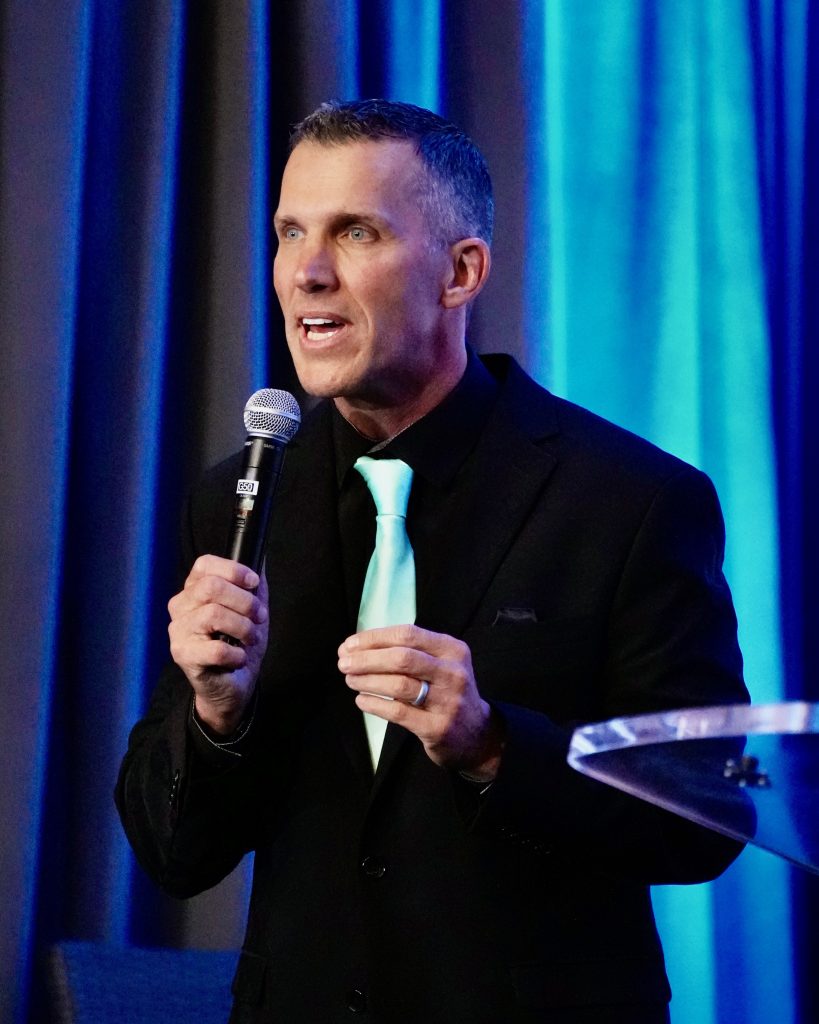
Courtesy photo
Clinton Phillips came to Aspen to play an unlikely sport, carrying a degree he couldn’t fully use — but one that gave him access to some of the sharpest minds in the world. What followed was a deeply personal crisis that reshaped his path, and ultimately led to the creation of a company that would change how people access healthcare.
Today, Phillips is building again, this time with an even bigger ambition: not just facilitating the treatment of illness, but preventing it altogether.
We caught up with him to trace that path, from Johannesburg to Aspen, and beyond.
Bryan: Where did your story begin in South Africa?
Clinton: I was born in Johannesburg and had what I’d call a wonderful, yet turbulent upbringing. My parents divorced when I was young, remarried and then divorced again. There was a lot of instability — moving around, not always knowing where we’d stay.
But one of the biggest stabilizers in my life was the church. We were part of a start-up church that grew into the Southern Hemisphere, and I was with them for the whole journey.
Every week, you’d hear that God has a plan for your life — that you have purpose. That shaped everything for me. It still influences every decision I make today.
Bryan: How did the turbulence you mentioned shape you?
Clinton: Struggle can go two ways — it can paralyze you, or it can motivate you.
For me, it created a deep desire not to live that way. My mom did her best, but there was always this sense that we were one step away from financial collapse. At the same time, I believe South Africans have this natural drive to hustle, to build, to figure things out. Combine that with a belief that you can, in fact, change your stars, and it becomes powerful.
Bryan: What led you from South Africa to Aspen?
Clinton: I was introduced to Aspen through the movie “Dumb and Dumber,” believe it or not. But I came here to play rugby. Aspen was the best team in the U.S. at that stage.
I studied chiropractic at the University of Johannesburg, but when I got here, I couldn’t practice as a chiropractor without redoing my qualifications. So I had to adapt. I leaned into everything else I’d learned — rehab, nutrition, therapy — and started building from there.
Bryan: What did Aspen teach you?
Clinton: Aspen was my real business education, much better than what I was provided at university.
My clients were some of the most successful people in the world. At least 40 of them were on the Forbes list. I got to ask them every question I’d ever wanted to ask.
One moment that stuck with me was with Howard Schultz from Starbucks. I had a list of questions ready — but he flipped it. He was the one asking me questions, curious about what I was doing. That taught me something important: the most successful people are incredibly curious and humble.
The other big lesson was this — success is never linear. These people had been through lawsuits, bankruptcies, betrayals. Their stories were messy. But they just kept going. And maybe most importantly, they weren’t what people think. The best ones were generous. They thought about customers first. They thought about impact. That blew my mind.
Bryan: And how did 2nd.MD come about?
Clinton: It started with something very personal.
My daughter had a stroke shortly after birth. We needed a pediatric neurologist, and it took months just to get in front of one — only to be told that they didn’t deal with stroke victims. That frustration led to the idea: what if anyone could access the best specialists quickly?
We moved to Houston to build it. It was incredibly hard — getting doctors on board, accessing records and finding customers. Eventually, we built a network that allowed people to speak to top specialists within days. Companies like FedEx, Wells Fargo and SpaceX started offering it to their employees. And wow, did we make a difference.
We weren’t even profitable yet when we were offered $460 million for the business. That became 2nd.MD.
Bryan: And now Medici — what’s different this time?
Clinton: 2nd.MD was about access — getting people to the best doctor in the nation. Medici is about prevention. Preventing my daughter from getting a stroke in the first place. We’re asking a different question: how do you not get sick in the first place?
We look at everything — DNA, toxicity, microbiome, 400 biomarkers — and build a personalized strategy so people can stay healthy for decades. We are leading the peptide revolution. At the same time, we’re building tools like Dr. Gabi, an AI doctor designed to bring high-level insights to more people, not just those who can afford premium care.
Bryan: What are you most proud of today?
Clinton: My marriage, first and foremost. That foundation matters more than anything. Beyond that, the schools and clinics we’ve built in Africa, the people we’ve helped through our businesses and the fact that we’re still building.
The world tells you to get more, earn more, accumulate more. But what actually brings fulfillment is giving. Some of the most meaningful moments in my life weren’t business milestones — they were things like sponsoring children, building schools or seeing real impact in communities.
Business, to me, is just a vehicle to do that at scale.
Bryan: What’s driving you now?
Clinton: I’m 51, and I feel like I’m just getting started. I want to be more creative, more effective and help more people than ever before. I want to see how far this can go.
At this point, it feels less like building a business and more like running an experiment with God — doing your best and seeing what unfolds from there.
Bryan: What advice do you have for the next generation?
Clinton: I wanted to become a doctor, but I didn’t do well enough at school. I didn’t allow that to define me, though.
What really matters is your willingness to hustle — to go the extra mile, to work harder, to serve better than anyone else. And pay attention to what moves you, what frustrates you, what you feel drawn to fix. Those are clues to your purpose.
Clinton Phillips’ story carries no shortage of lessons — how to respond when the path you’ve committed years to doesn’t unfold as expected, and the value of placing yourself close enough to greatness to actually learn from it. But above all, it’s his definition of success that stands out: not a single moment or milestone, but the cumulative impact of what you choose to build — and who it ultimately serves.
Bryan Welker lives and breathes business and marketing in the Roaring Fork Valley and beyond. He is president, co-founder, and CRO of WDR Aspen, a boutique marketing agency that develops tailored marketing solutions. Who should we interview next? Reach out and let us know bryan@wdraspen.com.


Old Town Yoga to bring sound-based classes to Basalt
When Carlie Urell received an SBA loan to fund Old Town Yoga, she described it as a full circle moment after she used to give out the same loans to women-owned businesses through the Economic Community and Development Institute, a non-profit.