As Aspen, Pitkin County face high radon risk, free test kits will be offered through January

Kaya Williams/The Aspen Times archives
January is national radon action month, and Aspen and Pitkin County are offering all residents free radon test kits throughout the month.
Radon is an invisible, odorless, and naturally-occurring radioactive gas that comes from radioactive materials buried deep in the geology, according to Pitkin County Environmental Health Administrator Bryan Daugherty. As the radioactive materials decay, radon gets released up through the soils and can enter homes through cracks in floors or foundations.
“Our goals with this campaign are to raise awareness about the danger of radon, urge the public to test their homes, and mitigate their homes to reduce the risk of lung cancer,” Natalie Tsevdos, Aspen’s environmental health programs administrator, told The Aspen Times.
The press release confirms radon is the leading cause of lung cancer among non-smokers, responsible for more than 20,000 lung cancer deaths in the U.S. each year.
“Due to Colorado’s geology, approximately 50% of homes in the state have elevated radon levels,” the release states, “making testing particularly important.”
Daugherty confirmed that older homes built more than 10 years ago are likely to have high radon levels, since they weren’t built with “radon-ready” construction.
“About 40% or so of our homes in Pitkin County from our testing do come back with high radon levels,” he said.
Free tests can be picked up in person at the Community Development office on the first floor of City Hall, located at 427 Rio Grande Place, or at the Pitkin County administration building, located at 530 E Main St., suite 205. For the first time, they will also be available for pickup at the town of Snowmass Village Town Hall, 130 Kearns Rd.
According to Daugherty, winter promotes the worst conditions for having radon, so homeowners can test to see the worst possible results. Heated homes are creating negative pressure that draws radon in more easily, and with doors and windows closed, the most accurate results occur.
Because radon is a heavier gas than air, homeowners should test the lowest living area of a house. He recommended testing every four or five years, or after any major remodels to a house.
If a home tests high for radon, it’s critical to install a mitigation system to reduce the risk of lung cancer.
“It’s a chronic exposure risk,” he said. “The more that you’re exposed to radon, the higher your risk of lung cancer is.”
Daugherty noted that for those who smoke cigarettes, the risk is even higher.
“Cigarette smoking is synergistic with radon in your home,” he said. “If you are a smoker, your risk of lung cancer is exponentially higher.”
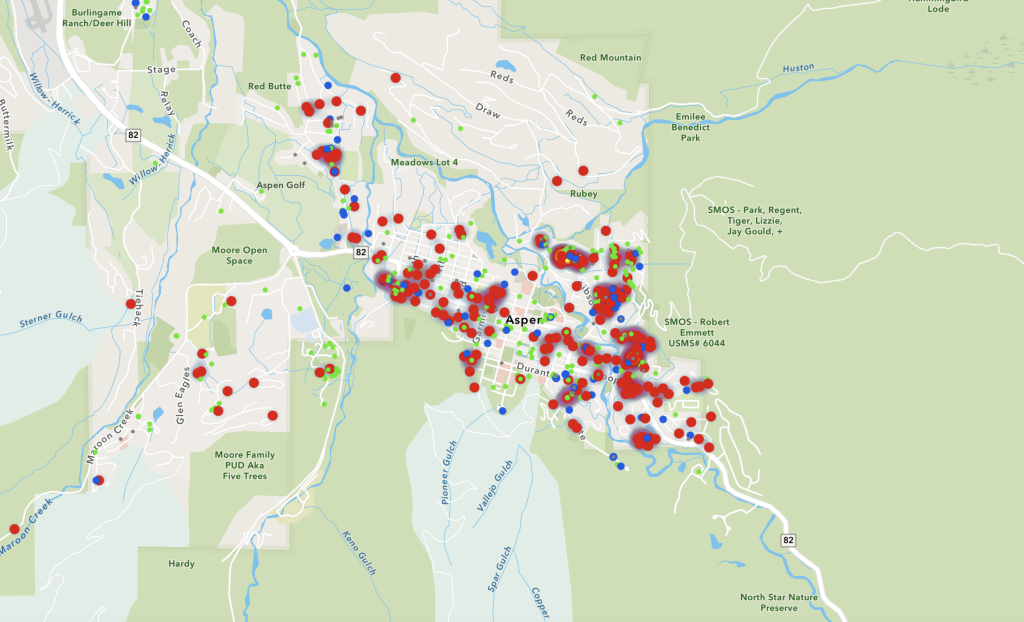
In an effort to help offset mitigation costs, the city’s environmental health and sustainability department will be launching a new grant opportunity for qualifying Aspen/Pitkin County Housing Authority households with radon test results of 4 pCi/L or higher. Applications will open on March 1.
“The impetus for the radon mitigation grant program came from wanting to help residents improve the health of their indoor air,” Tsevdos said. “Radon mitigation is very effective at reducing radon levels in the home, and it can cost anywhere from $1,000 to over $4,000. If the city can cover part of that cost, we can help residents mitigate who otherwise might not be able to.”
For property managers and commercial building owners, the city is also conducting a pilot project offering free testing for commercial buildings as funding allows.
“The expansion of the city’s radon program will give staff a better picture of radon levels throughout the community and be used to inform future projects and incentives,” an Aspen newsletter states.
Those interested can reach out to airquality@aspen.gov.
“We’re excited to continue to expand our radon efforts alongside Pitkin County and provide more resources for our community,” Tsevdos said in the release. “We hope these programs help residents take action now while also strengthening our understanding of radon levels throughout Aspen.”
Anyone with a mitigation system installed should test levels every few years to ensure that the system is continuing to function properly, Daugherty added.
And while radon is constantly coming out of the ground at all times, he confirmed that when people are outside, those percentages of radon exposure should be “incredibly low” and not a matter of concern.