Year in Review 2025: This year’s biggest wolf stories

Colorado Parks and Wildlife (CPW)
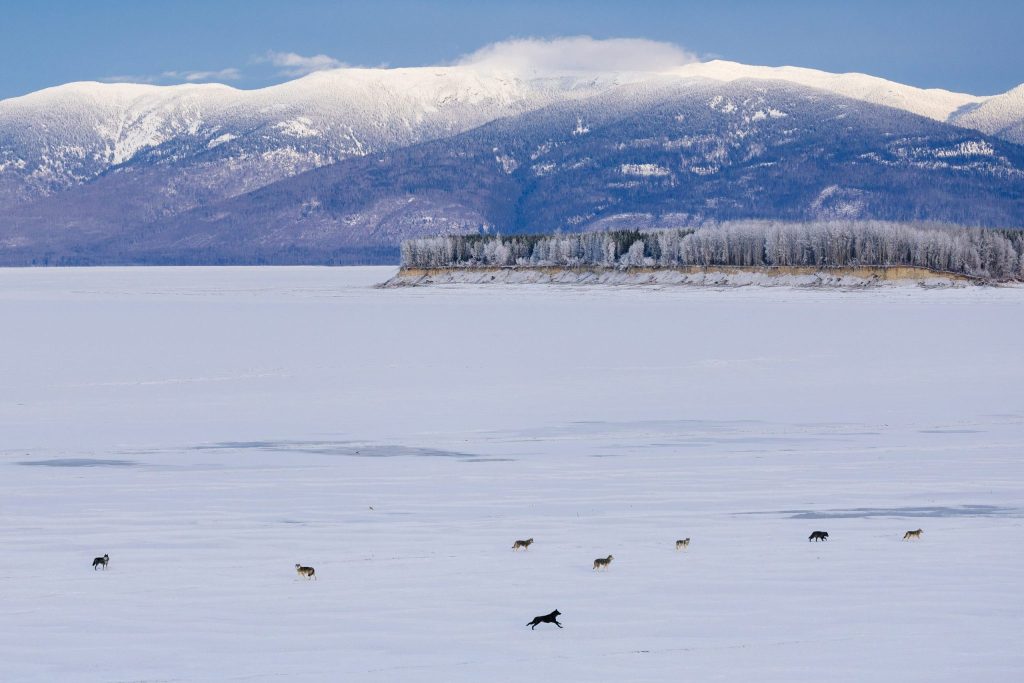
In 2025, it was a big year for the wolves in Colorado. Colorado’s wolf reintroduction effort continued to take shape as collared gray wolves were documented moving across the Western Slope.
The year included both developments and challenges for the program, with several wolves confirmed dead and the birth of at least six pups recorded, reflecting ongoing changes in the state’s wolf population.
1. Colorado’s reintroduced wolves tour new counties in latest activity map
In the final month of spring, the movements of Colorado’s collared gray wolves continued to be spread across the Western Slope, with some activity pushing further south and west than in prior months.
Colorado Parks and Wildlife’s latest watershed map — which shows the collared wolves’ activity between April 22 and May 27 — shows movements that appear more compacted within Colorado’s northwestern counties than the April activity.
In the last month, the wolves were active in watersheds along the eastern portions of Moffat, Rio Blanco and Garfield counties as well as in Routt, Jackson, Eagle, Grand, Pitkin, Summit, Gilpin, Clear Creek, and Lake counties.
-Ali Longwell
2. Female wolf dies in northwest Colorado, marking fourth death of British Columbia wolves this year
One of Colorado’s reintroduced wolves died on Thursday, May 15, in the state’s northwest region.
Colorado Parks and Wildlife officials confirmed on Friday that they received a mortality alert on the female wolf’s collar on Thursday. The agency provided no additional details on the incident or the cause of death.
The U.S. Fish and Wildlife Service will conduct the investigation and necropsy to determine what caused its death.
-Ali Longwell
3. How many of Colorado’s wolves can die before experts raise the alarm?
In the 18 months since Colorado Parks and Wildlife began the voter-mandated reintroduction of gray wolves, seven of the 25 wolves it has relocated from Oregon and British Columbia have died. Four of these deaths occurred this year between March 16 to May 15.
The deaths have been caused by conflicts with other animals, illegal poaching in one instance, and two legal, human-caused deaths in Wyoming. Two of the deaths this year are still under investigation.
Colorado’s wildlife agency has maintained throughout the reintroduction efforts that some level of mortality was planned for and expected.
-Ali Longwell
4. Another of Colorado wolves dies, marking the sixth death this year
Another of Colorado’s reintroduced wolves has died in the northwest corner of the state.
Colorado Parks and Wildlife confirmed on Monday, June 2, that it received a mortality alert for the male wolf, 2507, on Saturday, May 31. The agency did not provide any additional information on the location or cause of death of the wolf, which was relocated from British Columbia in January.
Colorado’s wolf population was estimated at 30 animals following the release of 15 wolves from British Columbia in January. This marks the sixth death this year and the ninth since the reintroduction effort began in December 2023.
-Ali Longwell
During a legislative hearing on Monday, Colorado lawmakers questioned Colorado Parks and Wildlife’s top officials on recent wolf management decisions and future releases as producers pushed for more relief, communication and support for tools to mitigate conflict.
Colorado’s wolf reintroduction has been shrouded in controversy since voters approved the effort via Proposition 114 in 2020.
At the hearing, Garfield County Commissioner Perry Will referred to wolf restoration as “East Slope directed, West Slope affected,” alluding to the proposition’s narrow passage bolstered primarily by urban voters. The measure failed in 51 of Colorado’s 64 counties. Only four Western Slope counties voted in favor of it.
-Ali Longwell