Wolves have divided Colorado – livestock producers, officials seek common ground during a visit to a North Park ranch

Meg Soyars Van Hauen/Sky-Hi News
On the morning of Dec. 19, 2021, a family operating a vast 11,000-acre Angus cattle ranch near Walden in North Park woke up to a loss that thrust them into the Colorado wolf debate. Wolves that had traveled down from Wyoming killed one of their cattle, likely the night before.
At that time, the controversial gray wolf re-introduction effort hadn’t yet begun. Don and Kim Gittleson, who operate the North Park Angus cattle ranch, continued to experience depredations as Colorado Parks and Wildlife (CPW) prepared to re-introduce wolves to the Western Slope. Exactly two years after officials investigated the Gittleson’s first dead heifer, five wolves were released in Grand County on Dec. 18, 2023.
Over the past three years, Don has lent his experience to ranchers newly dealing with depredation. He’s also worked with pro-wolf volunteers who attempted to keep depredating wolves from his herds.
“CPW didn’t release my name,” he said. “I released my own name. Once I was in the news, I talked to a lot of people.”
He was speaking in front of a large group of livestock producers, outfitters, CPW staff, legislators, Jackson and Grand County commissioners, his family, and members of the media who had gathered June 15 at his ranch. This diverse group was here for an informational meeting on wolves. The hope was that everyone could find common ground and ask questions. The peaceful area lent itself to camaraderie — black cattle grazed in green pastures, surrounded by mountain ranges.

But some conversations proved stressful. People spoke about how wolf re-introduction had impacted their lives to officials who were tasked with carrying out that re-introduction.
“Wolves — they definitely bring out the feelings,” Don said.
Proposition 114, narrowly passed by voters in 2020, stipulated that wolves would be released west of the Continental Divide.
CPW officials have sometimes taken the brunt of public opposition to the re-introduction. Standing in the Gittleson’s barn, surrounded by individuals affected by wolves, CPW Commissioner Marie Haskett explained that the agency didn’t decide to undertake the re-introduction — it was a law passed by voters.
At the meeting, Don was asked how he felt about the majority of Front Range voters who had approved the re-introduction. He cautioned that he’s careful to avoid using generalizing terms, such as “Front Range.”
He added that voters on the Western Slope also voted for re-introduction — in fact, there were “Yes” votes in every Colorado county.
“But, primarily, this is an urban-rural disconnect,” he said. “Personally, if today they were voting on Proposition 114, I don’t think it would have passed.”
With only 10 wolves released, the re-introduction has pitted different groups against each other, according to those who spoke at the meeting in North Park. Some attendees talked about the divide between urban and rural communities being worse than ever with relationships on the decline.
Don said he has received calls and emails from those who regret voting to approve the re-introduction. He’s also received hateful emails. One person told him to “get off public land.” The Gittlesons graze cattle on school district-owned land.
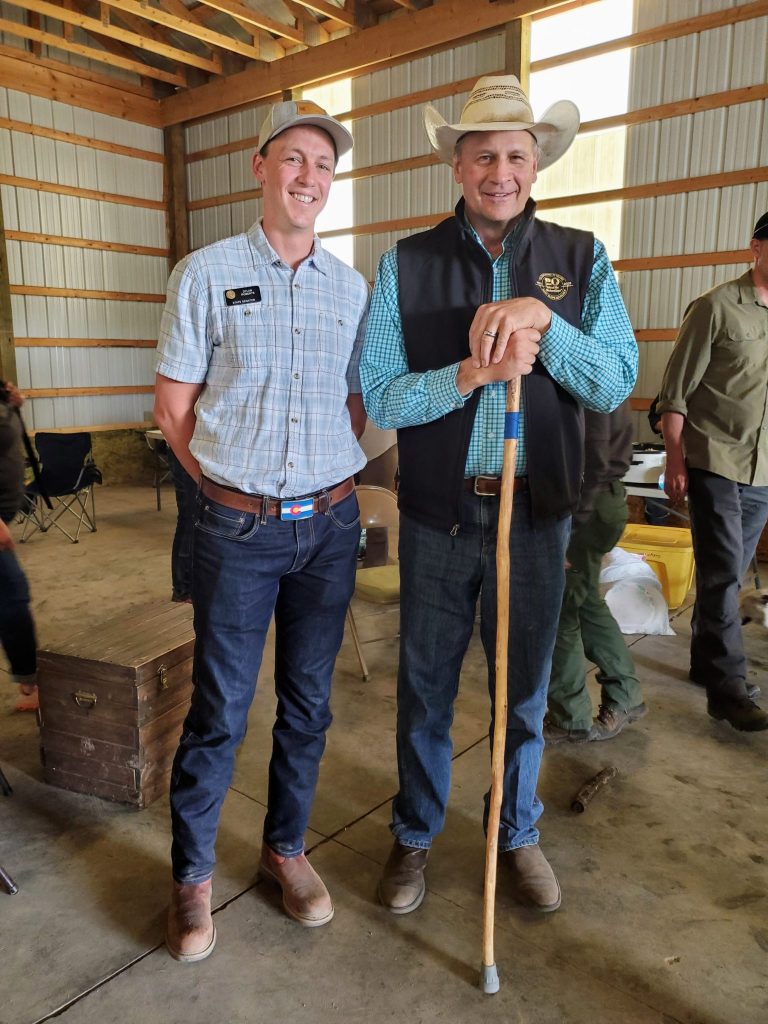
For many ranchers, depredation losses can be emotional as well as financial. Don explained that his family has spent countless hours and dollars on non-lethal tools. These deterrents are far more expensive than the actual money lost from a killed animal, he said.
“The loss is nowhere near the cost of non-lethal, or labor — not even close,” he said. “You can’t be doing things that cost you more than what your losses would be without doing anything. A business can’t operate like that.”
CPW and pro-wolf volunteers did invest a lot of money in assisting the Gittlesons in preventing depredations. He predicts that the agency’s expense for non-lethal deterrents will increase exponentially as more wolves are on the ground.
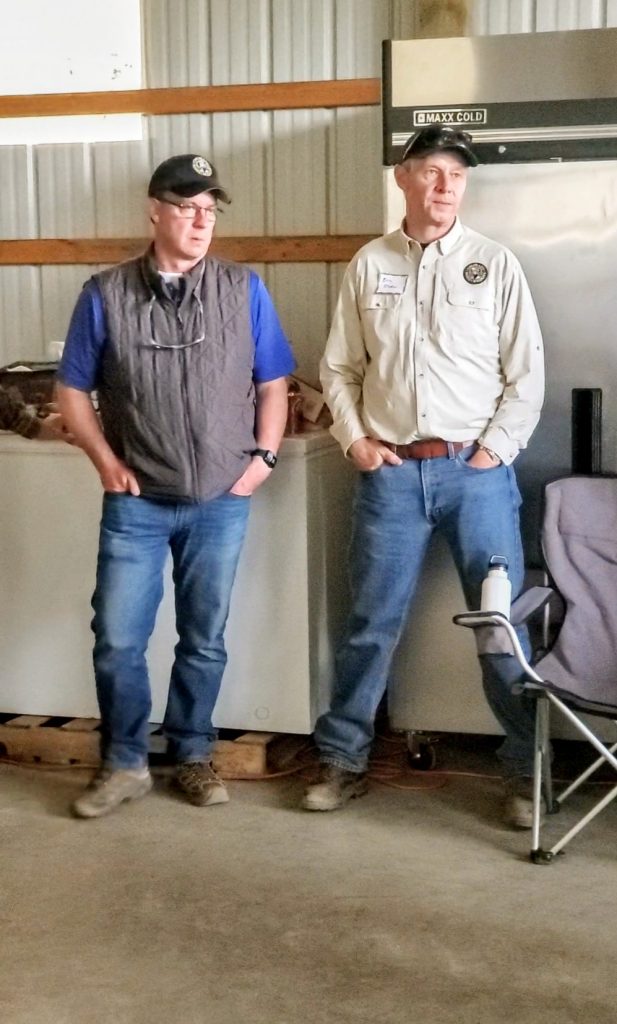
CPW Director Jeff Davis attended the meeting and spoke with people concerned about wolves on the landscape. This included hunting outfitters, like Earl Osterling of Ivory & Antlers Outfitting based out of Rand.
Osterling expressed his fears that ungulate populations such as elk would be reduced as wolf numbers grow.
“Guys like me may begin to make decisions, whether we’re going to stay in business, or do we need to cut our clients in half? These are real decisions I have to think about,” he said.
Davis responded that the agency is working diligently on its ongoing ungulate studies and will publish results to the public. The agency also recently implemented its Big Game Season Structure for the 2025-29 season.
“What’s important to us is … decisions the commission makes and how those affect the rural economy,” he said. “A big blind spot right now is truly understanding the contribution of fishing and hunting in particular, so we’re not making decisions that unintentionally have negative effects on rural communities.”
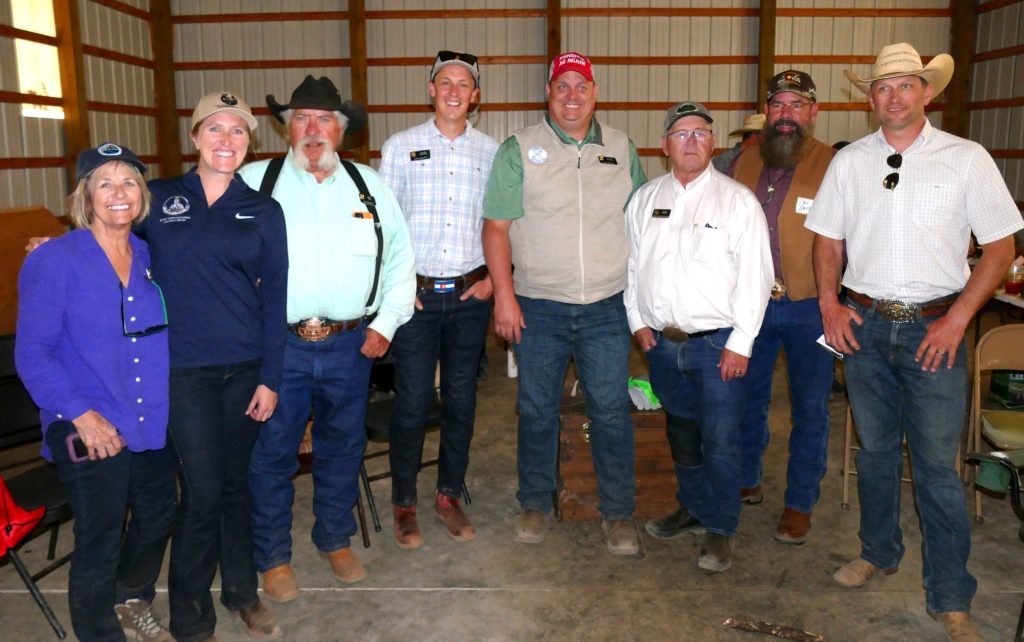
Sen. Byron Pelton also spoke to Davis. He expressed that he’s thankful members of CPW attended the meeting and are committed to being more transparent.
“The biggest concern I have is that (agriculture) is a $47 billion industry — second largest economy in the state of Colorado,” Pelton said. “Anything that harms it, we should be very cognizant that these people need to be protected, and this industry needs to be protected.”
On the Gittleson Ranch — at the end of a miles-long dirt road, far removed from civilization’s squabbles — there was a concerted effort to work together. How these partnerships will continue to be tested by the wolf reintroduction remains to be told.
This is part one in a series from Sky-Hi News about wolves in Colorado.
-
Cattle on a peaceful sunny day in North Park on June 15.
Meg Soyars Van Hauen/Sky-Hi News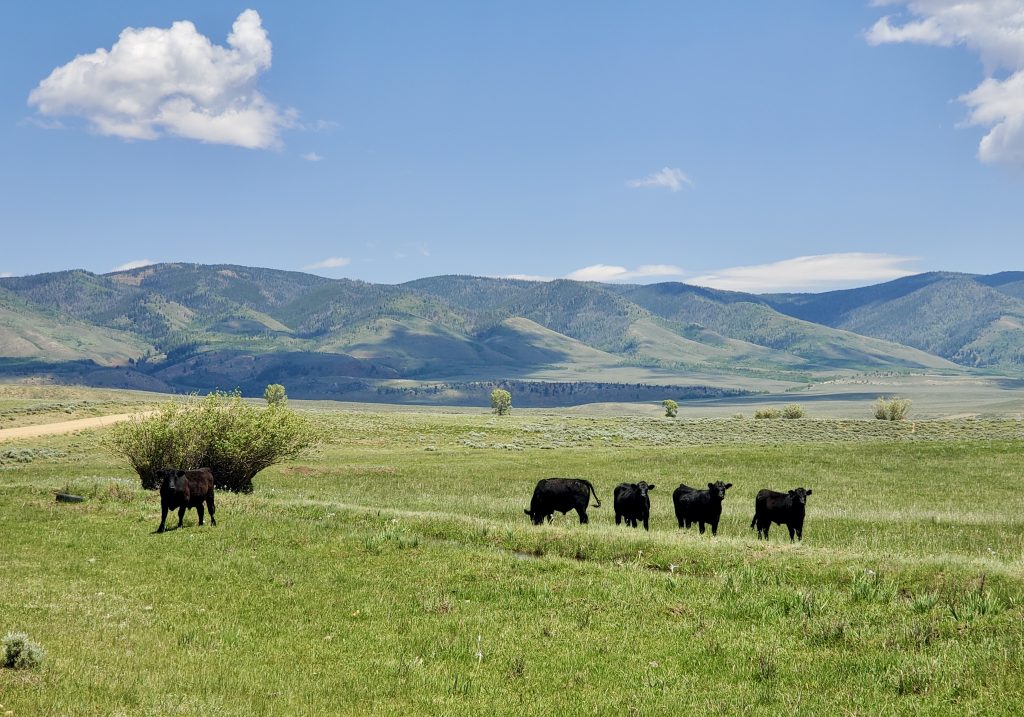
-
More than 70 people attended the Gittleson Ranch event that took place June 15 in North Park.
Meg Soyars Van Hauen/Sky-Hi News archive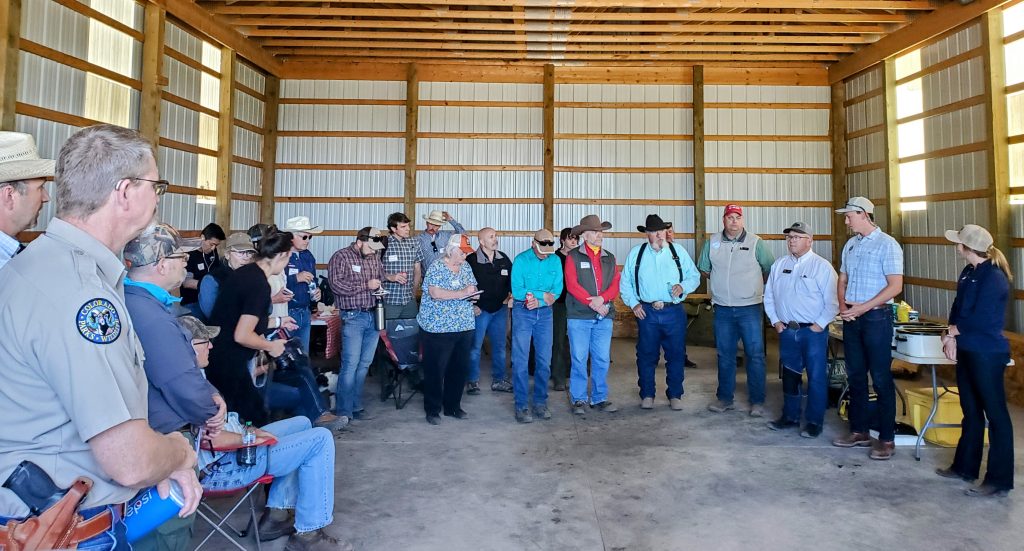
-
Don Gittleson speaks to the group on how an adult cow was attacked by wolves on his ranch. He had to put the cow down.
Meg Soyars Van Hauen/Sky-Hi News