Willoughby: Slinky, popular toys — 1950s Aspen
Tim Willoughby Follow
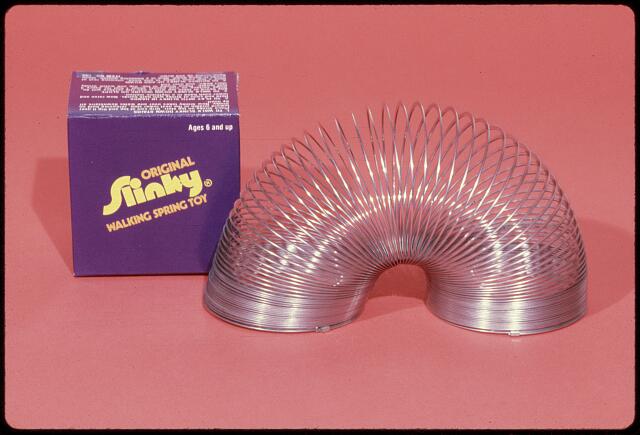
Library of Congress/Courtesy photo
The baby boomer generation, in addition to being large in numbers, also began at a time when the parents had endured the limitations of the Depression and a war. The new era ushered in a huge expansion in toys, and parents were indulging (spoiling) their children.
Aspens’ children benefitted in the 1950s, although there were a few differences. The major one was that, since there was no television until almost 1960 and it did not have many stores catering to children, toy fads were not as common, or they delayed as word spread mouth-to-mouth or from Christmas mail order catalogues.
One exception was that Walgreens in Glenwood — known to many as “the five and dime” — had a whole section of “in” and inexpensive toys. A trip to Glenwood had special significance to those of us children who rarely got to go there.
One of the more interesting toys of that period was the Slinky. Wikipedia outlines some interesting tidbits. It was invented by Richard James in 1943. Two years later, he demonstrated it at a Gimbels in Pennsylvania, selling out this first batch of 400 in just 90 minutes. It is still in production today, and it is estimated that there have been 300 million sold. In 2000, it was inducted into the National Toy Hall of Fame and, in 2003, listed on the Century of Toys list.
As popular as it was, there are very few ads for it in Colorado’s newspapers in the 1950s. The three I found were in Denver papers. The first, 1956, at Snyder Toy Center selling for $.59, $5.37 in today’s dollars. Another ad in 1968 for Skaggs Drug Center pointed out a major selling point for the toy: “nothing to wear out.”
Barney Bishop remembers playing with them with his cousin Vicki (Marolt) Buchanan: “I remember making it go from hand-to-hand sort of like juggling, or holding it high in the air and letting gravity stretch it out and see if you could make it come back.” They also got their Slinky to work descending the steps to the basement — one of the major features of a Slinky, that magical movement without human help. He also remembers it “getting tangled up in itself.”
Ingrid (Elisha) Stuebner had the most stairs in her Main Street home, but many sections were carpeted, and the Slinky did not work on them. But she remembers it working on the wood stairs. Her summary is similar to the others I have checked: “it would get all tangled up.” Cathy (Chalfant) Douglas also lived in an Aspen Victorian and remembers the fun with her Slinky leaping down most of the stairs.
My experience with a Slinky was not very interesting. I didn’t have stairs, but I tried to get mine to go from a chair seat to the floor. Like with Barney and Ingrid, mostly what I remember was it getting tangled, likely through my mismanagement.
Another favorite toy of 1950s Aspen was the pogo stick. They had been around for many decades but, through redesign, had become safer and marketed for children in the 1950s. Like bicycles, they were a “summer” item, but they were a frequent gift. Max Cook in Denver sold them in 1954 for $7.95, $72 in today’s dollars. The ad’s description best illustrates the pitch of that era: “sensational gift … it’s new, it’s safe … new thrills with a different type of toy for boys and girls of all ages.”
You may be doing your holiday shopping looking for toys. The baby boomer generation does not recommend a Slinky, but a pogo stick for the outdoor Aspen children who need to have that joy like skiing moguls would be a good choice.
Tim Willoughby’s family story parallels Aspen’s. He began sharing folklore while teaching at Aspen Country Day School and Colorado Mountain College. Now a tourist in his native town, he views it with historical perspective. Reach him at redmtn2@comcast.net.