Willoughby: Skis and ski shops — 50 years ago
Tim Willoughby Follow
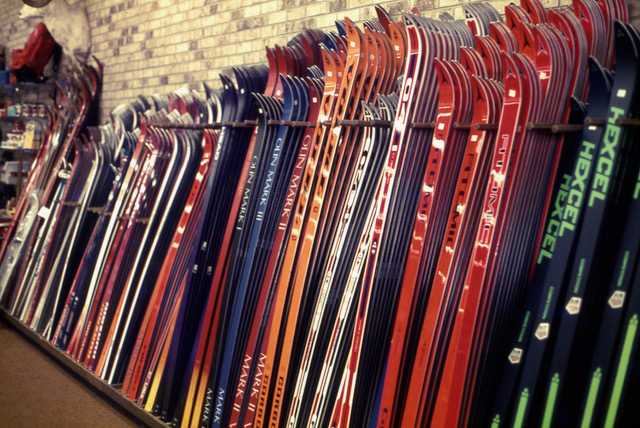
Aspen Historical Society/Courtesy photo
Aspen was in the middle of the ’70s skier boom in 1976. So was the ski-manufacturing business. The following will give you some idea of how huge it was.
Hard to believe, but there were 13 stores selling skis. Here is an alphabetical list: Aspen Leaf, Aspen Mountaineering, Aspen Sports, Gene Taylor Sports, Highlands’s Inn Ski Shop, L’ Equipe, Mogel Ski Shop, Molterer Sports, Pomeroy Sports, Snowmass Sports, Sporthaus Lindner, Stefan Kaelin’s Swiss Sports and The Winter Shop.
The most enduring store and the largest, Aspen Sports, expanded that year. Aspen Sports opened in 1954 by locals Gale Spence and John Oaks. Spence was one of the best local racers in the 1940s and was on the 1950 FIS team; he also coached the Aspen Ski Club junior racers, beginning in 1952.
Stefan Kaelin’s main business was his ski shop, but he opened another shop that year: a bakery. With so many stores, you would think they would have had to advertise, filling the Aspen Times Weekly with pages of ski specials, much like the many pages of real estate ad pages today. But there were few ads.
While nearly all the ski shop names are familiar to me, I must admit that I did not set foot in most of them. For tourists, because they were scattered around, they were a short walk from their lodging. Locals, like me, had their favorites, and depending on which skis they wanted, they frequented the same few stores — except for off-season sales and sales to sell off discontinued items.
Many of the ski manufactures had been around for decades, but skis were going through rapid changes in the ’60s and early ’70s, shifting from wood skis to mixtures of layers of wood and metal. Plastic and honeycomb plastic replaced the wood. As an example, Kneissls, which had been around since 1919, was the first to have plastic in the 1960s. If you had a pair of the older ones, then you will remember the “reds”: all wood, weighed a ton and barely bent — great if you were going 60 in a downhill race but not so great in tight moguls.
I may have missed a couple, but here are 15 brands you could buy in Aspen and the country where they were made: Atomic, Austria; Blizzard, Austria; Dynastar, France; Fisher, Austria; Hart, U.S.; Head, U.S.; Hexcel, U.S.; K-2, U.S.; Kastle, Austria; Kneissl, Austria; Nordica, Italy; Olin, U.S.; Rossignol, France; Spalding, U.S.; and Vökl, Germany.
Two brands dominated many Aspen stores in the ’60s and ’70s: Rossignol and Head. The primary reason was that local Roby Albouy was the dealer representative for them. Roby, at one time, had been an instructor in the French National Ski School. He moved to Aspen in 1953 to help manage the Four Seasons Club.
Many of us “senior” skiers have a hard time swallowing how expensive skis have become. The good news is that they seem to last much longer, and when you look at the prices of the high-end skis of 1976, the prices, in today’s dollars, are similar, around $800.
Current skiers are likely to not believe how long skis for able skiers were in those days. I’m only five foot six, but I loved 210 cm skis. They were not as wide as today’s skis, not so great in powder and a challenge in moguls, and there was less grooming then, and they, especially the top-end ones for racers, were less flexible.
Not all the listed manufacturers are still in business, and some have merged. Some, from 1976, are collector’s items. I am sure there are a few of us who don’t like to give away or throw out our skis and have shoved them to the back of the ski closets. Have a look, and let them bring back the memories.
Tim Willoughby’s family story parallels Aspen’s. He began sharing folklore while teaching at Aspen Country Day School and Colorado Mountain College. Now a tourist in his native town, he views it with historical perspective. Reach him at redmtn2@comcast.net.